
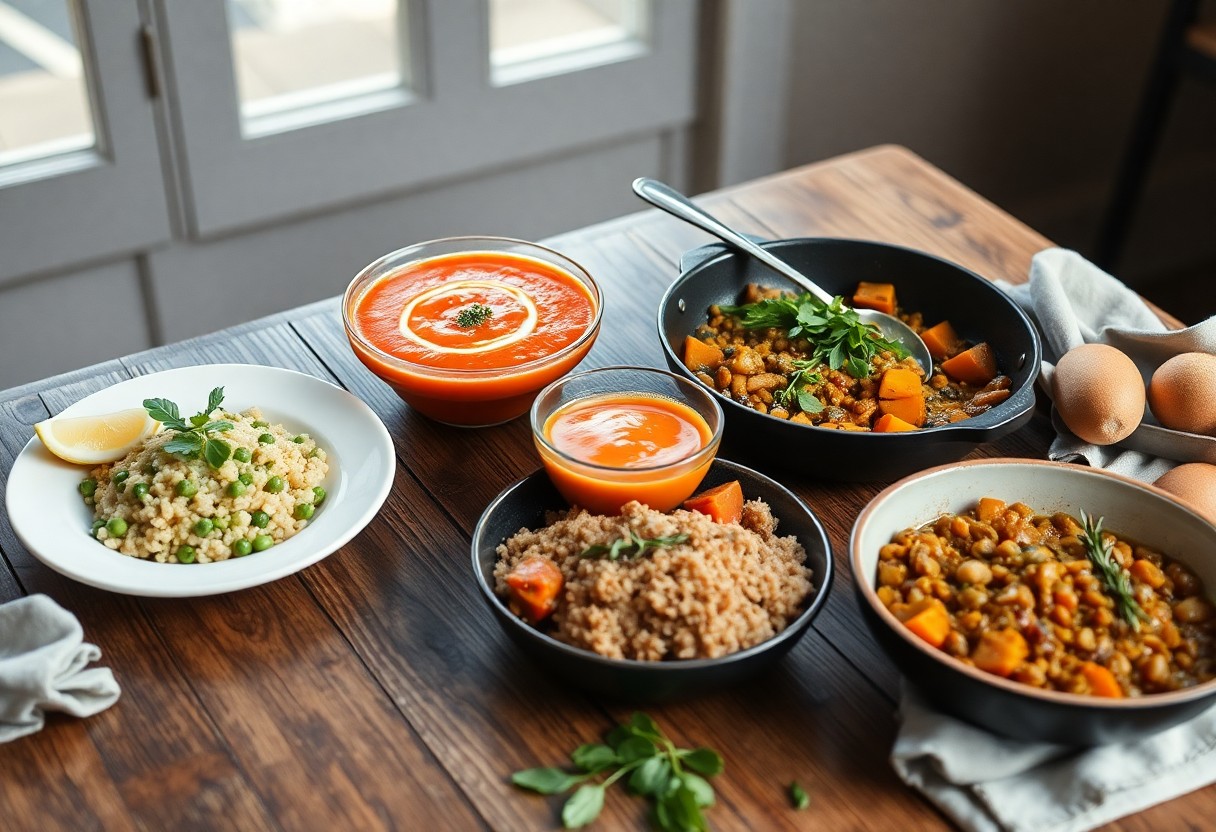
With seasonal produce and thoughtful techniques, you can create comforting vegetarian meals year-round that match weather and mood. This guide shows you how to layer flavors, balance textures, and select proteins and pantry staples to keep dishes satisfying in winter, bright in summer, and adaptable in spring and fall. You’ll learn simple swaps, preservation tips, and meal ideas to make seasonal cooking practical and nourishing.
Key Takeaways:
- Build meals around peak seasonal produce to maximize flavor and nutrition, swapping similar vegetables or fruits as the seasons change.
- Use comforting techniques-roasting, slow-simmering, braising, warming spices, and creamy textures-and add plant proteins (legumes, tofu, grains, nuts) for satisfying, well-rounded dishes.
- Plan and prep flexible components (batch-roasted vegetables, grains, sauces) to make weeknight comfort food easy and freezer-friendly across all seasons.
Spring Vegetarian Recipes
This spring, you center meals on bright, tender produce-think asparagus, English peas, ramps and chickpea greens-available April-June in many regions. You can highlight single-ingredient plates or combine 3-5 seasonal items for layered texture and flavor. Try quick blanching for asparagus (1-2 minutes) to preserve snap, or flash-sauté peas with lemon zest and 1 tablespoon butter or oil for a 5-minute side that keeps nutrients and color vivid.
Fresh Salads and Wraps
You build crisp salads and wraps around young greens like arugula and pea shoots, adding 1/2 cup cooked quinoa or 1 cup chickpeas for 10-15 g protein per serving. Use citrus- or yogurt-based dressings made in 5 minutes-2 tablespoons olive oil, 1 tablespoon lemon, pinch salt-to lift flavors. Examples: asparagus-tomato salad with tarragon, or a chickpea-avocado wrap with radish and dill for portable spring lunches.
Light Soups and Stews
You favor light broths and modest stews that showcase seasonal veg, such as split-pea soup, leek-and-potato broth, or miso with baby spinach; most recipes simmer 15-25 minutes. Keep textures clear by pureeing half the batch for body while leaving some chunks, and finish with acid-1 teaspoon lemon or 1 tablespoon sherry vinegar-to brighten each bowl.
For more depth, you focus on technique: sweat 1 medium shallot and 2 cloves garlic first, then add 4 cups vegetable stock and 3-4 cups chopped spring vegetables, simmering 10-20 minutes depending on density. You choose whether to blend fully or partially, and often stir in 1/4 cup plant cream or yogurt for silkiness. Plan for 4 servings and freeze individual portions for 2-3 months to simplify weeknight comfort.

Summer Vegetarian Recipes
Grilled Vegetable Dishes
You can transform zucchini, eggplant, bell peppers and asparagus by grilling them over medium-high heat (about 400°F). Marinate 4 cups of vegetables in 2 tbsp olive oil, 1 tbsp balsamic, 1 tsp smoked paprika and a pinch of salt for 15-30 minutes; grill 3-5 minutes per side for thin slices, 6-8 minutes for thicker cuts. Try skewering cherry tomatoes with halloumi, and finish with lemon zest or 2 tbsp chimichurri for contrast.
Refreshing Smoothies and Salads
You can refresh with smoothies and salads that use high-water fruits and quick proteins. Start smoothies with 1 cup leafy greens, 1 banana, 1 cup berries and 8 oz plant milk; add 1 tbsp chia or 20 g protein powder to reach 250-400 calories and 8-20 g protein. For salads, combine 2 cups greens, 1 cup seasonal fruit, 1/4 cup nuts and 2 tbsp vinaigrette; total prep time often stays under 10 minutes.
You can try three go-to recipes: Green Cooler-1 cup spinach, 1/2 avocado, 1 banana, 1 cup almond milk and 1 tbsp flaxseed (about 320 kcal, 6-8 g protein); Berry Yogurt Bowl-1 cup mixed berries, 6 oz Greek yogurt, 2 tbsp granola and 1 tsp honey (approx. 280 kcal, 15 g protein); Chilled Quinoa Salad-1 cup cooked quinoa, 1 cup cucumber, 1/2 cup chickpeas, 2 tbsp lemon dressing, chilled 1 hour for best texture. Batch-prep quinoa or dressings for 3-4 days of easy lunches.
Autumn Vegetarian Recipes
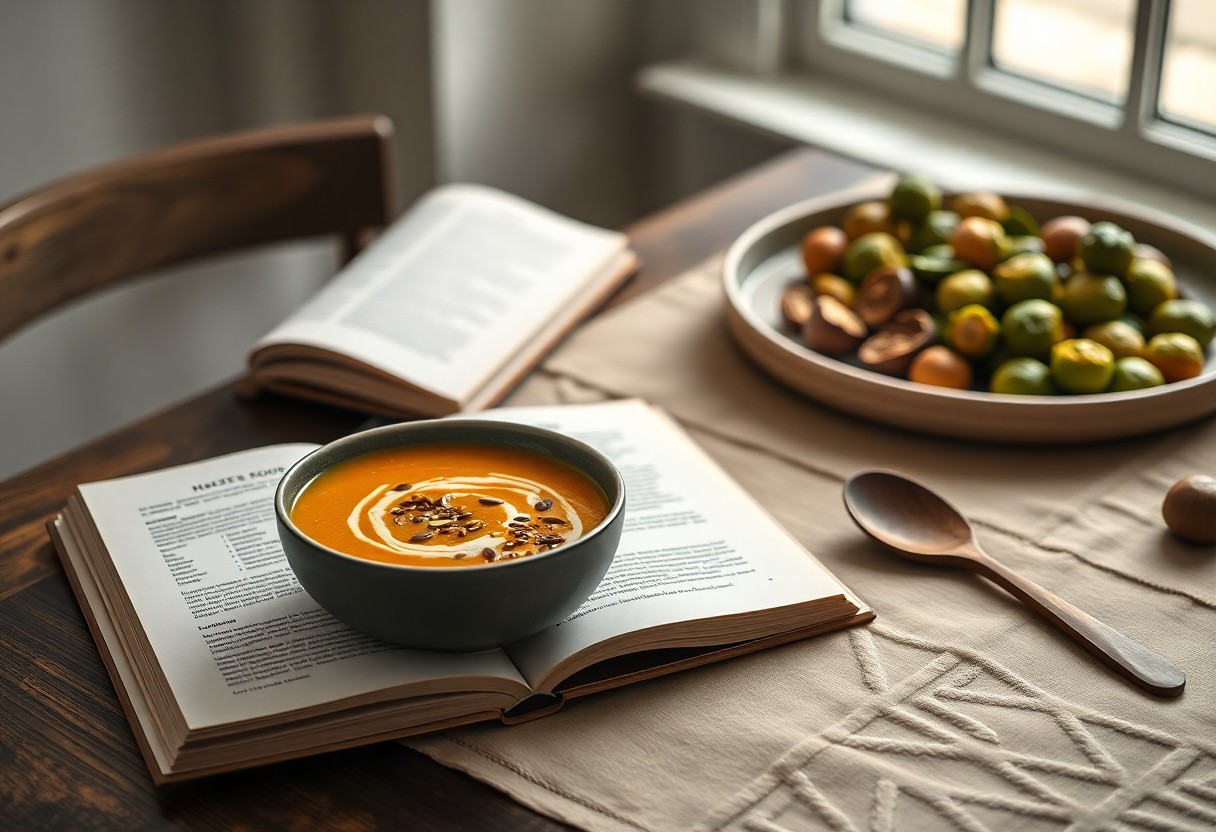
As temperatures drop, you’ll lean into roasting and braising to coax sweetness from squash, apples, and Brussels sprouts; roast squash at 400°F for 25-30 minutes tossed with maple and thyme for best caramelization. Try pairing 1 cup roasted vegetables with hearty greens and a grain, or fold them into soups and stews that simmer 20-40 minutes to deepen flavors. Seasonal swaps-kale for chard, pears for apples-keep your menus fresh while using pantry staples like nuts and whole grains.
Hearty Grain Bowls
You’ll build autumn bowls around farro, barley or quinoa-cook times vary: quinoa 15 minutes, farro 25-30 minutes, barley 30-40 minutes; use a 1:2 grain-to-water ratio. Add 1 cup roasted sweet potato cubes, 1 cup shaved Brussels sprouts, toasted walnuts and 2 tablespoons of a lemon-tahini dressing (2 tbsp tahini, 1 tbsp lemon juice, 1 tsp maple syrup). Aim for 1 cup cooked grain per person and finish with herbs like parsley or sage.
Root Vegetable Casseroles
You can layer parsnips, carrots, potatoes and beets for a rustic casserole that bakes well at 375°F for 40-50 minutes covered; use 1-1.5 pounds total of roots for a 9×13 dish. Experiment with 1 cup grated Gruyère or a cashew cream (soak 1 cup cashews, blend with 1/2 cup water) for a creamy finish, and top with 1/2 cup breadcrumbs for crunch.
When assembling, slice roots uniformly-about 1/4 inch thick-to ensure even cooking; parboil firmer roots 5-7 minutes if you prefer a shorter bake. Layer with 1/2 cup diced onions, 2 cloves minced garlic, 1/2 cup vegetable stock and 2 tbsp flour to help thicken juices, seasoning with 1 tsp each of thyme and rosemary. Finish uncovered for 10-15 minutes to brown the top and let rest 10 minutes before serving so the casserole sets.
Winter Vegetarian Recipes
Root vegetables like parsnips, rutabaga and beets shine roasted at 425°F for 35-45 minutes; you’ll get caramelized edges and deep flavor when tossed with 2 tbsp olive oil and 1 tsp salt per pound. Citrus-blood oranges and clementines-brighten braises and salads, while kale and collards add 100% daily vitamin K and fiber to stews. Aim to build meals around storage squash, winter greens and legumes for sustained warmth.
Cozy Soups and Chilis
Hearty soups and chilis reward low-and-slow cooking: split red lentils soften in 15-20 minutes, while dried beans need an 8-12 hour soak or 20-25 minutes in a pressure cooker. You can make a roasted butternut soup with 1.5 lb squash, 1 onion and 4 cups stock, or a black bean-chipotle chili using 2 cups cooked beans, 1 can diced tomatoes and 1-2 chipotles for smoky heat.
Comforting Baked Dishes
Casseroles and gratins provide oven-warmed comfort-think a lentil shepherd’s pie using 2 cups cooked lentils topped with 4 cups mashed potato, baked at 400°F (200°C) for 20-25 minutes until golden. You can also layer roasted root vegetables with 1 cup béchamel in a 9×13 pan, top with 1 cup grated cheese and bake 35-40 minutes; these dishes feed 6-8 and reheat well.
When you layer textures and timing, par-cook dense vegetables for 10-15 minutes before assembling and use a topping with 25-30% fat (butter or olive oil) for crispness. Adopt a make-ahead plan: assemble and refrigerate up to 48 hours or freeze for 2-3 months; when baking from frozen, cover and bake 45-60 minutes at 375°F (190°C), uncovering for the last 10-15 minutes to brown the top.
Seasonal Ingredient Spotlight
Spring Produce
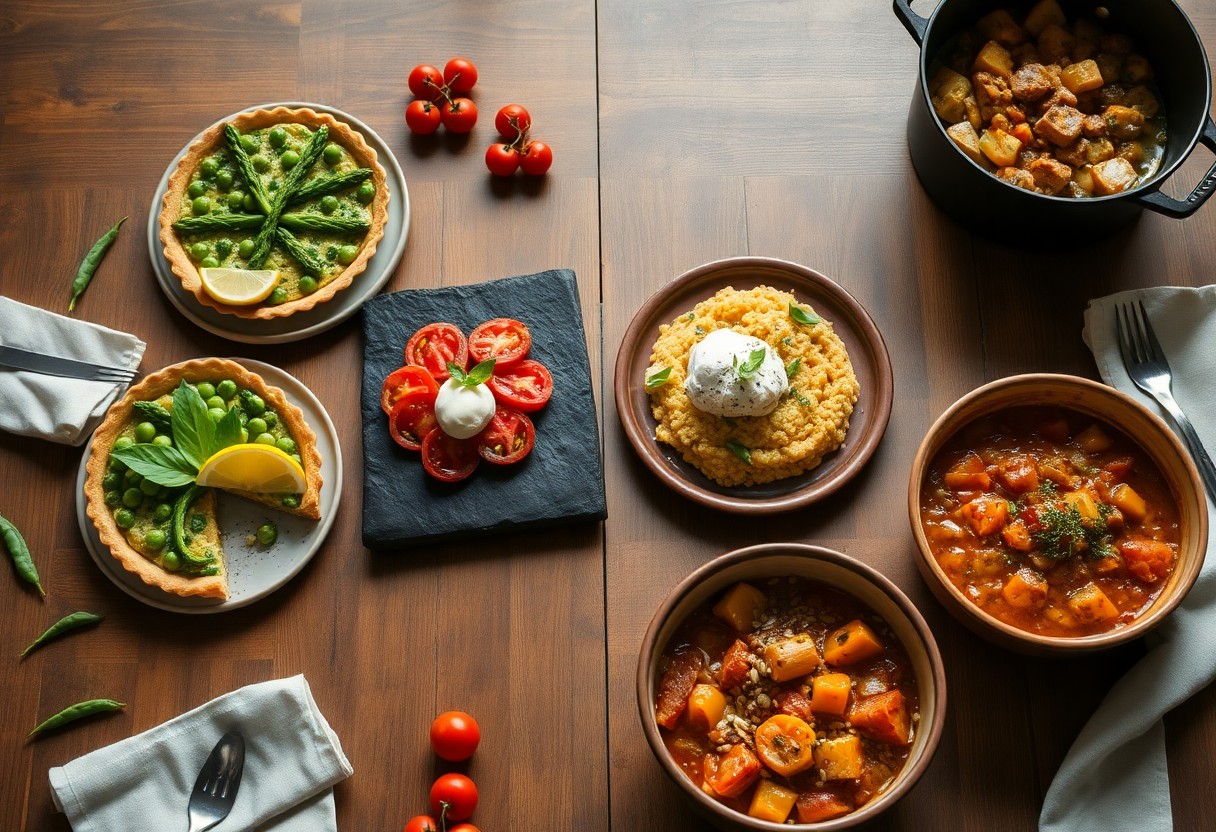
When you cook in spring, prioritize asparagus, English peas and ramps; asparagus typically peaks April-June, peas are sweetest within days of shelling, and ramps have a 2-4 week window in April-May. You can toss peas into quick pasta, shave raw asparagus into salads, and use ramps sparingly for bold, garlicky notes-each adds tender texture and early-season freshness that shifts dishes from heavy winter fare to lighter plates.
Summer Bounty
During summer you’ll lean on tomatoes, sweet corn, zucchini, eggplant and stone fruits at their height-think July-August for peak flavor. Tomatoes deliver concentrated lycopene when fully ripe, corn loses sweetness within 24 hours of harvest so buy local or blanch quickly, and abundant zucchini invites grilling, ratatouille or quick pickles to stretch prolific yields across weeks.
You should preserve summer’s surplus: roast tomatoes then freeze or can them, blanch corn kernels 3-4 minutes before freezing, and halve-and-salt stone fruits for quick compotes. Try a blistered tomato salsa or a charred corn salad with lime and cotija; those techniques maximize flavor and give you easy bases for weeknight meals.
Autumn Harvest
As autumn arrives, you’ll work with butternut, acorn and kabocha squash, apples (Gala, Fuji, Granny Smith) and Brussels sprouts-prime from September through November. Roasting concentrates sugars, braising softens fibrous squash flesh, and apples bring bright acidity for slaws, tarts or reductions that balance earthy roots and savory dishes in cozy meals.
You can store winter squash 2-3 months in a cool, dry spot and keep apples refrigerated for several weeks to extend their use; roast squash with sage and maple, make a 1:1 apple-onion base for sautés, or shred apples into quick breads to use excess fruit while it’s at peak texture.
Winter Staples
In winter you’ll rely on hardy staples: carrots, parsnips, beets, cabbage, kale and citrus-citrus peaks December-February and adds bright acidity to heavy dishes. You can roast roots at 400-425°F to develop caramelization, slow-braise cabbage for depth, or use citrus zest and juice to lift braised greens and root mash for balanced winter plates.
You should store roots in sand or perforated bags in the fridge to preserve texture, keep cabbage for 4-6 weeks refrigerated, and use citrus for dressings and marinades-braised beets with orange vinaigrette or carrot-ginger soups showcase how winter produce delivers sustained flavor through long, cold months.
Meal Prep Tips for Seasonal Cooking
Smart Batch Prep
Plan a Sunday session to wash, chop and roast 3-4 types of seasonal vegetables-roast squash and beets at 400-425°F for 35-45 minutes, blanch peas for 1 minute, and sauté greens for 3-4 minutes; package 2-3-serving portions in airtight glass containers and refrigerate up to 4 days or freeze for 8-12 weeks. Recognizing the time saved during busy weekdays helps you stick to seasonal eating and reduces food waste.
Quick Checklist
- When you roast on 2 sheet pans at once you double yield-aim for 6-8 portions per tray so you can mix proteins and grains later.
- Portion into 1-2 cup servings so you can combine components quickly into 3-4 ready meals for the week.
- Label each container with date and contents, and you’ll rotate the oldest first; freeze extras for up to 3 months to cut waste.
Final Words
With these considerations you can adapt comforting vegetarian recipes across seasons by leaning on seasonal produce, simple preservation, and flexible techniques. You should build meals around grains, legumes, and pantry staples so your cooking stays nourishing and efficient, adjust spices and textures to suit the weather, plan batch cooking and ingredient swaps confidently, and prioritize balanced flavors and satisfying textures to keep meals appealing year‑round.

Leave a Reply