
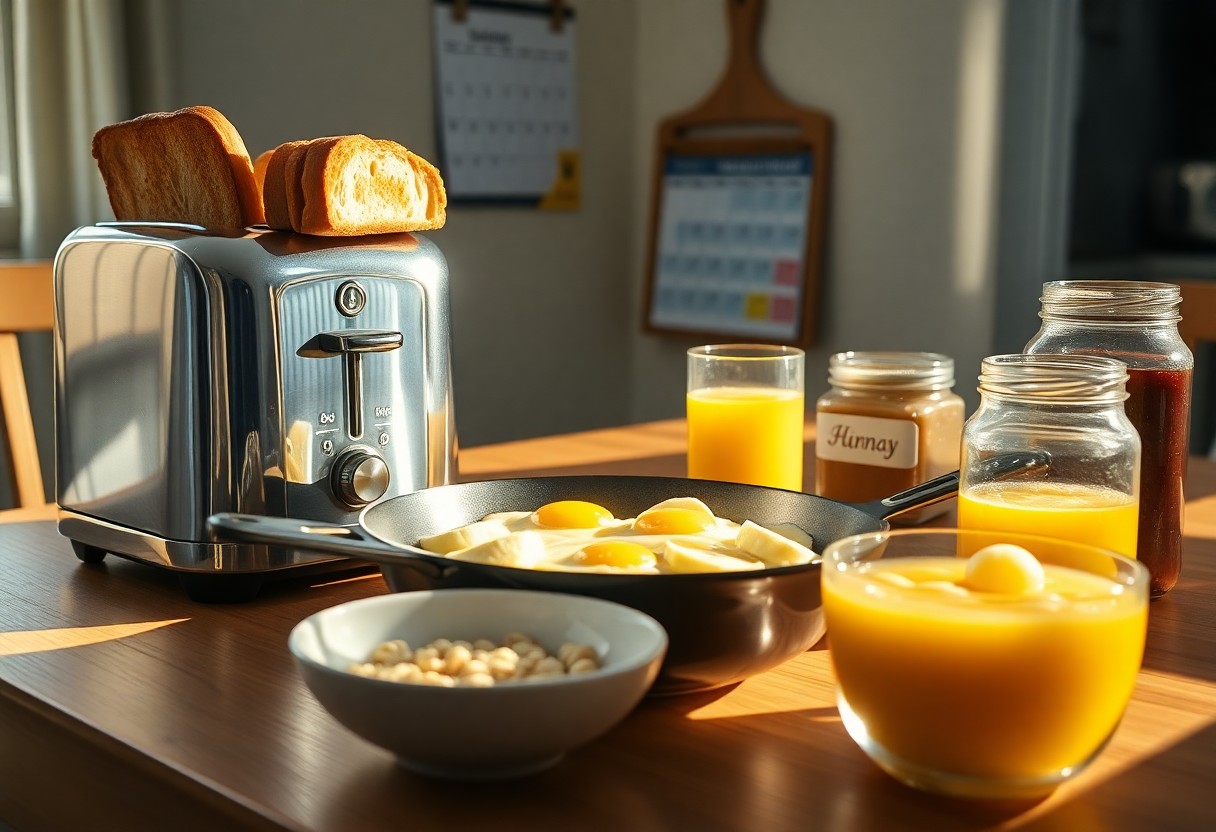
You can build a dependable weeknight menu with easy, wholesome recipes that fit your schedule and satisfy your family. This guide gives straightforward techniques, pantry-friendly staples, and adaptable meal templates so you can streamline prep, boost flavor, and customize dishes to your family’s tastes without fuss.
Key Takeaways:
- Use simple, versatile pantry staples and whole ingredients to keep meals fast and healthy.
- Prioritize quick prep, flexible substitutions, and one-pot or sheet-pan methods to save time.
- Cook family-sized batches, plan leftovers as new meals, and involve kids to build skills and enjoyment.
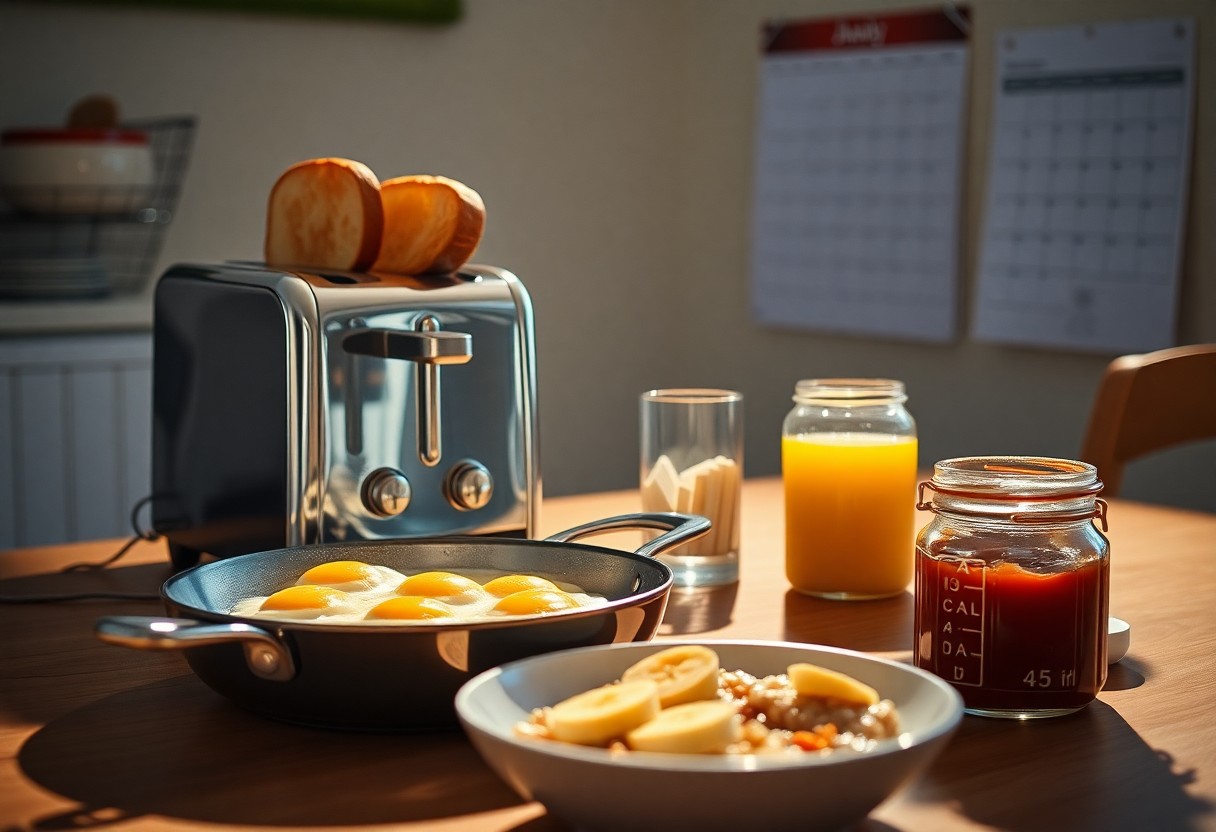
Weekday Breakfast Ideas
When mornings are tight, rotate five simple breakfasts you can make in 10 minutes: scrambled eggs with spinach, Greek yogurt with berries and granola, avocado toast with a poached egg, a banana-peanut butter smoothie, and microwaved sweet potato topped with cottage cheese. Prep one or two components-hard-boiled eggs, chopped fruit, cooked grains-on Sunday to cut weekday assembly to under 5 minutes and keep variety without extra dishes.
Quick Omelettes
For a fast, protein-packed start, whisk 2-3 eggs with 1 tablespoon milk, salt, and pepper, then pour into an 8-inch nonstick pan over medium heat; cook 1-2 minutes until edges set, add 1/4 cup cheese and 1/2 cup pre-sautéed vegetables, fold and slide onto your plate. If you prep fillings the night before, you can have a hot omelette in about 5 minutes; try spinach-feta, mushroom-cheddar, or ham-pepper combos.
Overnight Oats Variations
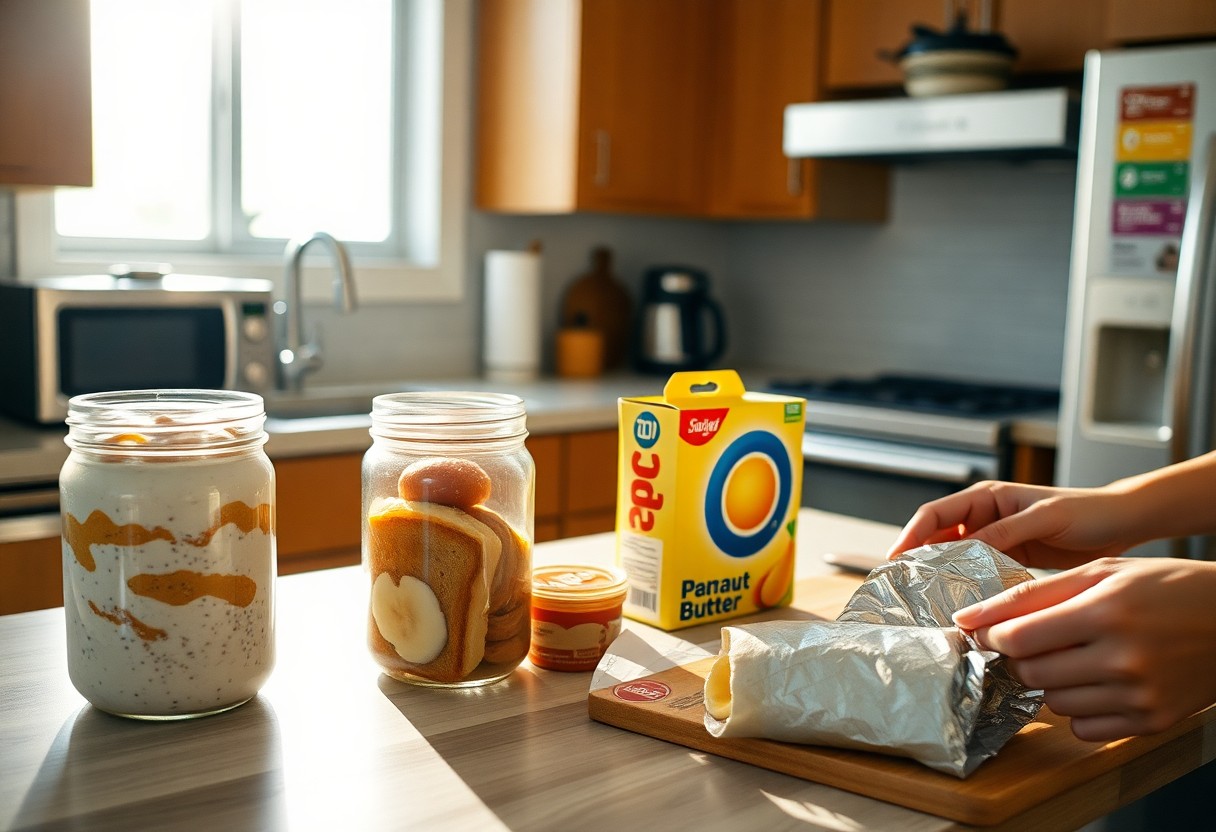
Use a base of 1/2 cup rolled oats, 1/2 cup milk or yogurt, and 1 tablespoon chia seeds; refrigerate 6-8 hours. Try Classic (1 tsp honey, 1/2 cup berries), PB-Banana (1 tbsp peanut butter, sliced banana), or Apple Pie (1/4 cup grated apple, 1/2 tsp cinnamon, 1 tbsp raisins). Pack in jars for grab-and-go breakfasts you can eat cold or warmed.
Adjust texture by swapping rolled oats for quick oats (softer) or increasing liquid by 2-4 tablespoons for a looser consistency; using Greek yogurt adds about 10-15 grams more protein per serving than milk alone and keeps oats creamier. Store jars up to 3 days, layer crunchy toppings like 1-2 tablespoons chopped nuts or seeds just before eating, and scale recipes easily-double the base to make four servings for weekday convenience.
Simple Lunch Recipes
Focus on 10-20 minute meals that slot into your weekday routine: paninis pressed in 5 minutes, grain bowls assembled in under 15, or soups simmered about 20 minutes. Aim for balance-one cup vegetables, 3-4 oz protein, and whole grains-to target roughly 400-600 kcal per meal. Use leftovers like roasted chicken and cooked quinoa to cut prep time to 5 minutes, and rotate 4-6 core recipes to keep lunches varied without extra shopping.
Hearty Sandwiches
Choose sturdy breads and stack 3-4 oz lean protein with vegetables so sandwiches hold up to grilling or packing. You can grill a turkey-and-Swiss panini for 3-4 minutes per side, mash 1 cup chickpeas with 1 tbsp mayo for a vegetarian filling (≈12 g protein), or make a caprese with basil and balsamic. Pressing adds crisp texture; pack dressings separately when you’ll eat later to avoid sogginess.
Salad Bowls with Protein
Build bowls with a base of greens or 1/2 cup cooked grains, 3-4 oz protein, plus 1 cup roasted or raw vegetables; proteins to rely on include roasted chicken (3 oz ≈26 g), canned tuna (one 5‑oz can ≈20-25 g), or 1 cup chickpeas (≈15 g). Use a 3:1 oil-to-acid dressing ratio and add a tablespoon of nuts or seeds for healthy fats to reach about 400-600 kcal per bowl.
Batch-cook proteins to streamline assembly: roast two 6-8 oz chicken breasts at 400°F for 20-25 minutes, bake salmon fillets at 375°F for 12-15 minutes, or press and pan-sear tofu after a 15‑minute press. Cook quinoa at a 1:2 grain-to-water ratio for 15 minutes. Store components separately in airtight containers for 3-4 days and assemble just before eating to preserve texture and flavor; adjust portions (3-4 oz protein, 1/2-1 cup grains, 1-2 cups veg) to meet your macro or calorie goals.
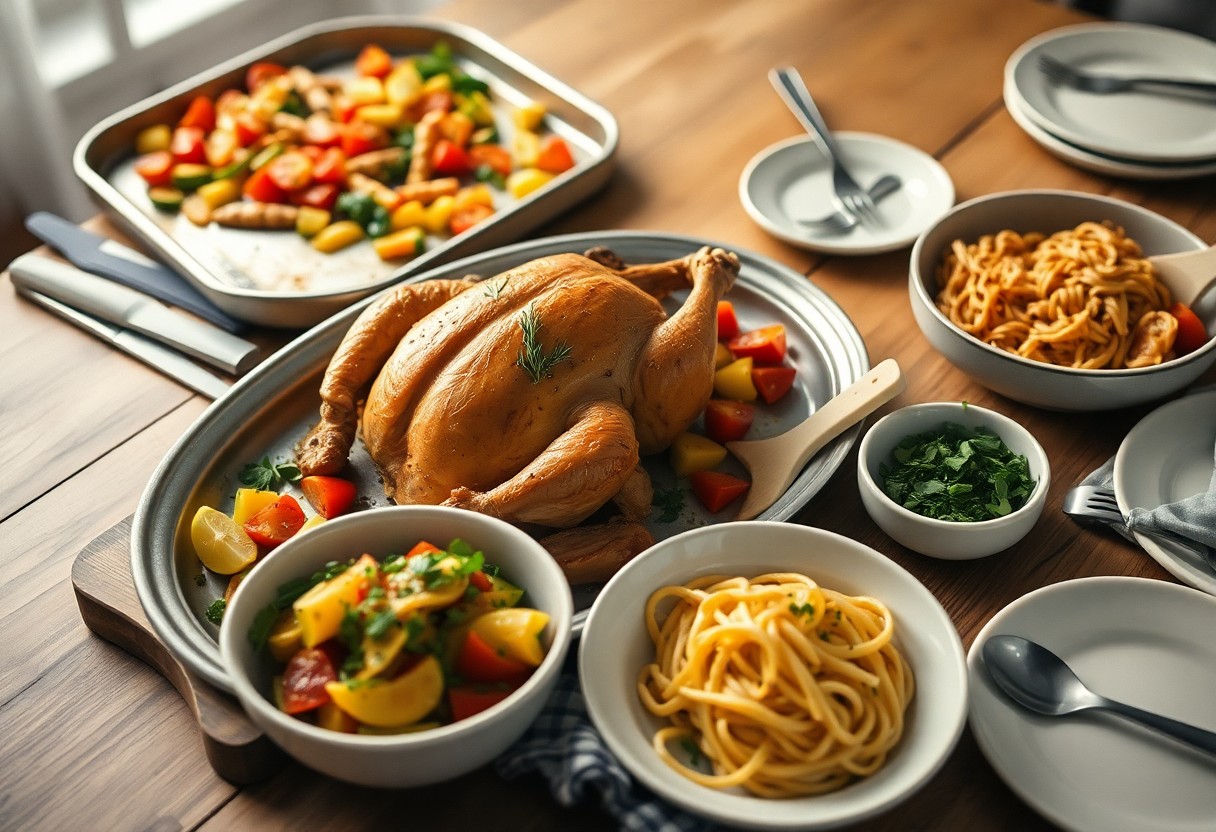
Easy Dinner Solutions
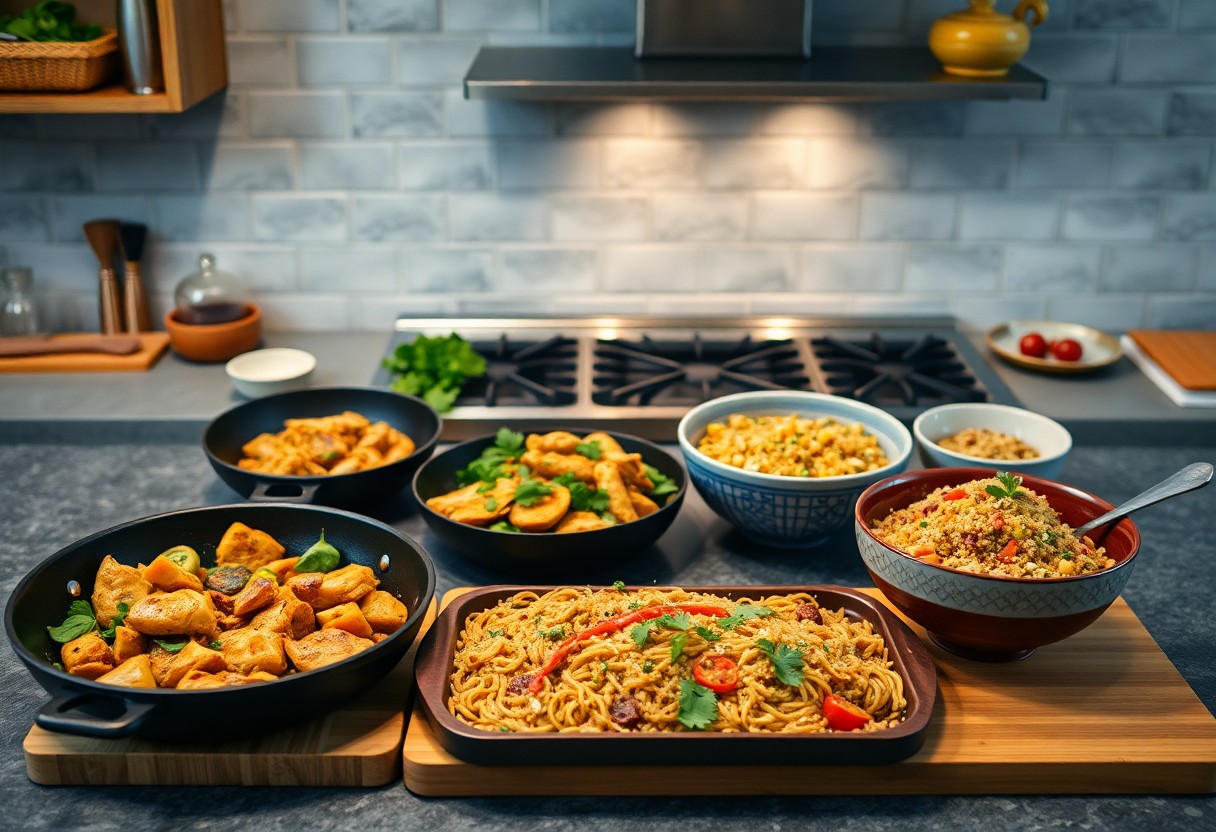
When weeknights get busy, lean on 20-30 minute mains and make-ahead options that scale to your family size; you might rotate a 20-minute pan-seared salmon with lemon and broccoli, a 25-minute pasta primavera with chickpeas for protein, and a 30-minute stir-fry using 1 lb chicken to feed four. Use batch-cooked grains and a jarred sauce to cut prep time and keep dinners consistent.
One-Pan Dishes
You can feed four with a single sheet pan: roast 1.5-2 lb chicken thighs with 1 lb mixed root vegetables at 425°F for 25-30 minutes, or toss sliced sausage, bell peppers, and onions for 20 minutes. Skillet options like shrimp and rice take 15-20 minutes and require one pan for sautéing and finishing, saving cleanup and preserving flavor.
Slow Cooker Favorites
For hands-off dinners you can set in the morning, use slow cooker recipes: pulled pork needs 8-10 hours on low for tender shredding, a pot of chili cooks well at 6-8 hours low, and shredded chicken for tacos is done in 4-5 hours on high. Portion to 4-6 servings and use frozen vegetables to simplify prep.
Layer ingredients with denser items on the bottom and add quick-cooking vegetables in the last hour; for most stews 2-3 cups of broth for a 4-serving batch keeps texture right. You may brown meat first for depth, though it’s optional. Keep the lid closed-6-8 hours on low equals 3-4 hours on high-and ensure poultry reaches 165°F before serving.
Family-Friendly Snacks
You can keep snacks simple and portable with 3-ingredient combos kids love: apple slices with 2 tbsp peanut butter and 1 tbsp raisins, mini turkey-and-cheese roll-ups, or yogurt cups topped with 2 tbsp granola. Aim for 10-minute assembly and batch-prep 3-4 snack bags on Sunday to save time. Offer one fresh fruit, one protein, and one crunchy element per plate to balance energy through after-school hours.
Homemade Granola Bars
Make 12 bars in about 30 minutes total: 10-minute prep and 20-minute bake at 350°F (175°C). Combine 3 cups rolled oats, 1 cup nut butter, 1/2 cup honey, 1/2 cup chopped nuts, and 1/2 cup dried fruit; press into an 8×8 pan and bake. You can swap almond butter for peanut to suit allergies; bars keep 5 days refrigerated or freeze up to 2 months.
Veggie Dips and Chips
Start with a basic hummus: blend one 15‑oz can chickpeas (drained), 2 tbsp tahini, juice of 1 lemon, 1 garlic clove, 2 tbsp olive oil, and salt to taste-this yields about 2 cups. Pair with baked pita chips, sliced cucumbers, carrot sticks, or air-fried sweet potato chips. You’ll stretch dips across 4-6 snacks and store hummus 4-5 days refrigerated.
For variety, make tzatziki by mixing 1 cup Greek yogurt, 1 grated cucumber (squeezed), 1 tbsp lemon juice, 1 tbsp chopped dill, and 1/2 tsp salt; a 1/2-cup serving provides roughly 110 kcal and about 10 g protein. You can also roast red peppers and blend into hummus for smokiness, portion dips into six 4‑oz jars for grab-and-go convenience.
Desserts for All Ages
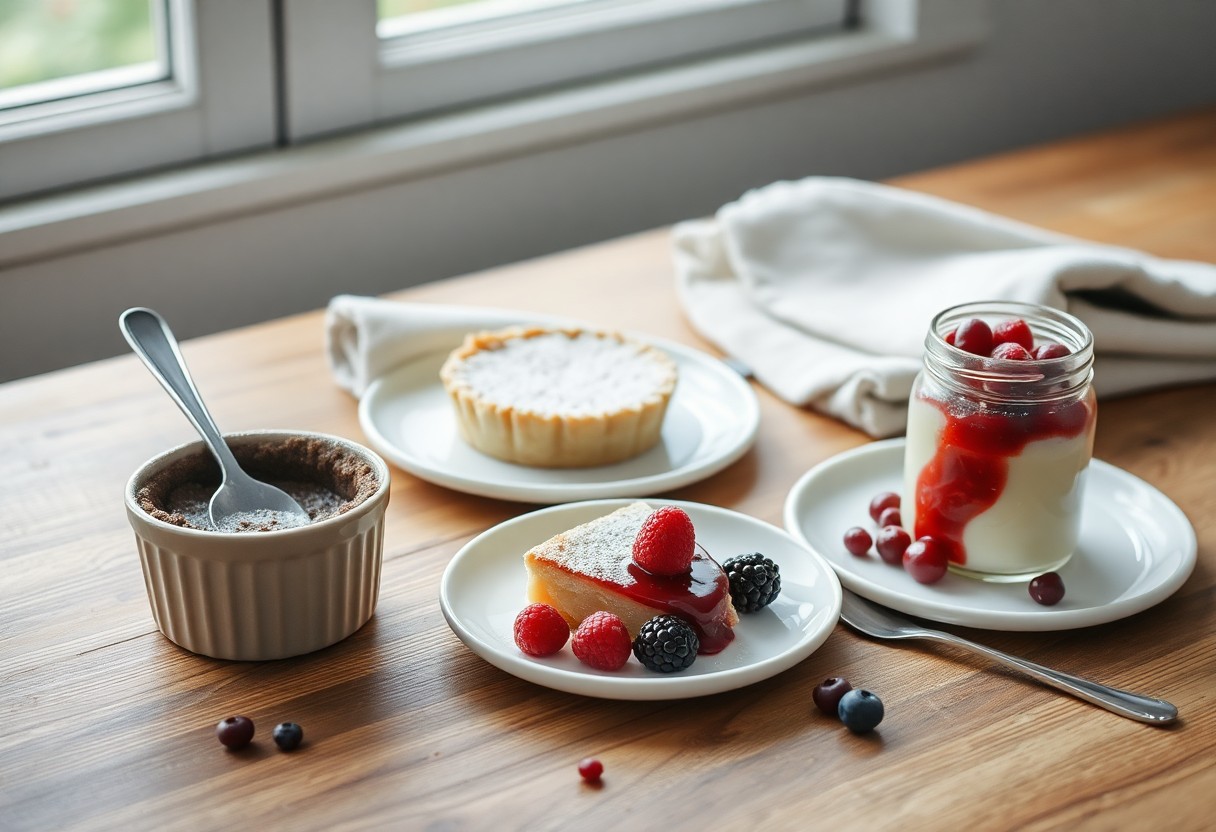
Balance quick and comforting desserts that suit toddlers through teens: a 9×13 fruit crisp serves 12, individual pudding cups take 10 minutes and chill for 30, and banana bread needs 10 minutes prep plus 50 minutes bake. You can scale portions, swap in seasonal fruit, or make two mini batches for picky eaters, keeping weeknight dessert simple without extra fuss.
No-Bake Treats
You can throw together energy bites in 10 minutes-mix 1 cup rolled oats, 1/2 cup peanut butter, 1/3 cup honey and 1/3 cup chocolate chips to yield about 12 bite-sized balls, chill 30 minutes. For variety, layer no-bake cheesecake cups with 1 cup whipped cream cheese, 1/2 cup powdered sugar and graham crumbs, then refrigerate an hour for easy, portable servings.
Simple Cake Recipes
You’ll rely on fast options: mug cakes in 90-120 seconds for single servings, a 9×13 sheet cake baked 25-30 minutes at 350°F (175°C) to feed 12, or a box-mix upgrade-add 1 cup sour cream, 3 eggs and 1/3 cup oil to a standard mix-to get moist results with minimal effort.
For a from-scratch 8-inch vanilla cake you can use 1 3/4 cups (220 g) all-purpose flour, 1 cup (200 g) sugar, 2 tsp baking powder, 1/2 tsp salt, 2/3 cup (160 ml) milk, 2 large eggs, 1/3 cup (80 ml) vegetable oil and 2 tsp vanilla; mix, pour into a greased pan and bake 25-30 minutes at 350°F (175°C) until a toothpick comes out clean.
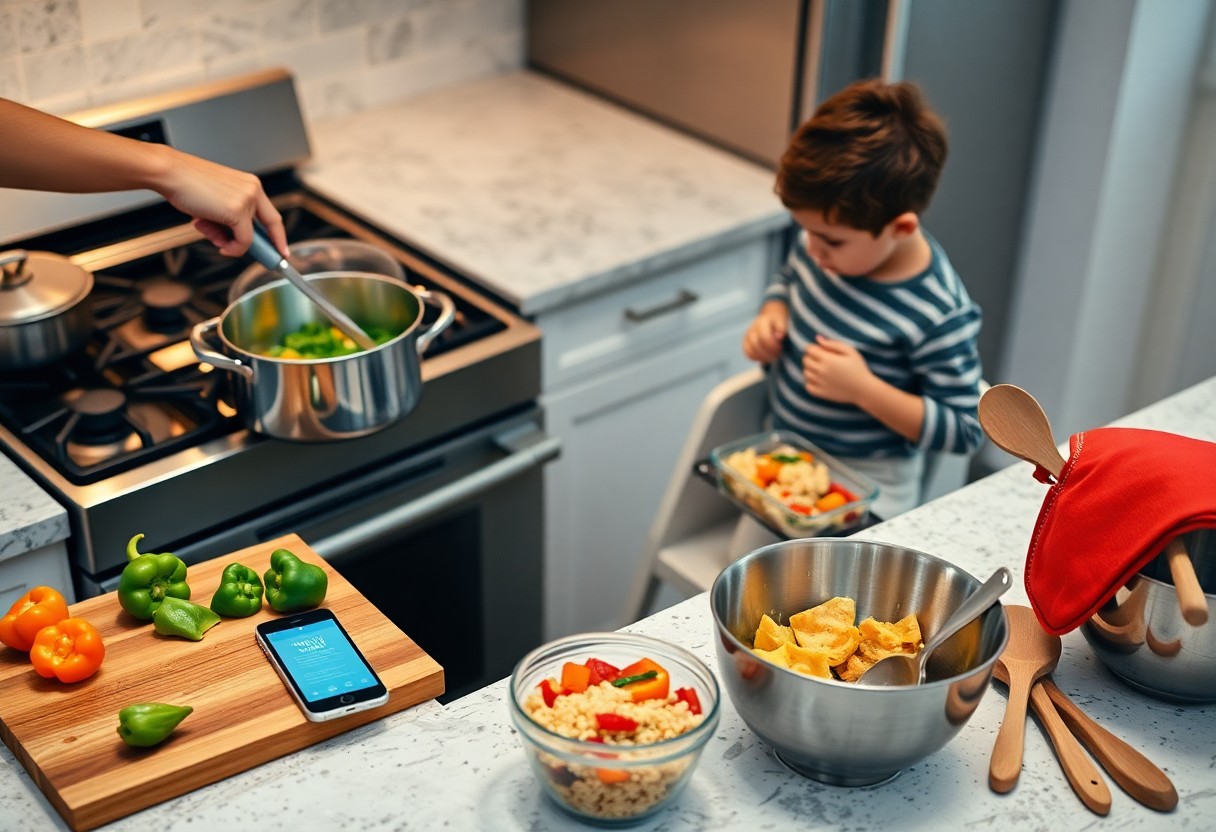
Cooking Tips for Busy Families
When evenings compress and you need dinner fast, front-load work: batch-roast 2-3 proteins on Sunday to yield 6-9 portions, chop vegetables for 3-4 days, and pre-cook grains so weeknight assembly takes 10 minutes. Try 30-minute sheet-pan meals twice weekly and keep 4-6 freezer-ready portions labeled with date. Track staples-frozen peas, canned tomatoes, rice-for 80% of quick meals. Thou assign theme nights (Mexican, Italian, Stir-fry) to cut decision time.
- Batch-cook proteins (2-3 types) and freeze in 4-6 serving portions
- Prep grains and legumes for 3-4 days of lunches
- Use 30-minute sheet-pan or one-pot dinners twice per week
- Keep a 7-day rotating grocery list to reduce shopping time
Meal Prepping Essentials
You should have three container sizes-2-cup, 4-cup, and 8-cup-plus airtight lids and labels; frozen meals last 2-3 months, refrigerated prep lasts 3-4 days. Cook 2 lb chicken to yield about six 4-oz portions, roast a 3-lb pork shoulder into 6-8 dinners, and portion grains in 1-cup servings. Use silicone muffin tins to freeze sauces and single-serve dressings for easy thaw-and-serve meals.
Ingredient Substitutions
When you’re out of an item, swap Greek yogurt 1:1 for sour cream, replace one egg in baking with 1/4 cup applesauce, and make 1 cup buttermilk by adding 1 tbsp vinegar or lemon to 1 cup milk and letting it sit 5 minutes; canned beans (1 cup) supply roughly 15 g protein and can replace 4 oz cooked meat in many recipes. Test texture in small batches before scaling.
Taste as you go and adjust seasoning: use 1 tsp dried herb for 1 tbsp fresh, thin Greek yogurt with a splash of milk to mimic cream, and purée cooked cauliflower to replace half mashed potatoes for a lighter side. For savory swaps, silken tofu blends into sauces as a cream substitute; try changes on 1-2 servings before serving the whole family.
To wrap up
Upon reflecting on simple family recipes for everyday cooking, you can see how reliable staples, flexible ingredients, and straightforward techniques make it easy to feed loved ones well with minimal stress. Use batch-cooking, season-to-taste approaches, and versatile sauces to streamline meal planning while keeping flavors varied. With a modest pantry and consistent routines you build confidence, save time, and ensure nourishing meals become part of your daily rhythm.

Leave a Reply