
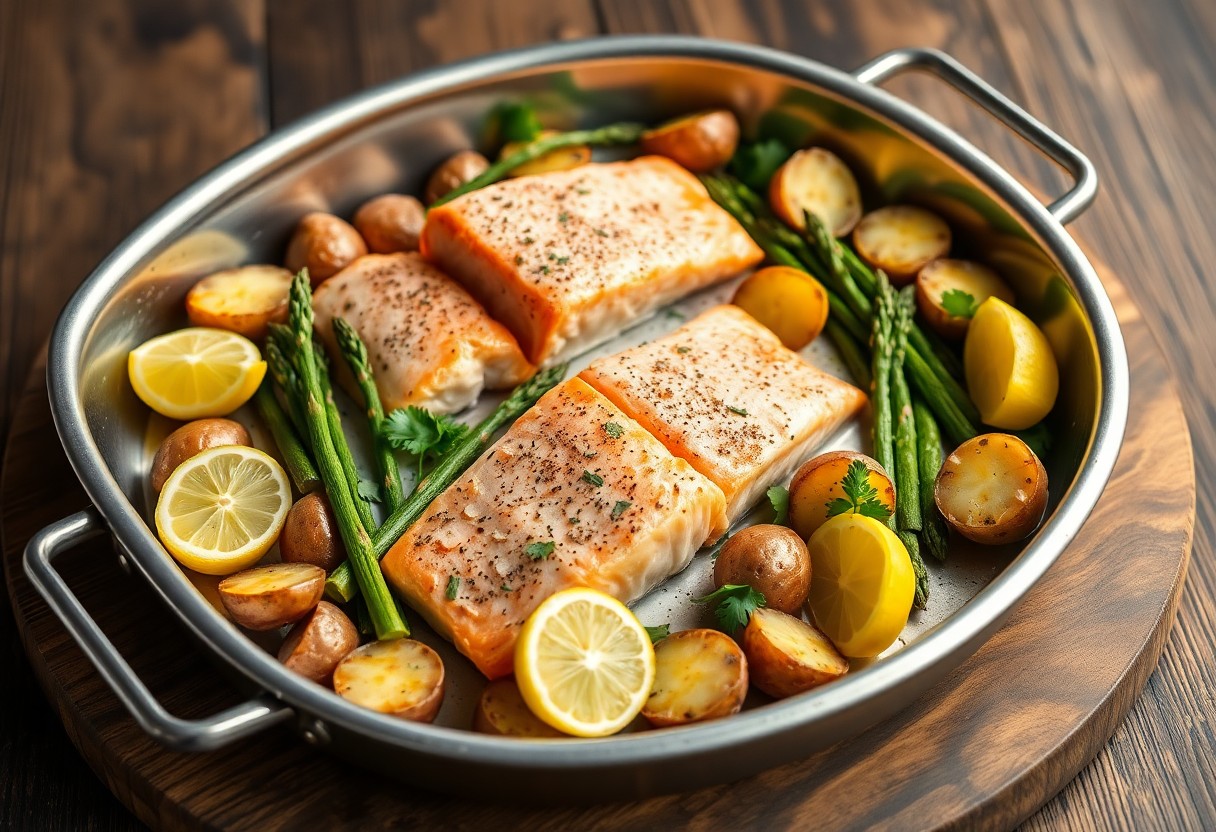
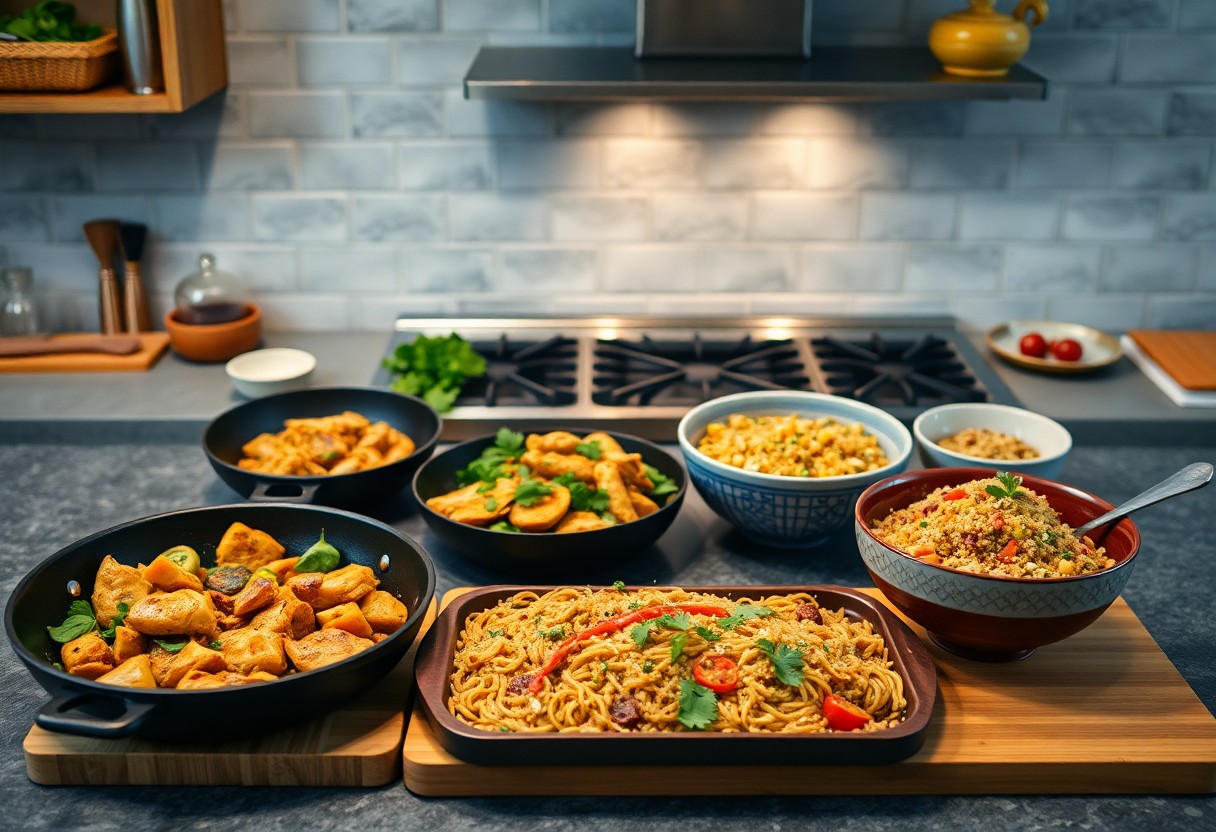
Just toss your proteins, vegetables, and starch together in one pan so you can create balanced, flavorful meals with minimal effort and cleanup; you’ll learn timing, seasoning, and simple techniques that make one-pan cooking efficient and adaptable to your schedule, dietary needs, and pantry staples.
Key Takeaways:
- Minimize cleanup and cook time by preparing protein, vegetables, and starch together in a single pan.
- Highly adaptable-swap proteins, vegetables, and seasonings to fit dietary needs and pantry staples.
- Excellent for batch cooking and leftovers; sheet-pan and skillet methods reheat well and save time.
Benefits of One-Pan Meals
You cut down on multitasking by cooking protein, veg, and starch together, which often reduces total dinner time by 20-40% and simplifies grocery lists. For example, a sheet-pan chicken with potatoes and Brussels sprouts cooks in about 30-40 minutes with one seasoning blend, while a skillet shrimp and rice comes together in 15-20 minutes, making planning and portioning easier for weekly meal prep.
Time-Saving Convenience
You shave off prep and active cooking minutes because everything cooks at once; sheet-pan dinners typically require 10-15 minutes of prep and 25-40 minutes in the oven, and one-skillet sautés can finish in 10-20 minutes. Meal batches scale well – cook for two or six without extra steps – and you can use oven-timed methods to free you up for other tasks while the meal finishes unattended.
Minimal Cleanup
You reduce post-meal dishes from roughly four to one: pan, cutting board, and a single serving utensil. That cuts sink time dramatically and lowers dishwasher loads, so weeknight cleanup becomes a five- to ten-minute task instead of a half-hour chore.
You can further shrink clean-up effort by lining pans with foil or parchment for roasting, using nonstick skillets for saucy one-pot meals, and deglazing right in the pan to loosen fond. For tougher residue, soak the pan 10-15 minutes in warm water, then use a nylon scrubber or a baking-soda paste; with cast iron, dry promptly and rub a light oil to protect seasoning after cleaning.
Essential Tools for One-Pan Cooking
You want a compact toolkit: a 10-12-inch oven-safe skillet, a 9×13 rimmed sheet pan, and a 5-6 quart Dutch oven cover most one-pan recipes. A tight-fitting lid and a heat-resistant silicone spatula speed up searing and deglazing, while an instant-read thermometer and a microplane help you finish proteins and sauces with precision.
Recommended Cookware
Choose a 10-12-inch cast-iron or carbon-steel skillet for even searing and oven use to 500°F, a 9×13 rimmed sheet pan for roasted vegetables and proteins, and a 5-6 quart enameled Dutch oven for braises and stews. Stainless steel builds fond for pan sauces, and nonstick proves invaluable for eggs and delicate fish.
Kitchen Gadgets to Simplify Cooking
Keep an instant-read thermometer (reads in 2-5 seconds) to hit targets like 165°F for poultry and 145°F for fish, plus long tongs, a heat-resistant silicone spatula, a microplane for zest, and a digital timer. These gadgets reduce guesswork, speed transitions from stovetop to oven, and improve consistency across meals.
Use the thermometer to probe the thickest part of chicken or meatloaf, aiming for safe internal temps; rely on tongs and a silicone spatula to flip without piercing and losing juices. An oil mister gives even coating to sheet pans, and an immersion blender emulsifies pan sauces into silky finishes in seconds.
One-Pan Meal Ideas
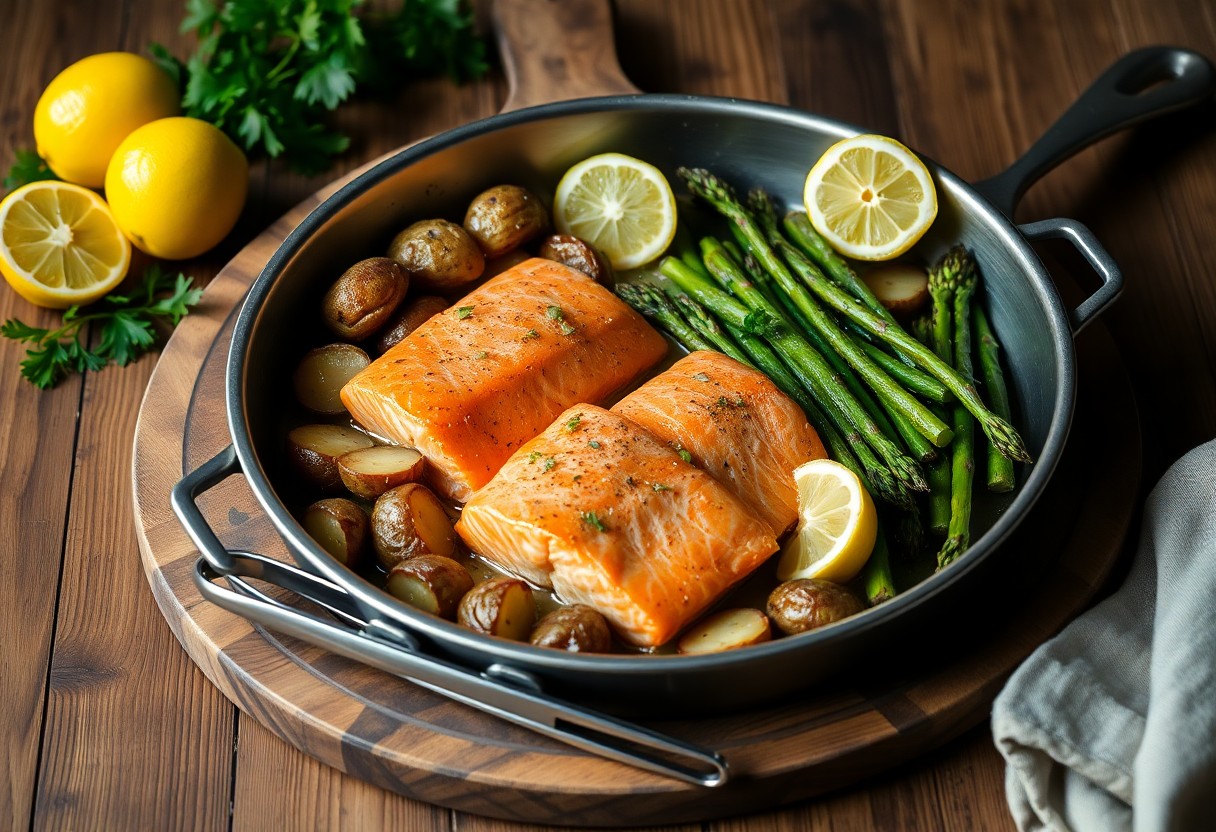
You can turn a single skillet or sheet pan into dinner for four in 25-40 minutes: think 10-12-inch skillet shakshuka with 6 eggs and two cans (15 oz) of tomatoes, sheet-pan salmon with asparagus at 425°F for 12-15 minutes, or a one-pot chicken and rice braise that yields tender thighs after 30 minutes covered. Use your 9×13 pan for even roasting and save 5-10 minutes by prepping veggies while proteins sear.
Vegetarian Options
You’ll find plenty of satisfying meatless meals that still pack protein and flavor: roast a tray of cauliflower, Brussels sprouts, and chickpeas at 400°F for 25-30 minutes with 1 tbsp olive oil and 1 tsp smoked paprika; make a 20-minute skillet lentil ragù using 1 cup dried lentils (or 2 cups cooked) and a 14 oz can of tomatoes; or toss halloumi, peppers, and zucchini for a 15-minute pan-grill that serves 2-3.
Meat-Based Dishes
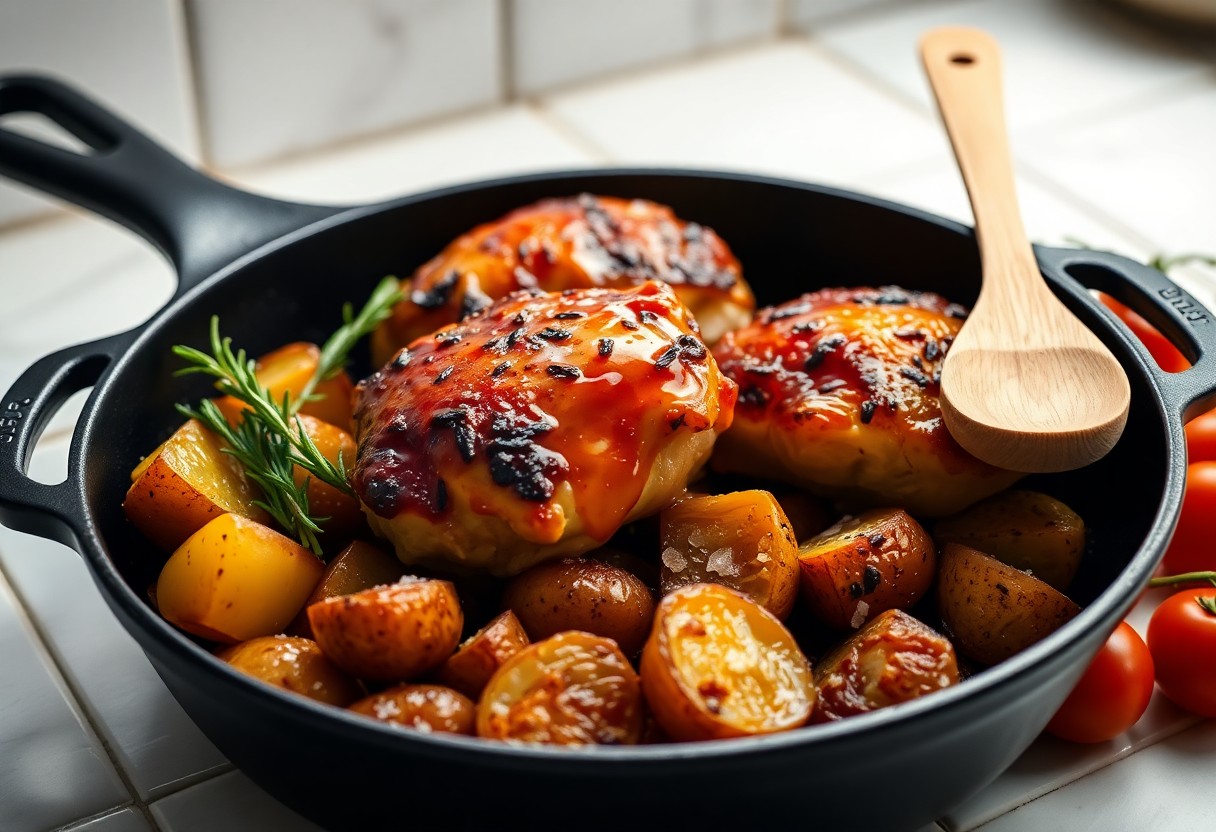
You should favor bone-in chicken thighs, pork tenderloin, and sausages for one-pan success because they tolerate high heat and stay juicy: sear thighs 4-5 minutes per side then roast at 425°F for 20-25 minutes until the internal temp reaches 165°F; roast a 1-1.5 lb pork tenderloin at 425°F for 20-25 minutes to 145°F and rest 5-10 minutes before slicing.
Dive into technique: use a hot pan to develop a 3-4 minute golden sear, then deglaze with 1/4 cup wine or stock to build a pan sauce, timing vegetables to go in during the last 12-20 minutes so carrots take longer than zucchini, and always verify doneness with a thermometer-165°F poultry, 145°F pork-to avoid overcooking while keeping cleanup to one vessel.
Flavor Enhancements
To lift one-pan dinners, layer flavor deliberately: toast 1 teaspoon ground spices for 30-60 seconds, add 2 cloves minced garlic and 1 tablespoon tomato paste to deepen color, then finish with 1 tablespoon butter or a squeeze of lemon for brightness. You can increase savory depth with 1 teaspoon soy sauce or 2 tablespoons miso diluted in 2 tablespoons water, and balance with a teaspoon of honey when sauce acidity needs taming.
Herbs and Spices
Use dried herbs early and fresh herbs at the end: add 1 teaspoon dried thyme or 1-2 sprigs rosemary when vegetables start browning, and stir in 1 tablespoon chopped parsley or basil in the last 1-2 minutes. You should toast whole spices like coriander or cumin seeds for 30-60 seconds, then grind; this releases oils and increases aroma by 30-50%, making small amounts go further in your one-pan meals.
Marinades and Sauces
Marinades follow a simple 3:1 oil-to-acid ratio: combine 3 tablespoons olive oil with 1 tablespoon lemon juice or vinegar, 2 cloves minced garlic, 1 teaspoon salt and 1 teaspoon smoked paprika; marinate fish for 15-30 minutes, chicken for 30-120 minutes, and tougher cuts up to 12-24 hours. You should pat proteins dry before searing to achieve a brown crust and reserve excess marinade for simmering into a sauce only after boiling.
When converting pan drippings into a sauce, deglaze with 1/2 cup stock or wine, scrape brown bits for 30-60 seconds, then simmer 3-5 minutes to concentrate flavor; whisk in 1 tablespoon butter or 1 tablespoon miso for umami, or thicken with a 1:1 cornstarch slurry (1 teaspoon cornstarch + 1 teaspoon cold water) over 1 minute. You should add sugary glazes in the last 2-4 minutes to avoid burning, and make quick chimichurri (1/4 cup parsley, 2 tbsp vinegar, 1/4 cup oil) as a bright finish.
Tips for Meal Prep
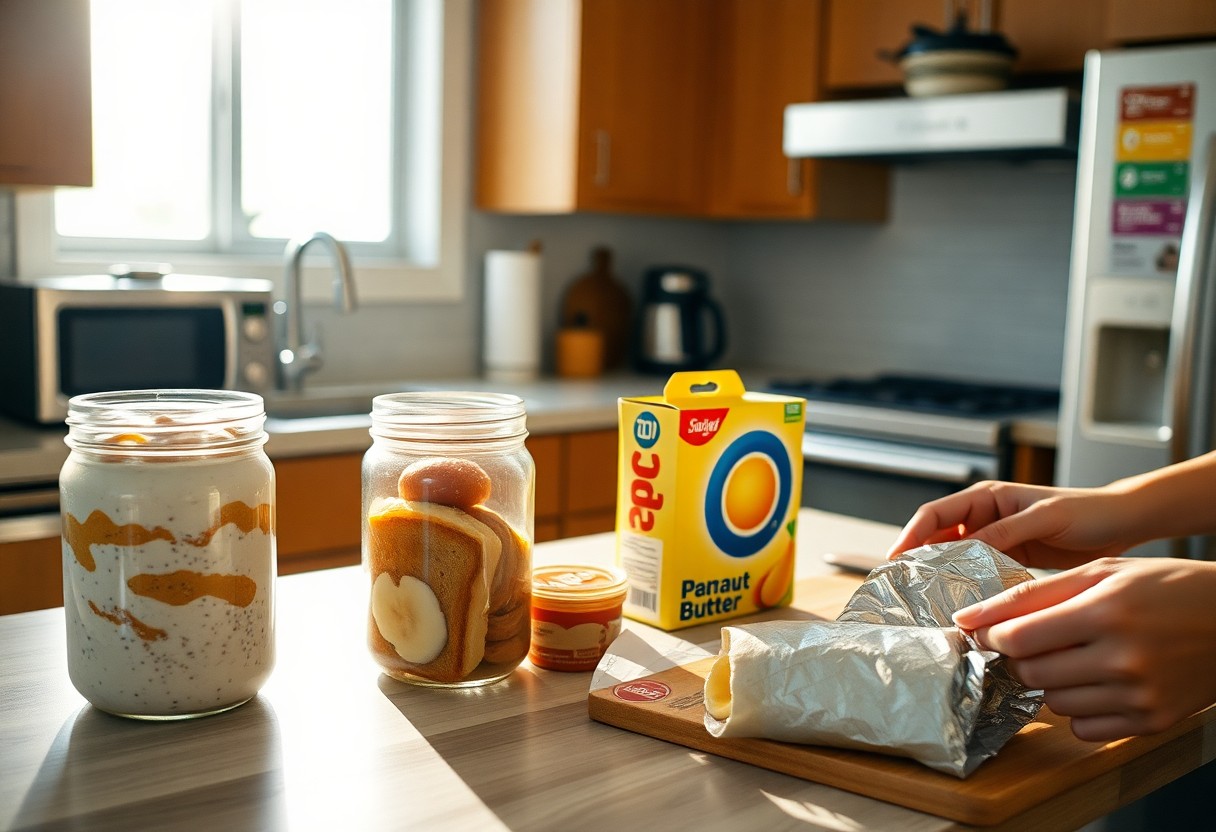
When you streamline prep, dinners come together faster and waste less: chop 1 lb vegetables, divide 1-1.5 lb protein into four portions, and pre-mix spice blends into 2-3 tsp packets.
- Label and date 2-cup meal containers;
- par-cook 2 cups rice or 1 lb potatoes for quick reheats;
- roast a 3-4 cup batch of veg for 2-3 nights;
- keep pre-sautéed garlic/onion in oil for up to 5 days.
The payoff: meals ready in 20-30 minutes and fewer decisions at dinner time.
Batch Cooking Strategies
You can convert a two-hour Sunday session into five dinners by roasting 2-3 lb chicken thighs, cooking 4 cups quinoa, and preparing a 6-8 cup tray of mixed vegetables; portion into 2-cup servings and freeze flat for 2-3 months. Stagger flavors-use a tomato-based sheet pan for one night and a lemon-herb batch for another-to avoid repetition and make reheating straightforward (microwave 3-4 minutes, oven 12-15 minutes at 375°F).
Storing Leftovers
You should cool food to fridge temperature within two hours and store in shallow, airtight containers at ≤40°F; consume within 3-4 days or freeze up to 3 months. Use clear labels with date and contents, separate wet sauces from starches when possible, and portion into single-meal sizes to speed reheating and reduce waste. Reheat leftovers to an internal 165°F for safety.
For best texture, reheat one-pan meals in a skillet over medium heat for 5-7 minutes, adding a splash of broth for saucier dishes; bake at 350-375°F for 10-15 minutes to revive crisped edges, or microwave covered for 1-3 minutes with a 30-second stir interval. Thaw frozen portions overnight in the fridge, and consider vacuum sealing or flash-chilling to extend freezer life and prevent freezer burn.
Dietary Considerations
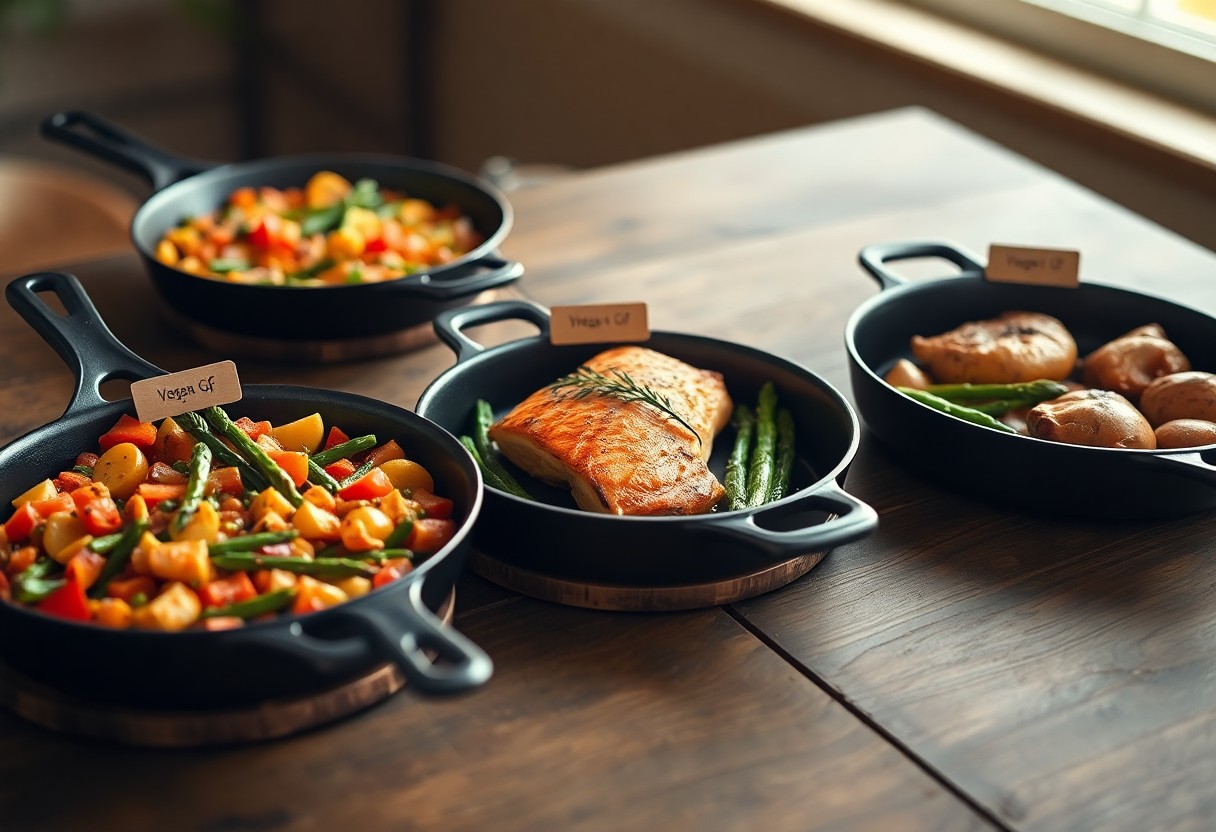
When tailoring one-pan dinners to dietary needs, you can swap ingredients and adjust portions to hit targets: for roughly 20-30 g protein per serving use 6-8 oz poultry or fish, if sodium matters limit sauces to 1 tablespoon and choose low-sodium broth, and to boost fiber increase vegetables to 2 cups per plate; simple swaps like quinoa for pasta or cauliflower rice for grains keep prep under 40 minutes and maintain one-pan convenience.
Gluten-Free Options
You can swap wheat pasta and flour tortillas for gluten-free staples: 1 cup quinoa (cooks in 12-15 minutes) or 2 cups cauliflower rice (ready in 5-7 minutes) work well in a single skillet; use tamari instead of soy sauce at about 1 tablespoon for flavor, and try sheet-pan fajitas with corn tortillas and 1.5 lb mixed peppers for a 25-30 minute family meal with no gluten-containing ingredients.
Low-Carb Recipes
You can choose low-carb bases like 2 cups cauliflower rice, 2 medium spiralized zucchinis (≈6 g carbs), or 1 cup roasted spaghetti squash per person to keep meals under 30 g net carbs; plan 4-6 oz protein portions and use one-pan skillet meals with 1 lb protein plus 12 oz nonstarchy veg to serve four in 25-35 minutes.
You can focus on fiber and healthy fats to increase satiety: add 2 tablespoons olive oil, ¼ cup chopped nuts, or 1 avocado per plate. When roasting, arrange ingredients in a single layer-1 lb chicken thighs with 10 oz Brussels sprouts and 2 tablespoons oil roast at 425°F for 25-30 minutes. Track carbs: cauliflower rice (1 cup) ≈5 g, zucchini (1 medium) ≈3 g so you can balance meals precisely.
Conclusion
With these considerations guiding your choices, one-pan meals let you streamline dinner prep, balance flavors and nutrition, and minimize cleanup so you can cook confidently on busy nights; experiment with seasonings, textures, and sheet-pan or skillet techniques to keep meals varied, scale portions to suit your household, and build a rotating repertoire that saves time and stress.

Leave a Reply