
Just a few smart techniques let you serve satisfying, budget-friendly family meals without sacrificing flavor. You’ll learn how to stretch proteins, use pantry staples, plan simple batch cooking, and employ bold seasoning and smart swaps to keep costs down while pleasing picky eaters. With practical tips and easy templates, you can save time and money while delivering meals everyone will enjoy.
Key Takeaways:
- Use inexpensive pantry staples (beans, rice, pasta) and versatile proteins (chicken thighs, ground turkey) to stretch meals.
- Cook in batches and repurpose leftovers into tacos, bowls, or soups to save time and reduce waste.
- Build big flavor with simple techniques: caramelize onions, toast spices, and add acid (lemon or vinegar) plus fresh herbs.
Essential Ingredients for Budget-Friendly Meals
You build big flavor from a compact list: pantry grains, dried legumes, basic aromatics, a handful of spices, and versatile proteins. Buy staples like rice, pasta, canned tomatoes, and stock in bulk to cut per-meal costs; dried beans commonly run $1-2 per pound while a dozen eggs is often $2-4. Use multi-purpose condiments-soy sauce, vinegar, mustard-to stretch flavor across soups, stir-fries, and one-pan dinners.
Pantry Staples
You’ll want long-lasting items that transform cheaply into many meals: white or brown rice, pasta, oats, canned tomatoes, beans, and flour. Store spices in airtight jars to keep potency, and rotate cans by date. Canned tomatoes and beans, typically $0.80-$1.50 each, anchor sauces and stews; a half-cup of dry rice or pasta becomes a hearty base when combined with sautéed aromatics and a splash of stock.
Cost-Effective Proteins
You should prioritize proteins that deliver calories and nutrients at low cost: eggs (~6-7 g protein each), dried lentils and beans, canned tuna, tofu, and frozen bone-in chicken thighs. Dried lentils often cost under $2 per pound and cook in 20-30 minutes, giving 8-10 servings per bag. Canned tuna and beans are shelf-stable options that let you assemble quick salads, casseroles, or pasta dishes without a grocery run.
You can stretch more expensive meats by combining them with legumes or grains-mix half ground beef with lentils for bolognese, or shred a roasted chicken into rice and vegetable bowls. Make bone-in roasting or slow-simmered thighs into stock to extract flavor and make soups; one large roast can yield two meals plus broth. Batch-cook portions and freeze in single-meal containers to reduce waste and lower weekly protein spend.
Flavorful Cooking Techniques
You can turn simple staples into restaurant-level dishes by mastering heat and timing: toast whole spices 2-3 minutes until fragrant, brown proteins 3-4 minutes per side for Maillard flavor, then deglaze with 1/4 cup stock or wine to lift fond. Use low-and-slow braises for beans or tougher cuts, finish with a squeeze of acid or fresh herbs, and rely on pan reductions to concentrate flavor without extra cost.
Spices and Herbs
Choose whole spices when possible-toast 1-2 minutes and grind for fresher taste-while keeping ground spices for quick seasoning. Use about 1 teaspoon cumin or smoked paprika per pound of protein, and 1 tablespoon chopped fresh herb per four servings to finish. Add hardy dried herbs early in the cook and delicate fresh herbs at the end to maximize brightness.
Marinades and Sauces
For marinades, balance acid, fat, salt, and aromatics: a basic mix is 1/4 cup oil, 2 tablespoons acid (vinegar or lemon), 1 teaspoon salt, plus garlic and 1 teaspoon smoked paprika for 1 pound of chicken; marinate 30 minutes to overnight. You can also use yogurt-based marinades to tenderize and quick pan sauces-deglaze, add 1/2 cup stock, and reduce-turn pantry staples into big-flavor finishes.
Adjust marinating times by protein thickness: for thin cuts you use 15-30 minutes, for chicken or pork allow 2-8 hours, and for tougher beef 6-24 hours; avoid citrus-heavy blends on fish for over 15-30 minutes. If you want to use the leftover marinade as sauce, boil it for 3 minutes or reserve some before marinating; reduce by half to intensify, or whisk in 1 tablespoon butter to finish and gloss the sauce.
Meal Planning Tips
Map out 3-4 proteins you rotate (eggs, canned tuna, chicken thighs) and 2-3 versatile vegetables so you can mix-and-match dinners across five nights. Use staples like brown rice, dried lentils and canned tomatoes to stretch meals and lower your weekly food spend by an estimated 20-30%. Batch grains and legumes on one day to cut nightly prep to 10-15 minutes. Thou should label and portion cooked staples into 2-3 serving containers for fast assembly.
- Pick 3 dinner themes (stir-fry, grain bowls, pasta)
- Shop a twice-weekly list to use fresh produce
- Prep a 30-60 minute cook session on Sundays
- Freeze single portions for emergency meals
Weekly Menu Ideas
You can sketch a 7-night plan: Monday chili (dried beans), Tuesday tofu-broccoli stir-fry, Wednesday pasta with canned tomatoes and spinach, Thursday black-bean taco bowls, Friday sheet-pan chicken and potatoes, Saturday soup that yields six servings for freezing, and Sunday flexible roast or family-choice night; keep two meatless dinners and one leftovers day to cut costs by about 15%.
Batch Cooking Strategies
Cook 4 cups dry rice (yields ~12 cups cooked) and 2-3 cups dry lentils (yields ~6-7 cups cooked) on Sunday to create four dinner bases; roast a 3-4 lb chicken to shred into salads, tacos and soups; dice and pre-roast a tray of mixed vegetables for quick reheats. You should portion into 2-3-serving containers and cool quickly to reduce food-safety risks.
Store cooked rice and grains in the fridge for 3-4 days and freeze for up to 2 months; cooked chicken and legumes keep 3-4 days refrigerated and 2-3 months frozen. You should label containers with date and portion (1-2 cups) to rotate stock efficiently. When reheating, add a tablespoon of water per cup of rice or grains and heat until steaming; thaw frozen portions overnight in the fridge to preserve texture and flavor.
Quick and Easy Recipes
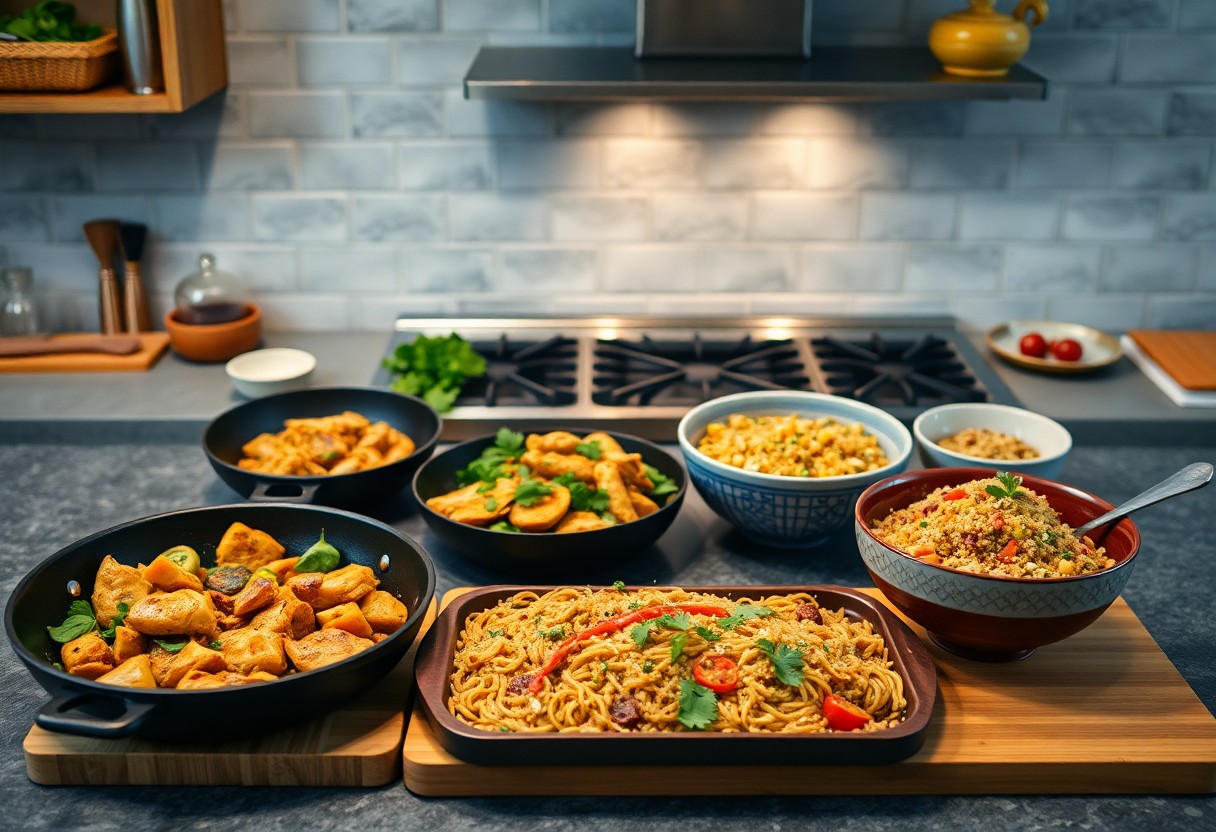
When weeknights are tight, aim for 20-30 minute meals that still taste seen-to-be-believed: 15-minute garlic shrimp over rice, 25-minute chicken-thigh stir-fry with bell peppers, or a 30-minute lentil chili that feeds 4 and freezes well. You can batch-cook bases like rice or quinoa on Sunday, then mix with canned tuna, roasted veg, or an egg for fast, balanced dinners that stretch ingredients and save both time and money.
One-Pot Dishes
One-pot recipes cut cleanup and often concentrate flavor-try a 25-minute one-pot pasta where pasta cooks in the sauce, or a 40-50 minute Dutch-oven chicken with potatoes and carrots that serves 4. You’ll use 1 pan, 1 oil measure, and a handful of spices; for legumes, simmer dried beans with aromatics for 60-90 minutes to make a hearty stew without canned purchases.
Sheet Pan Meals
Sheet pan dinners let you roast protein and vegetables together at 400-425°F: salmon with asparagus in 12-15 minutes, or bone-in chicken thighs with potatoes in 35-40 minutes for a family of 4. You’ll save time by trimming and seasoning once, then roasting; use a rimmed half-sheet pan (18×13 in) to keep portions even and juices contained.
To get reliable results, space items so air circulates and cut veg into ½-1-inch pieces for even cooking; rotate the pan once if your oven has hot spots. Season with 1-2 tbsp oil, 1 tsp smoked paprika, ½ tsp garlic powder, salt and pepper, and finish citrus or herbs. For safety, verify chicken reaches 165°F; for batch meals, double the veg and store in airtight containers for 3-4 days.
Kid-Friendly Meal Ideas
Mix familiar formats with big flavor to win dinners: oven-baked chicken tenders, bean-and-cheese quesadillas, sheet-pan nachos, and one-pot pasta are crowd-pleasers that you can prep in 20-30 minutes. You can swap in ground turkey, canned tuna, or chickpeas for protein and serve with quick sides like carrot sticks or apple slices to hit a balance of tastes and textures kids accept while keeping costs under control.
Incorporating Vegetables
Sneak veggies into favorite dishes so your kids barely notice: stir 1 cup grated carrot into meatballs, fold 1 cup pureed cauliflower into 2 cups cheese sauce for mac, or roast bell peppers and toss them into quesadillas. You can also offer raw cucumber and bell pepper sticks with hummus; the contrast of crunchy texture and dip often raises veggie intake without extra effort.
Creative Ways to Use Leftovers
Transform last night’s dinner into new meals to save time and money: shred 2 cups of roast chicken for tacos, chop roasted vegetables into fried rice with 2 cups cooked rice, or stuff leftover chili into baked potatoes. Using simple swaps-tortillas, eggs, or quick sauces-you’ll stretch ingredients and make dinners feel fresh without extra grocery runs.
For a specific swap, turn 2 cups shredded chicken into enchiladas: mix with 1/2 cup salsa and 1/4 cup black beans, roll into 6 tortillas, top with 1 cup cheese and bake at 375°F for 10-12 minutes. Or convert roasted veg into a frittata: whisk 6 eggs, stir in 2 cups chopped veg and 1/4 cup milk, then cook 8-10 minutes on the stovetop and finish under the broiler for 2-3 minutes.
Cooking on a Budget: Tools and Resources
Focus on multipurpose gear that pays off: a good chef’s knife ($30-$70) and a heavy Dutch oven ($30-$100) cover most stovetop and oven tasks, while an Instant Pot ($60-120) replaces a slow cooker and pressure-cooks dried beans in about 25-35 minutes. You’ll save time, reduce energy use, and avoid single-purpose purchases by prioritizing durability and versatility.
Kitchen Gadgets
Prioritize low-cost, high-impact tools: an immersion blender ($20-40) purees soups in seconds, a digital scale (accurate to 1 g) prevents overbuying, and a bench scraper speeds vegetable prep and dough handling. You can often shave prep and cleanup time and extend ingredient uses-investing in 3-4 smart gadgets typically delivers the biggest returns.
Online Meal Planning Resources
Use sites and apps that combine recipes, cost info, and shopping lists: Budget Bytes gives cost-per-serving breakdowns, Paprika (≈$4.99 one-time) saves and organizes recipes, and Eat This Much or Mealime auto-generate plans you can set for family size and export as grocery lists. Free tiers exist; paid plans usually run $3-6/month.
Integrate tools for maximum savings: sync recipe apps with store circulars or Instacart to compare prices, enable barcode scanning to track pantry inventory, and set servings to match your household (4 or 6) to avoid waste. You can also batch-import recipes, export CSV shopping lists, and schedule repeating menus so grocery trips shrink and leftovers get used systematically.
Conclusion
To wrap up, you can feed your family satisfying, flavor-packed meals without overspending by prioritizing pantry staples, batch-cooking, and smart seasoning; swapping proteins, stretching recipes with vegetables and grains, and involving your family saves time and money while boosting taste. With simple planning and confident technique, you’ll deliver variety and nutrition on any budget.


Leave a Reply