
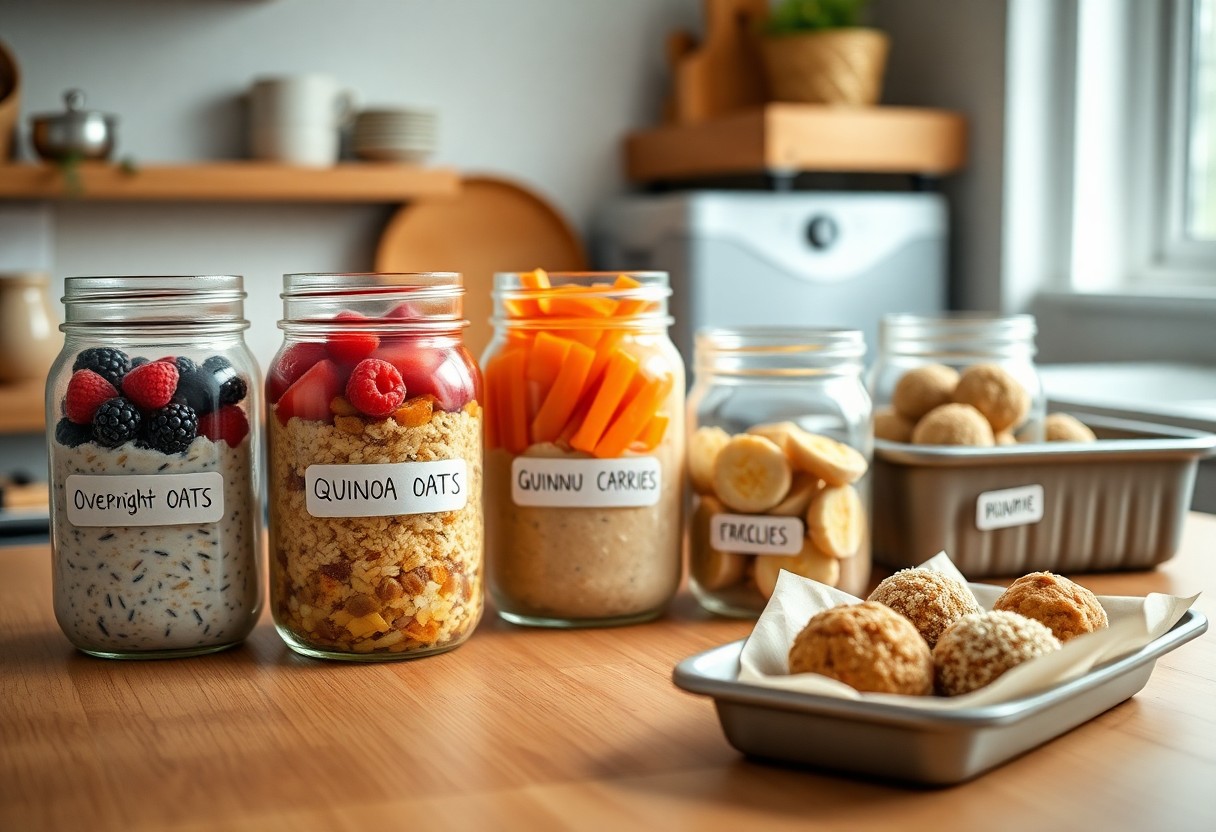
You can streamline your week by prepping a variety of healthy, grab-and-go snacks that save time and reduce stress; batch-roasted chickpeas, overnight oats jars, energy bites, sliced veggies with hummus, and portioned nut-and-fruit mixes keep you fueled and productive. This guide gives clear, practical make-ahead strategies, storage tips, and quick swaps so you consistently reach for better options when time is tight.
Key Takeaways:
- Batch-prep versatile bases (roasted veggies, grains, hard-boiled eggs, dips) to mix-and-match for quick grab-and-go snacks.
- Portion into single-serve containers or bags to save time, control portions, and simplify reheating or freezing.
- Build balanced snacks with protein, healthy fat, and fiber-nuts, yogurt, hummus, fruit, and whole-grain crackers work well.
Benefits of Make-Ahead Snacks
You lock in consistency and reduce daily decision fatigue by preparing snacks ahead: prepping 10 portions on a weekend can shave roughly 10-20 minutes off your weekday routine, saving over an hour per week. You cut costs through bulk purchases, avoid impulse buys, and ensure variety-think pre-portioned hummus and carrot sticks, baked granola cups, and boiled eggs ready to grab.
Time-Saving Advantages
When you batch-cook roasted nuts, chopped veggies, overnight oats, or energy balls in 30-60 minutes, you create 5-7 grab-and-go portions that eliminate morning assembly. You’ll save roughly 10-15 minutes per day compared with building snacks from scratch, and storing portions in clear containers or labeled bags makes packing for work or school nearly instantaneous.
Healthier Choices
You gain control over sugar, sodium, and portions by making snacks yourself: many commercial bars contain 10-15 g added sugar, whereas homemade energy balls or yogurt parfaits let you cut that to 3-6 g and boost protein. You can prioritize whole ingredients-nuts, seeds, fruit, legumes-and balance macros to keep energy steady between meals.
You can target nutrition goals with simple swaps: replace chips with roasted chickpeas (about ½ cup yields roughly 6-7 g protein and 6-8 g fiber) or pair a ¾-cup serving of plain Greek yogurt (adds ~12-18 g protein) with berries. You should aim for roughly 10-20 g protein and 3-8 g fiber per snack when possible, portion and label containers, and freeze extras so healthy options are always available.

Ideal Ingredients for Make-Ahead Snacks
Prioritize ingredients that hold texture and flavor after 2-7 days of refrigeration and that freeze well for 1-3 months. Focus on protein-rich items, whole grains, sturdy vegetables and shelf-stable fats so you can assemble 8-12 grab-and-go portions per prep session. Examples: roasted sweet potatoes, cooked quinoa, hard-boiled eggs, canned beans, and nut butters-each scales easily and mixes across snacks for variety.
Non-Perishable Staples
You should stock canned chickpeas and tuna, rolled oats, brown rice, quinoa, jars of nut butter, whole-grain crackers, nuts, seeds, and dried fruit. Buy 2-4 cans or 500-1000 g bags depending on household size; these items form bases for hummus, energy bites, overnight oats, and portable trail mixes that require minimal daily assembly.
Fresh Produce Options
You’ll want hardy options like carrots, bell peppers, apples, pears, cucumbers, and citrus, plus longer-lasting greens such as kale. Plan for 5-10 servings of vegetables and 3-7 pieces of fruit per week: carrots and apples can last 2-4 weeks in the fridge, while berries and herbs typically keep 3-5 days.
Prep strategies extend shelf life: cut and store carrots or peppers in water for up to 10 days, keep apples whole in the crisper for 3-4 weeks, and portion berries into airtight containers with paper towels to absorb moisture. Also freeze overripe fruit in 1-2 cup portions for smoothies-this reduces waste and gives you ready-made bases that last 2-3 months.
Quick and Easy Snack Recipes
Pick a handful of recipes that scale: 5-ingredient no-bake energy bites, jars of overnight oats, and 12 mason-jar yogurt parfaits you can assemble in one hour. You can batch 20 portions of trail mix by combining 2 cups nuts, 1 cup seeds, 1 cup dried fruit, and a sprinkle of sea salt; store in airtight jars for 3-4 weeks. Small tweaks like swapping almonds for walnuts change flavor without extra time.
No-Bake Energy Bites
Combine 1 cup rolled oats, 1/2 cup nut butter, 1/3 cup honey, 1/4 cup chia or flax, 1/4 cup mini chocolate chips, and 1 tsp vanilla; mix, roll into about 20 balls, and chill 20-30 minutes. You’ll get grab-and-go snacks with roughly 100-150 calories each; keep them in the fridge up to 2 weeks or freeze for 3 months, thawing a few at a time.
Veggie and Hummus Packs
Cut 3-4 cups of mixed vegetables (carrot sticks, bell pepper strips, cucumber spears) and portion with 1/4 cup hummus into 8-ounce containers or reusable snack cups; each pack serves as a 150-250 calorie snack and yields about 8-12 portions from 2 pounds of veggies. You’ll find this method saves 30-60 minutes across the week when prepped on Sunday.
To keep packs crisp, line the container with a paper towel to absorb moisture and store hummus in separate 2-3 oz ramekins or leakproof cups to avoid sogginess; if you prep 12 packs, rotate flavors-classic garlic, roasted red pepper, lemon-tahini-to prevent fatigue. Blanching snap peas for 30 seconds and shocking them in ice preserves bright color and crunch, and chilled packs stay best for 4-5 days in the fridge.

Meal Prep and Storage Tips
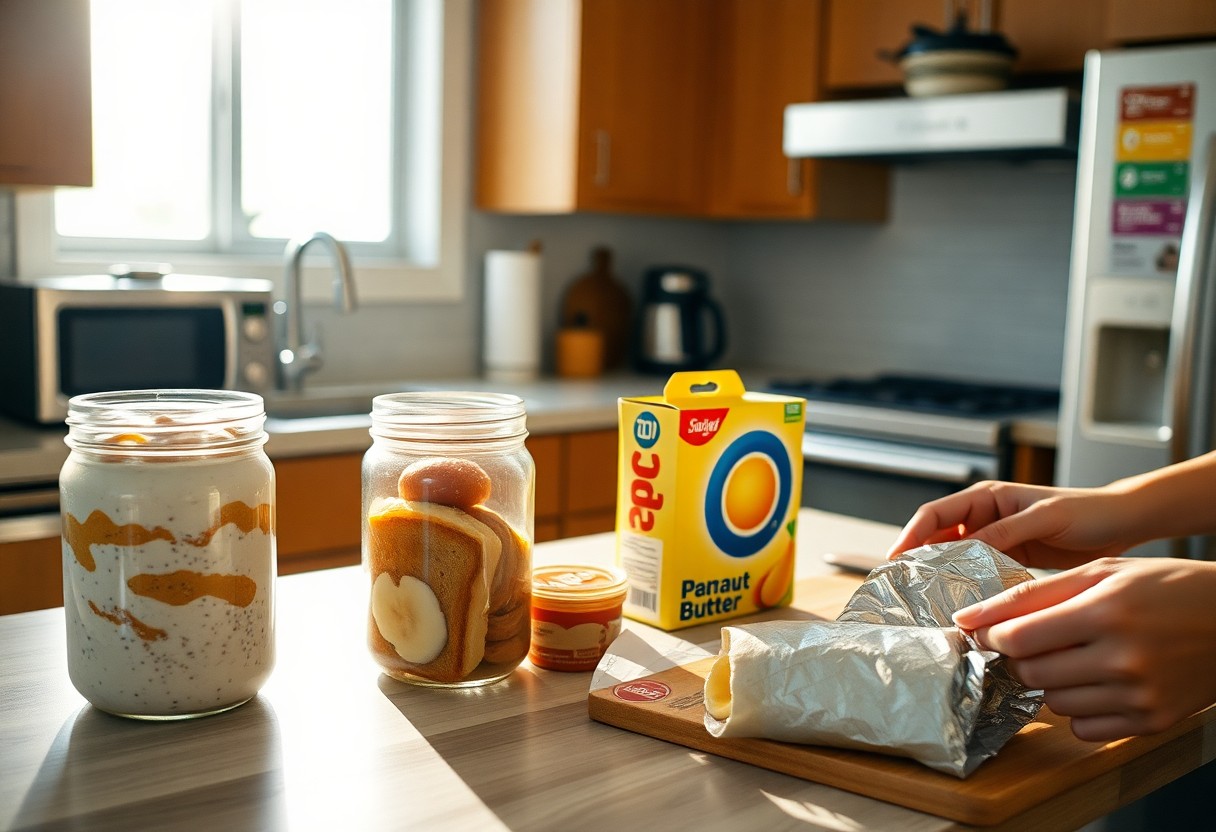
- Use 16-24 oz glass jars for overnight oats and parfaits so layers stay intact and visible.
- Portion energy bites into ten 1-tbsp rounds with a scoop so you grab a consistent serving.
- Freeze smoothie packs flat in labeled freezer bags for up to 3 months to save space and speed thawing.
- Keep your fridge at 34-40°F and store snacks on middle shelves away from the door to maintain even temperatures.
Batch the most time-consuming steps-roasting, chopping, and portioning-on one day so weekdays are grab-and-go; use clear glass jars, BPA-free containers for wet items, and freezer bags for smoothie packs, and label with date and contents. Assume that labeling each container with date and intended use helps you avoid waste and eat through batches within safe windows.
Efficient Prepping Techniques
Set aside a 60-90 minute block on Sunday to do mise en place: roast a sheet pan of nuts and chickpeas at 350°F for 12-18 minutes, chop 4 cups of veggies, and portion into ten 1-cup servings; use a food processor to chop nuts in 20-30 seconds and a 1-tbsp scoop to speed consistent portioning so you can grab a balanced snack in under 10 seconds.
Best Storage Practices
Prefer glass or vacuum-sealed containers to reduce odor transfer and extend shelf life-vacuum sealing can double refrigerated life for many snacks; store overnight oats and yogurt parfaits 3-5 days, energy bites 10-14 days refrigerated, and smoothie packs frozen up to 3 months, and flatten bags so frozen portions thaw faster.
Label every container with contents and prep date using a waterproof marker and follow FIFO so you eat oldest items first; pack dressings separately for salads and use paper towels to absorb moisture (adds 1-2 days of freshness), reheat grain bowls covered for 2-3 minutes per serving, or defrost frozen packs overnight in the fridge to preserve texture.
Customizing Snacks for Dietary Needs
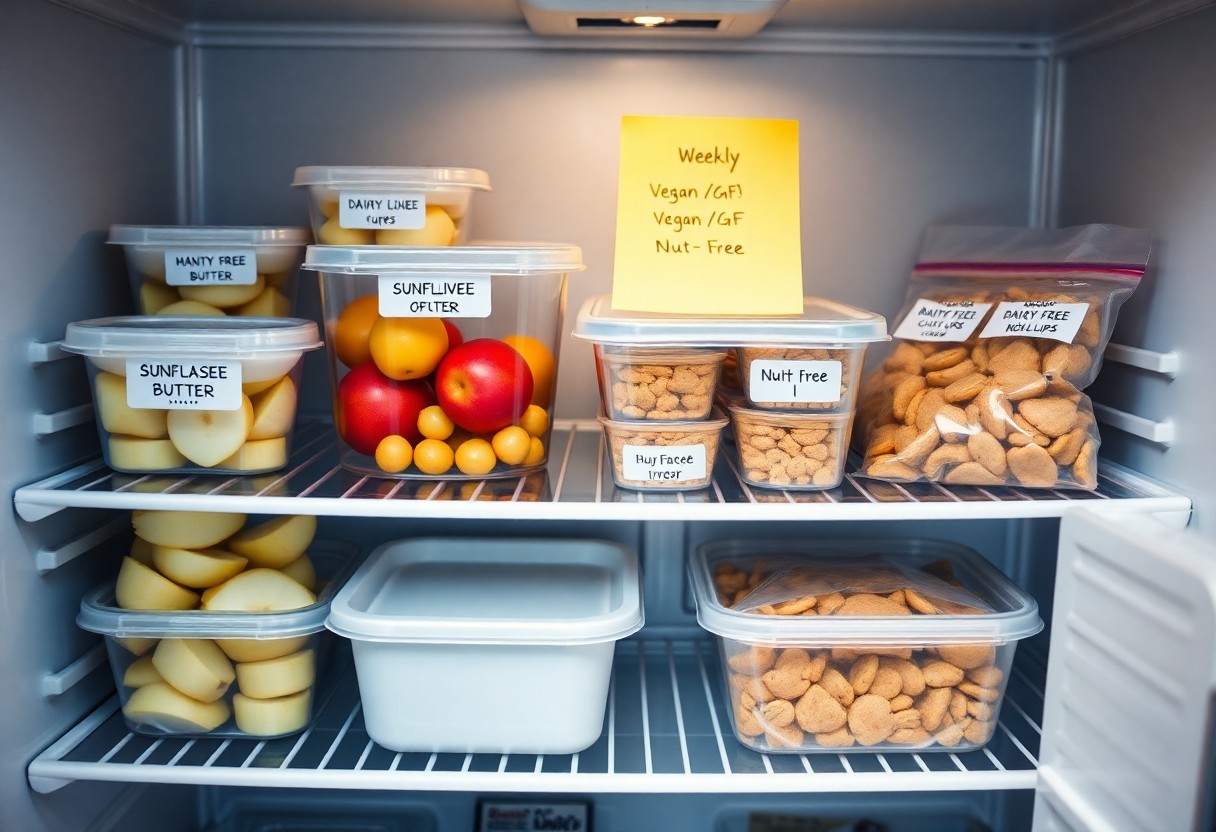
Tailor your make-ahead plan so your snacks match allergies, intolerances, and preferences: batch 10 mason jars of overnight oats with certified gluten-free oats, portion 8 hummus cups, or bake 24 almond-flour bites for nut-tolerant kitchens. You should label ingredients and dates, store refrigerated items for 3-5 days, and freeze individual portions for up to 8 weeks to keep variety ready without daily prep.
Gluten-Free Options
If you avoid gluten, lean on quinoa, buckwheat, rice-based granolas, and certified gluten-free oats; bake 12 almond-flour muffins or roast 3 cups of chickpeas for crunchy snacks. You can also make chickpea-cracker dough pressed into two sheets to yield about 20 crackers. Because celiac disease affects roughly 1% of people and non-celiac sensitivity is more common, label containers and keep separate utensils and surfaces to prevent cross-contamination.
Vegan-Friendly Ideas
For vegan make-ahead snacks, combine legumes, whole grains, and seeds: cook 3 cups of dry lentils (yields ~6 cups cooked) to portion into six snack bowls, bake 1.5 lb tofu into 4-6 packs, or portion hummus into eight ½-cup servings with veggie sticks. One cup cooked chickpeas provides about 15 g protein, so pair them with oats or seeds to create filling, balanced snacks that hold up 3-5 days refrigerated.
To boost nutrition and convenience, target roughly 8-15 g protein per snack by pairing a grain with a legume or 100 g tofu (≈8-12 g protein), add 1-2 tbsp of seeds for healthy fats, and use fortified plant milks or nutritional yeast for extra B vitamins and calcium. Sheet-pan baking (tofu cubes, seasoned chickpeas) and portioning into single-serve containers speeds grab-and-go use, and most vegan dips and cooked legumes keep well 3-5 days refrigerated or up to 2 months frozen.
Inspiring Snack Pairings
You can turn prepped components into variety by pairing textures and tastes: stack five roasted sweet potato rounds with 2 tablespoons herbed ricotta and a pinch of za’atar for savory-sweet contrast; layer a 16-oz mason jar with ½ cup Greek yogurt, ¼ cup granola and ⅓ cup mixed berries for a balanced parfait; or toss 1 cup roasted chickpeas with 1 tsp smoked paprika and 2 tbsp chopped pickles for crunch and acidity.
Complementary Flavor Combos
Balance is key: pair sweet fruit with salty cheese-try 1 small apple with 1 oz cheddar; contrast creamy with acidic-2 tbsp tzatziki and 6 cucumber slices; combine bitter with fat-1 oz dark chocolate (70%) and ¼ cup roasted almonds. You’ll create satisfying bites by mixing one textural element (crunch, cream) with one flavor contrast (sweet, acid, bitter).
Pairing with Beverages
Match snack intensity to drink strength: light herbal teas (6-8 oz) work well with fresh fruit and ½ cup yogurt, while an 8-12 oz cold brew pairs with denser snacks like 2 oatmeal energy bites or a 2-egg salad on rye. You can use carbonation-12 oz kombucha-with spicy roasted nuts to cut oiliness and refresh the palate between bites.
Think about sweetness, acidity and temperature when you pair: acidic drinks cleanse the palate after fatty nibbles, sweet drinks amplify already-sugary snacks, and effervescence reduces perceived richness. As a rule of thumb, offer a 6-8 oz light drink with delicate snacks and 8-12 oz fuller-bodied beverages with protein- or grain-heavy bites so your beverage complements rather than overwhelms each portion.
Final Words
Following this, you can streamline your week by preparing versatile, nutritious snacks that save time and reduce stress. Plan, batch-cook, portion, and label so you always have grab-and-go options that suit your tastes and schedule. Small prep sessions will keep you fueled and on track all week.

Leave a Reply