
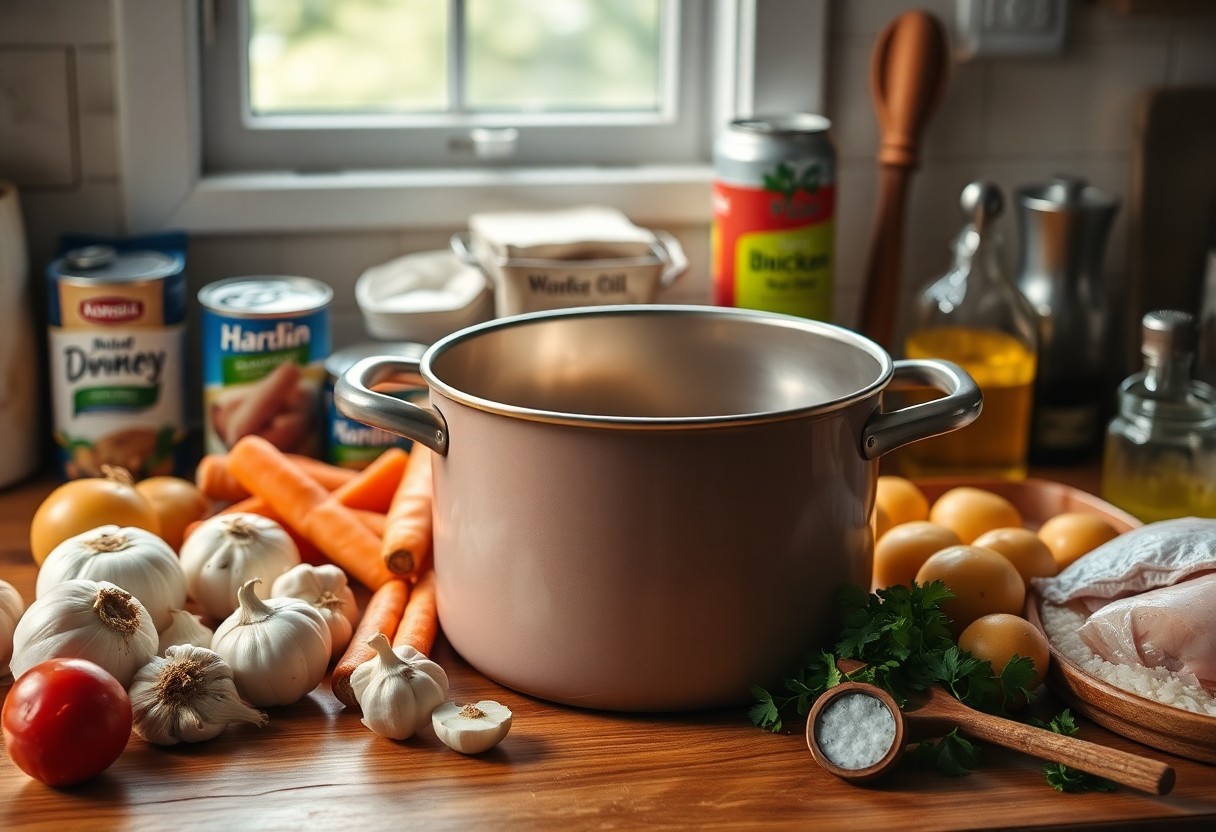
It’s easier than you think to prepare satisfying, nutritious dinners with minimal time and cleanup. This guide shows simple one-pot recipes, crucial techniques, and smart ingredient swaps so you can cook confidently, save time, and feed your family or yourself delicious meals tonight.
Key Takeaways:
- Save time and cleanup by cooking entire meals in one pan-combine protein, grains, and vegetables, and use timed layering so everything finishes together.
- Rely on pantry staples and simple swaps-canned tomatoes, grains, beans, and stock make recipes adaptable and forgiving.
- Use basic one-pot techniques: sear for browning, deglaze to capture flavor, simmer covered until tender, then finish with fresh herbs or a splash of acid for brightness.
Benefits of One-Pot Meals
You get faster dinners, fewer dishes, and meals that often taste better because flavors meld while cooking. Many one-pot recipes-from skillet pastas to hearty stews-finish in about 25-40 minutes and use just one main cookware item, which lowers grocery waste and can cut per-meal cost when you stretch proteins with grains or beans. You’ll also find fewer decision points at dinner, making it easier to eat at home more often.
Time-Saving Convenience
You can shave significant time off weeknight cooking: many one-pot dishes reach the table in 20-35 minutes, with only 10-15 minutes of active prep. Because you brown protein, add vegetables, and finish with a single liquid step, you avoid juggling multiple pans or stovetop burners. For example, a skillet pasta can go from raw ingredients to plated in about 25 minutes, making it ideal when you have limited time.
Easy Cleanup
You only wash one main pan and a few utensils, so cleanup often drops from 20-30 minutes to 5-10 minutes. Serving directly from the pot reduces transfers and spills; choosing a dishwasher-safe Dutch oven or nonstick skillet means you can load it straight into the machine. You’ll also use fewer cutting boards and mixing bowls, which shortens both washing and drying time.
You can speed cleanup further with a few habits: soak the pot immediately while you eat to loosen stuck-on bits, use a silicone spatula to scrape sides clean, and opt for cookware with smooth seams and a flat base. Batch-cook sauces and freeze portions in one container to avoid multiple pots later. If you own a 5-6 quart Dutch oven or large nonstick skillet, you’ll find many recipes transition from stove to oven to table without extra dishes.
Essential Ingredients for One-Pot Meals
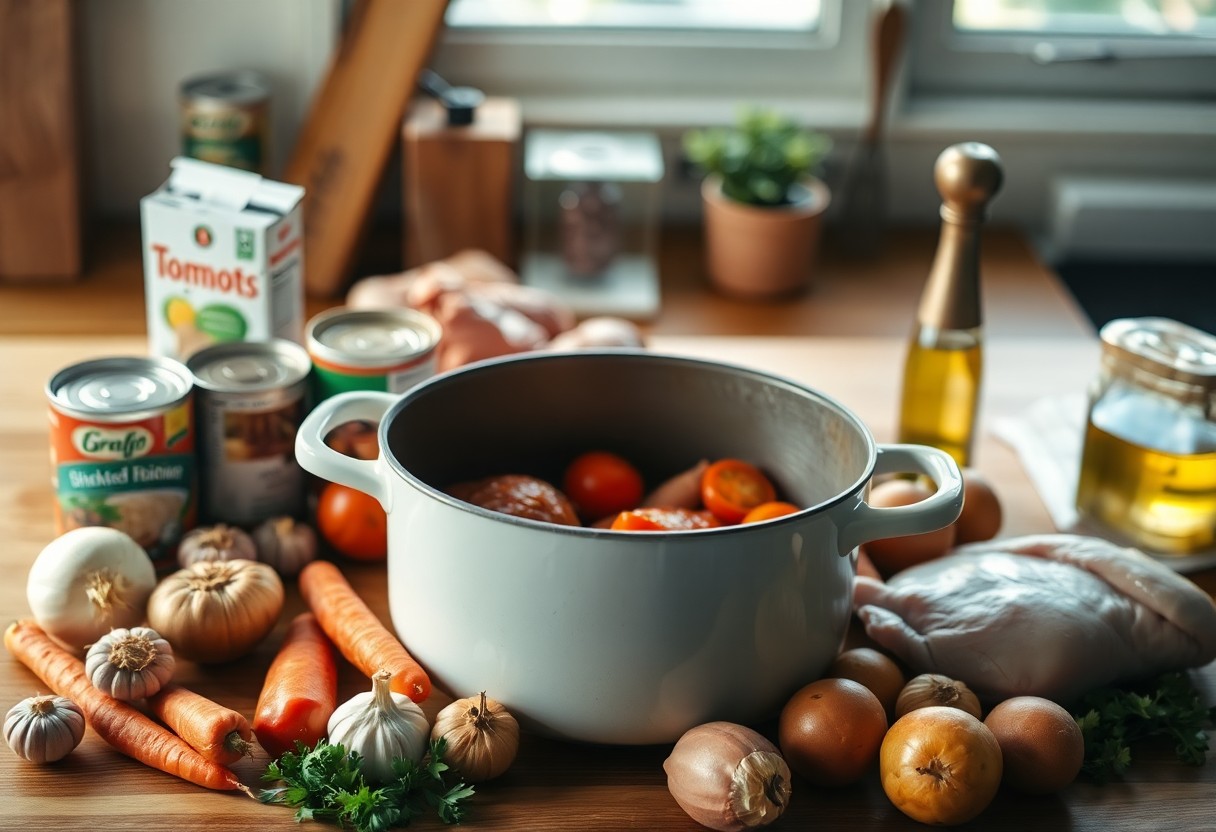
Stock your pantry and fridge with flexible staples that make one-pot dinners reliable: 2-3 cups of low-sodium broth, a 14-oz can of diced tomatoes, 1 cup dried rice (yields ~3 cups cooked), 8 oz pasta, olive oil, garlic, onions, and a few versatile spices like smoked paprika and cumin. You’ll also want one or two cans of beans, soy sauce, and a jar of stock-worthy condiments so you can shift from Mediterranean to Asian flavors without extra shopping.
Proteins
You can use chicken thighs (boneless cook in 20-25 minutes; bone-in 35-45 minutes), salmon (8-12 minutes), firm tofu (sear 6-8 minutes then simmer), or lentils (green/brown 20-25 minutes) for dependable timing. Canned beans are ready to heat in 5 minutes and stretch meals. Sear meat or brown tofu first to develop fond – that Maillard flavor adds depth and lets you build sauces with a quick deglaze of wine or broth.
Vegetables
Root vegetables like carrots and potatoes need 20-40 minutes depending on size, so cut them into ½-inch cubes for even cooking; bell peppers and zucchini take 8-10 minutes, while leafy greens wilt in 2-5 minutes. You’ll layer by cook time: start with aromatics and roots, add mid-density veg and grains, and finish with fast-wilting greens to keep texture and color.
Differentiate starchy vegetables (potatoes, sweet potatoes – 25-30 minutes cubed) from quick cookers (peas, spinach, frozen mixed veg). Using frozen veg can cut active cooking time by roughly 50-70% and is great for weeknights. Acidic finishes like lemon or a splash of vinegar brighten vegetables, and tossing in herbs at the end preserves volatile flavors; adjust salt after reductions so your seasoning stays balanced.
Popular One-Pot Meal Recipes
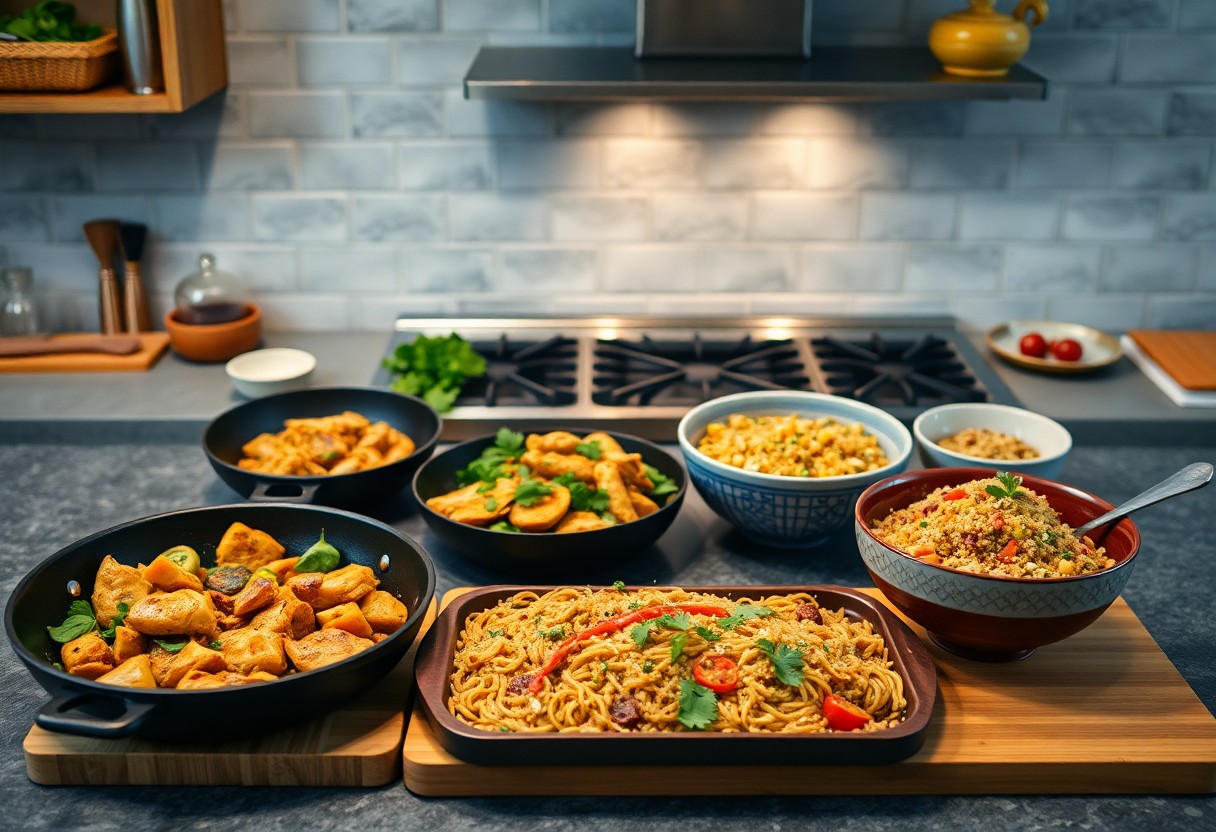
Pick recipes that fit your weeknight timing: 10-15 minutes prep and 20-40 minutes cook time are common, and many yield 4 servings. For example, one-pot pastas, stews, and skillet bakes use 1 pan, 3-6 core ingredients, and scale easily-double bulk proteins or frozen vegetables for leftovers and lunches.
Classic Chicken and Rice
Start by searing 4 bone-in chicken thighs 6-8 minutes per side for color, then add 1 cup long-grain rice and 2 cups low-sodium chicken broth; you’ll simmer covered 25-30 minutes until rice is tender. Toss in 1 cup frozen peas or diced carrots the last 5 minutes, and finish with 1 tablespoon lemon juice and chopped parsley for brightness.
Vegetarian Chili
Use three 15-oz cans-black beans, kidney beans, and pinto-plus a 14.5-oz can diced tomatoes, 1 cup vegetable broth, 1 tbsp chili powder and 2 tsp cumin; you should simmer 20-30 minutes for flavors to meld. This simple pot serves 4 and adapts well: add 1 diced sweet potato or a cup of corn for extra texture.
If you use canned beans, expect about 3 cups drained beans total; each 1-cup serving delivers roughly 15-18 g protein and 10-12 g fiber, making the chili a filling, budget-friendly dinner. Freeze leftovers in 2-cup portions up to 3 months, vary heat with cayenne or chipotle, and top servings with avocado, shredded cheese, or Greek yogurt.
Tips for Perfect One-Pot Cooking
Small tweaks make big differences in one-pot results: use a heavy-bottomed pot, preheat oil until shimmering, and salt proteins at least 15 minutes ahead (about 1 tsp per pound). Sear proteins 2-3 minutes per side for deep flavor, and cut vegetables uniformly so they cook evenly. Finish with a 5-10 minute rest to let starches set. Any change in liquid, cut size, or heat will alter timing, so test and note what works for your stove.
- Preheat pan 1-2 minutes on medium-high before adding oil.
- Use 1 to 1.25 cups broth per cup of long-grain rice; adjust for risotto or barley.
- Trim proteins to even size so everything finishes together.
- Let the dish rest 5-10 minutes off heat to thicken and meld flavors.
Layering Flavors
You should brown proteins 2-4 minutes per side to build Maillard flavor, then toast whole spices 30-60 seconds in the hot fat before adding aromatics. Deglaze with 1/4-1/2 cup wine or stock to lift browned bits, and add fresh herbs in the last 2-3 minutes so their brightness stays intact; dried herbs can go in earlier to release flavor.
Cooking Times
Match times to ingredient density: you’ll need about 18-20 minutes simmer for white rice, 40-45 for brown rice, 20-25 for boneless chicken thighs, and 30-35 for bone-in pieces; diced potatoes take 12-15 minutes. Stagger additions so delicate greens or quick-cooking seafood go in the last 2-5 minutes to avoid overcooking.
When you make a one-pot chicken-and-rice, brown thighs 4-5 minutes per side, remove, sauté onion 3-4 minutes, toast 1 cup rice 1-2 minutes, return chicken, add 1¼ cups stock per cup rice, simmer covered 18-20 minutes, then rest 10 minutes before fluffing. If you use a pressure cooker, cut active time to 6-8 minutes at high pressure with a 10-12 minute natural release. Use an instant-read thermometer-165°F for poultry, 145°F for most beef-and increase liquid by ~10-20% at high altitude.
Modifying Recipes for Dietary Needs
When adapting one-pot recipes, you should swap by function rather than match ingredients word-for-word: replace starches, proteins, binders, and liquids with equivalents that behave similarly. For example, quinoa cooks in ~15 minutes while brown rice needs 40-45 minutes, so adjust cooking time and liquid accordingly; using a pressure cooker can cut bean cook times from hours to 20-30 minutes. You’ll also test seasoning-1-2 tablespoons of miso or 2 tablespoons nutritional yeast can restore savory depth lost when you remove meat or dairy.
Gluten-Free Options
You can make dishes gluten-free by substituting 1:1 gluten-free flour blends for roux-based sauces and swapping wheat pasta for rice, corn, or certified gluten-free pasta brands; quinoa and polenta work well in stews. Use tamari instead of soy sauce and certified gluten-free oats in casseroles. Note that gluten-free pasta often needs stirring and slightly shorter cook times to avoid mush-start checking at 7-8 minutes for many rice-based pastas.
Vegan Substitutions
You’ll replace animal proteins with legumes, tofu, tempeh, or seitan depending on texture needs: 1 cup cooked lentils offers ~18 g protein, 1 cup chickpeas ~15 g, and an 8 oz block of firm tofu provides about 20 g. Swap chicken stock 1:1 for vegetable broth and replace heavy cream with full-fat coconut milk (one 13-14 oz can) in curries. For egg binding, use 1 tbsp ground flax mixed with 3 tbsp water per egg.
For more depth, focus on mouthfeel and umami: add 1-2 tablespoons miso, 1-3 tablespoons soy-free tamari, or 1-2 tablespoons nutritional yeast to boost savory flavor. If you miss fat, blend ½ cup toasted walnuts or 2 tablespoons olive oil into sauces; to mimic ground-meat texture, combine 1 cup cooked lentils with ½ cup finely chopped mushrooms or walnuts. Fortified plant milks supply calcium and B12-fortified options help cover micronutrients in regular rotation.
Storage and Reheating One-Pot Meals
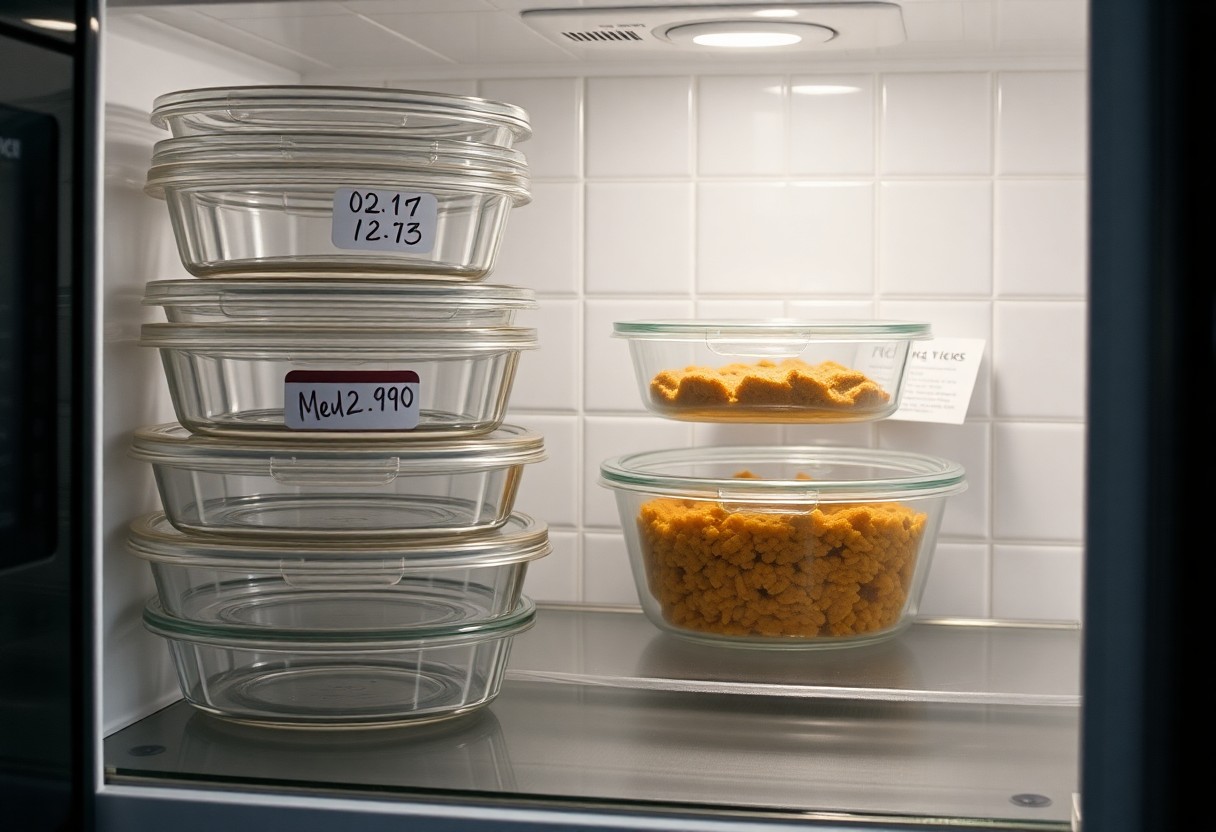
After cooking, cool your pot meals to room temperature within two hours and transfer into shallow airtight containers to speed chilling; divide large batches into 1-2 cup portions to cool faster. Label containers with date and contents, refrigerate up to 3-4 days, or freeze for 2-3 months for best quality (vacuum sealing can extend this to about 6 months). When reheating, bring the center to 165°F (74°C) and stir occasionally for even heat.
Best Practices
Divide and store in shallow, airtight containers and leave a half-inch headspace when freezing to allow expansion. Undercook pasta or rice by 1-2 minutes if you plan to freeze to avoid soggy results. Thaw overnight in the fridge or use the microwave defrost setting, then reheat on the stovetop or microwave with a splash of broth or water to restore moisture and ensure the interior reaches 165°F (74°C).
How Long They Last
Most cooked one-pot meals remain safe in the refrigerator for 3-4 days, while seafood-based dishes are best consumed within 1-2 days. In the freezer expect quality to last about 2-3 months; vacuum sealing can push that closer to 6 months. Check appearance, smell, and texture before reheating, and discard any portions showing off-odors, mold, or sliminess.
Portioning before storage helps you reheat only what you need and avoids repeated cool-reheat cycles that reduce safety and quality; aim to reheat each portion once to 165°F (74°C). For example, chicken-and-rice or beef stews typically last 3-4 days refrigerated, vegetable soups 3-4 days, and shrimp dishes 1-2 days. Label frozen meals with the date and use within the recommended window for best texture and flavor.
Final Words
From above, you can confidently turn simple ingredients into satisfying one-pot meals that fit your schedule and taste. With basic techniques and a few pantry staples, you’ll streamline cooking, minimize cleanup, and improvise with confidence. Use these approaches to plan weeknight dinners, scale recipes, and make your kitchen work for you every night.

Leave a Reply