
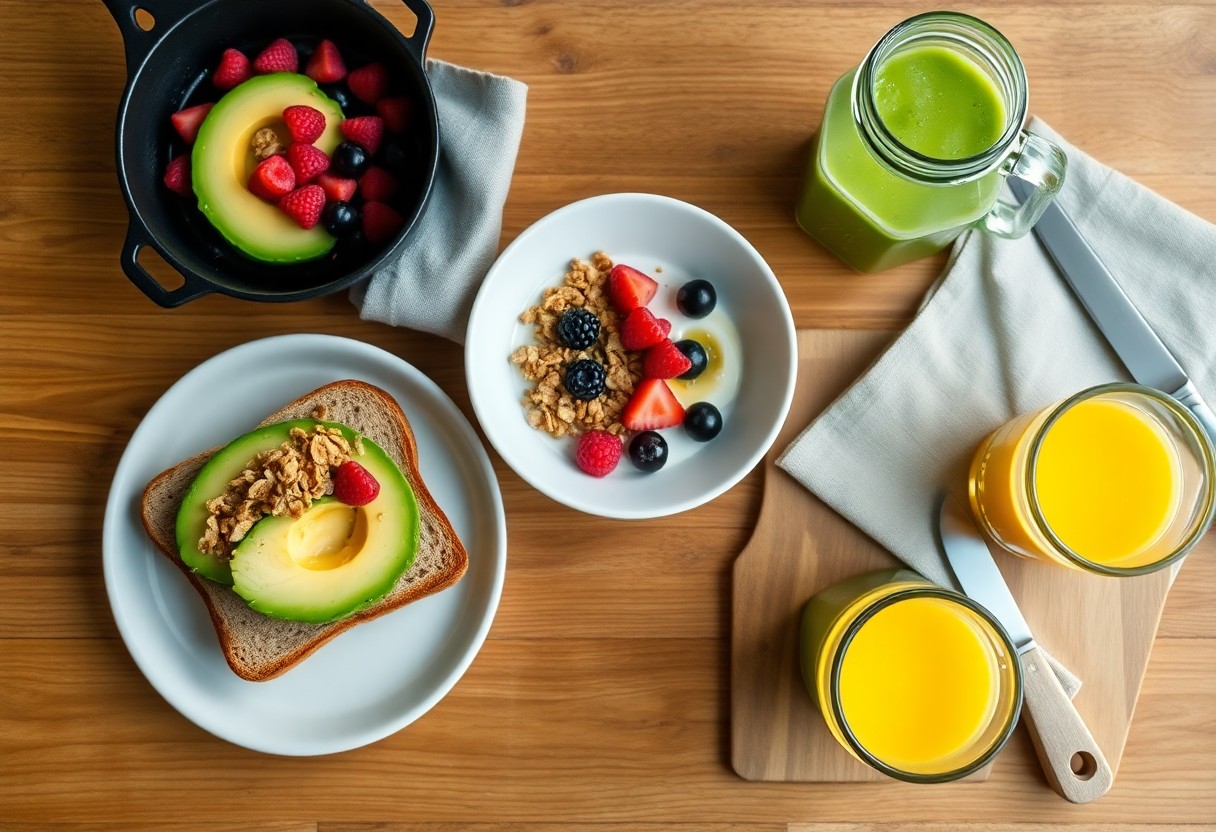
With simple, quick recipes and balanced ingredients, you can create breakfasts that fuel your morning and sustain energy; focus on whole grains, lean protein, fiber-rich fruit, and healthy fats to stabilize blood sugar and sharpen focus, try overnight oats with Greek yogurt, a veggie omelet with whole-grain toast, or a smoothie bowl topped with nuts and seeds, and plan portions so your meals suit your schedule and goals for consistent, nutritious starts.
Key Takeaways:
- Balance macronutrients-include protein, fiber, healthy fats and whole grains to maintain energy and satiety.
- Prep simple make-ahead options like overnight oats, smoothie packs, or egg muffins to save time and stay consistent.
- Rotate fruits, nuts, yogurt and whole-grain toast for variety; choose portable choices to avoid skipping breakfast.
Importance of a Nutritious Breakfast
Fueling your morning with a balanced breakfast stabilizes blood sugar, sharpens focus, and sets appetite control for the day; aim for roughly 300-400 kcal that includes 20-30 g protein and 5-10 g fiber to reduce midmorning hunger and sustain energy. For example, a bowl of steel-cut oats topped with ¾ cup Greek yogurt and a handful of berries delivers protein, fiber, and antioxidants while taking under 10 minutes to prepare.
Benefits of Eating Breakfast
You’ll experience improved concentration, steadier energy, and often better overall nutrient intake when you eat breakfast regularly. Studies show breakfast consumers more consistently meet recommendations for iron, calcium, and vitamin D. In school and workplace trials, breakfasts combining protein and low‑glycemic carbs produced measurable gains in short-term memory and attention versus high-sugar options.
Nutritional Elements to Include
Prioritize lean protein, fiber-rich carbohydrates, healthy unsaturated fats, and a mix of micronutrients so your breakfast fuels both body and brain. Target roughly 20-30 g protein (eggs, Greek yogurt, whey), 5-10 g fiber (oats, berries, chia), and 10-15 g unsaturated fat (nuts, avocado), while keeping added sugars below 10-15 g to support satiety and stable glucose.
You can combine those elements in quick, concrete ways: two eggs plus a slice of whole-grain toast and ½ an avocado supplies about 20 g protein and 12-15 g healthy fat; overnight oats made with ½ cup oats, 1 scoop protein powder, and ½ cup berries yields ~25 g protein and 7-9 g fiber. Swap flavored yogurts for plain Greek yogurt plus fresh fruit to cut 8-12 g added sugar while boosting protein and calcium.
Quick and Easy Breakfast Recipes
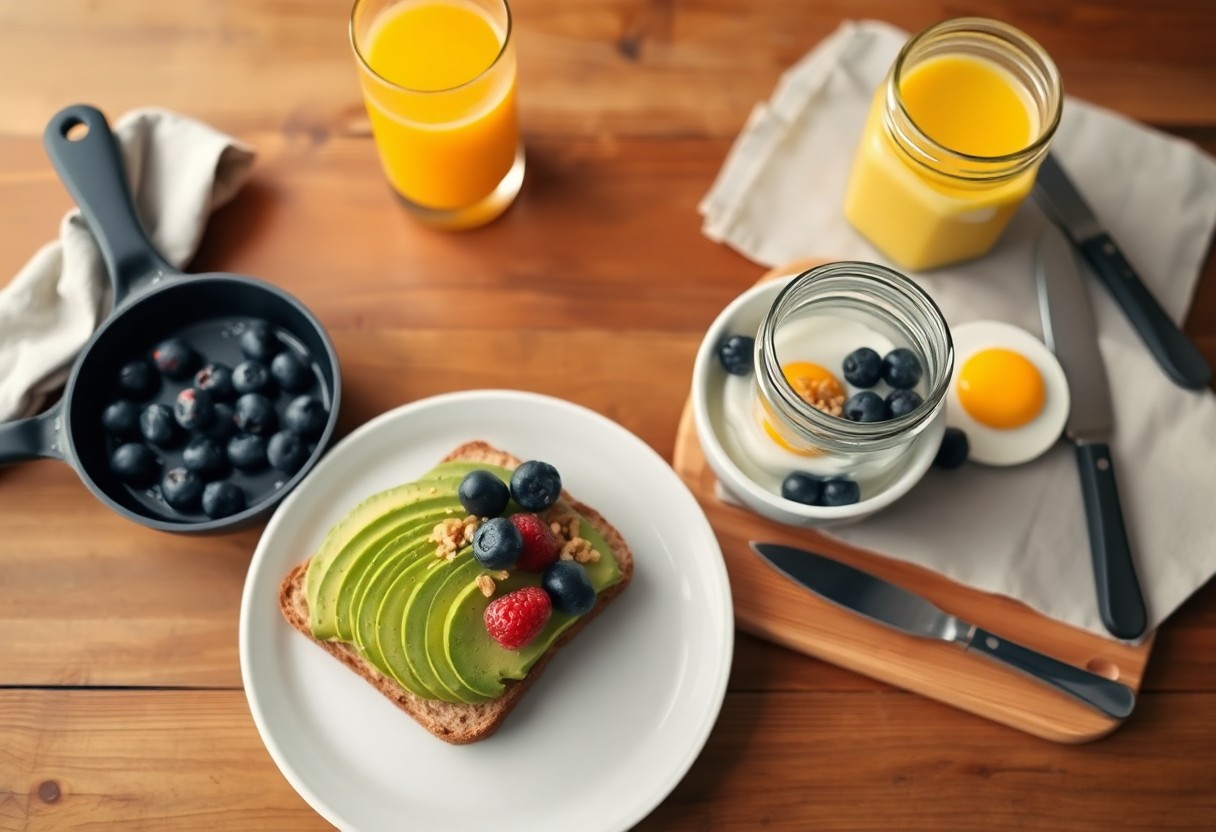
You can assemble satisfying breakfasts in 5-15 minutes that deliver protein, fiber, and healthy fats: a 2-egg scramble with spinach (about 12 g protein), whole-grain toast, or a Greek-yogurt parfait layered with ¾ cup yogurt, ¼ cup granola, and ½ cup berries. Batch options like prepped chia pudding jars or a 3-serving frittata in the oven save time on busy mornings while keeping calories and macros balanced.
Overnight Oats Variations
You’ll mix ½ cup rolled oats with ¾ cup milk or plant-based alternative, 1 tbsp chia seeds, and your choice of sweetener, then refrigerate overnight; try combinations like banana-peanut butter (1 small banana + 1 tbsp PB) or apple-cinnamon with grated apple and ½ tsp cinnamon. Nutritionally, a typical jar gives ~350 kcal, 10-12 g protein, and 8-10 g fiber when you include seeds and fruit.
Smoothie Bowl Ideas
You can build thick smoothie bowls using 1 frozen banana, 1 cup frozen berries, and ¼-½ cup Greek yogurt for creaminess; top with 2 tbsp granola, 1 tbsp flax, and ¼ cup sliced fruit for texture. Athletes often target 20-30 g protein by adding a scoop of protein powder or ½ cup cottage cheese to the base, keeping bowls both filling and nutrient-dense.
For consistent texture, blend your frozen fruit first with only 2-3 tbsp liquid, then add yogurt or protein; using a high-speed blender yields a scoopable consistency in under 2 minutes. Consider one savory option-1/2 avocado, 1 small tomato, and smoked salmon-for a lower-sugar alternative that supplies omega-3s and about 15 g protein per serving.
Egg-based Breakfasts
You’ll rely on eggs as a fast, versatile protein: one large egg provides ~6 g protein and cooks in 1-3 minutes poached or scrambled; try a 2-egg veggie omelet with ½ cup mixed peppers and 1 oz feta for ~20 g protein and extra micronutrients. For portability, make egg muffins in a muffin tin-each yields about 8-10 g protein depending on add-ins.
When batch-cooking, bake 12 egg muffins at 350°F for 18-20 minutes, cool, and refrigerate up to 4 days or freeze for 1 month; reheat 45-60 seconds in the microwave per muffin. Adding ¼ cup cooked quinoa or black beans to each cup increases fiber and raises protein to ~12-14 g per muffin.
Healthy Breakfast Options on the Go
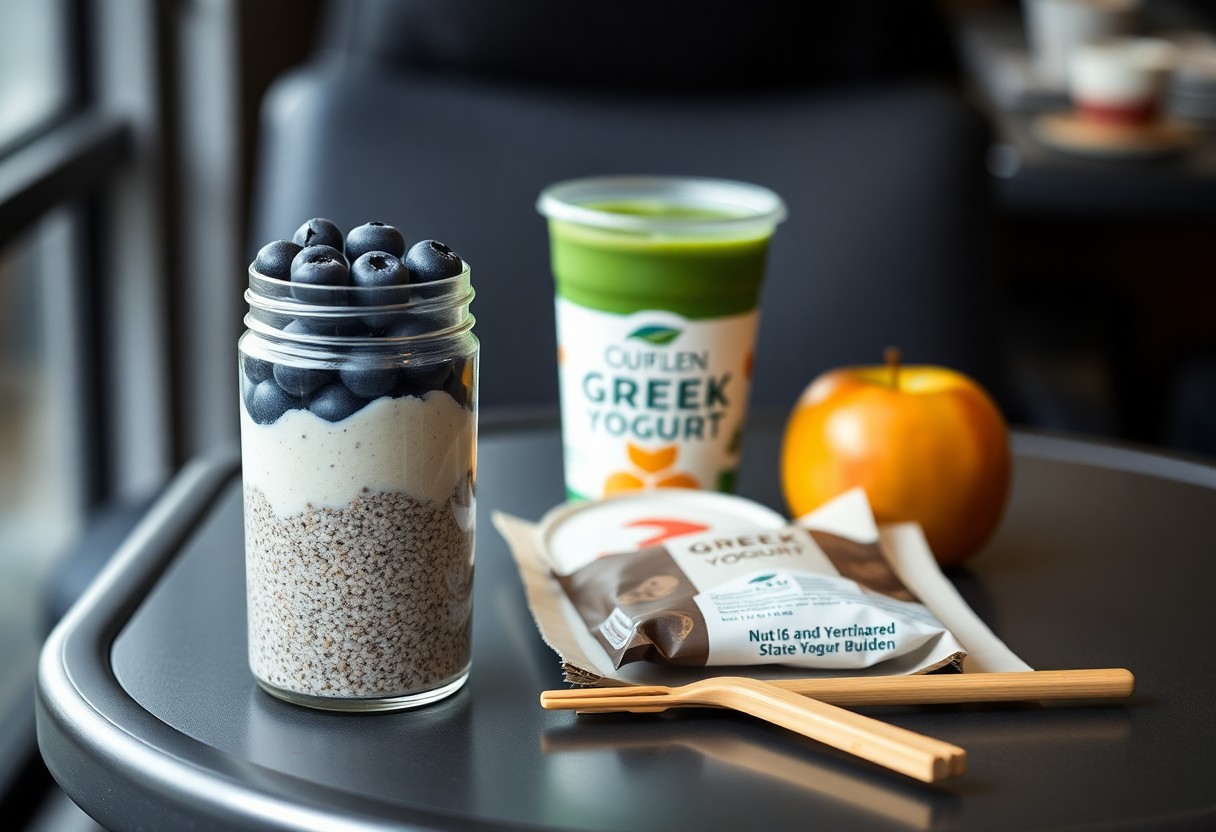
When mornings are tight, you can rely on portable breakfasts that still hit protein, fiber, and healthy fats: aim for about 300-450 kcal and 15-25 g protein to curb hunger. A protein bar (10-20 g protein), a 6‑oz Greek yogurt (~15 g protein), or whole‑grain toast with 1-2 tbsp nut butter (about 8 g protein) are practical choices. Pack fruit-an apple adds ~4 g fiber and vitamin C-to round out micronutrients without slowing you down.
Grab-and-Go Bars
Choose bars with 10-20 g protein and under 10 g added sugar, and scan ingredients for whole-foods like nuts, oats, and dates. You can pair a bar with a small banana to add potassium and 2-3 g fiber. When testing brands, note that very high‑fiber bars sometimes cause bloating, so try one at home first. Keep one in your bag or desk drawer as a reliable morning backup.
Fruit and Yogurt Combinations
Greek yogurt pairs well with fruit: a 6‑oz cup provides about 15 g protein, and a half‑cup of berries adds antioxidants and roughly 3-4 g fiber. You can layer yogurt, fruit, and 1 tbsp chia seeds or 2 tbsp granola in a jar for a grab‑and‑go parfait that stays fresh for several hours when chilled. Prioritize plain yogurt to avoid excess sugar from flavored varieties.
You should aim to combine 15-25 g protein with 5-8 g fiber for sustained energy; add 2 tbsp chia seeds (≈5 g fiber) or 1/3 cup oats for slow‑release carbs. You can pre‑portion servings into 8-12 oz jars-yogurt on the bottom, fruit in the middle, crunchy topping sealed separately-to preserve texture and make mornings truly hands‑free.
Nut Butter Toasts
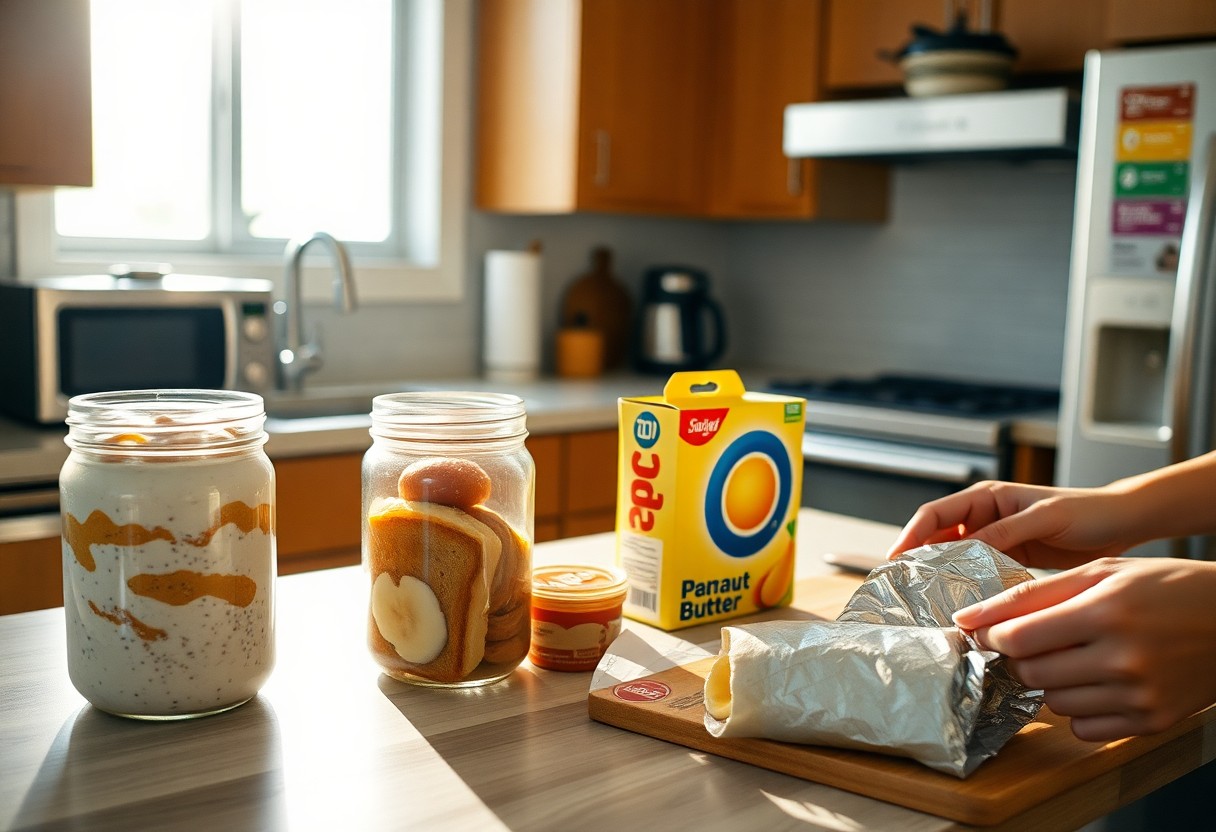
Whole‑grain toast with 1-2 tbsp nut butter is a quick balanced bite: 1 tbsp peanut butter is about 95 kcal and 4 g protein, so two slices with 2 tbsp yields roughly 8 g protein plus healthy fats. You can top with sliced banana for potassium, sprinkle hemp seeds for extra protein, or add cinnamon for flavor. This assembly takes under five minutes and can be wrapped for travel.
You should measure nut butter to control calories-1 tbsp ≈95 kcal-so 2 tbsp across toast is satisfying without excess. You can swap peanut for almond for more vitamin E or choose sunflower seed butter for allergy concerns. For faster mornings, pre‑slice fruit and store in airtight containers so you can assemble and go in under two minutes.
Incorporating Whole Grains
Adding whole grains to breakfasts boosts fiber and micronutrients while extending energy through the morning; you can swap refined options for whole versions without extra time. Choose oats, quinoa, barley, or 100% whole-wheat products and pair them with protein and healthy fats to stabilize blood sugar and keep you satisfied until lunch.
Benefits of Whole Grains
You get soluble and insoluble fiber, B vitamins, magnesium, and trace minerals from whole grains; for example, ½ cup (40 g) dry rolled oats supplies about 5 g fiber and 5 g protein. Studies consistently link higher whole-grain intake to improved blood lipids and better glycemic control, so including them at breakfast supports heart and metabolic health.
Whole Grain Breakfast Ideas
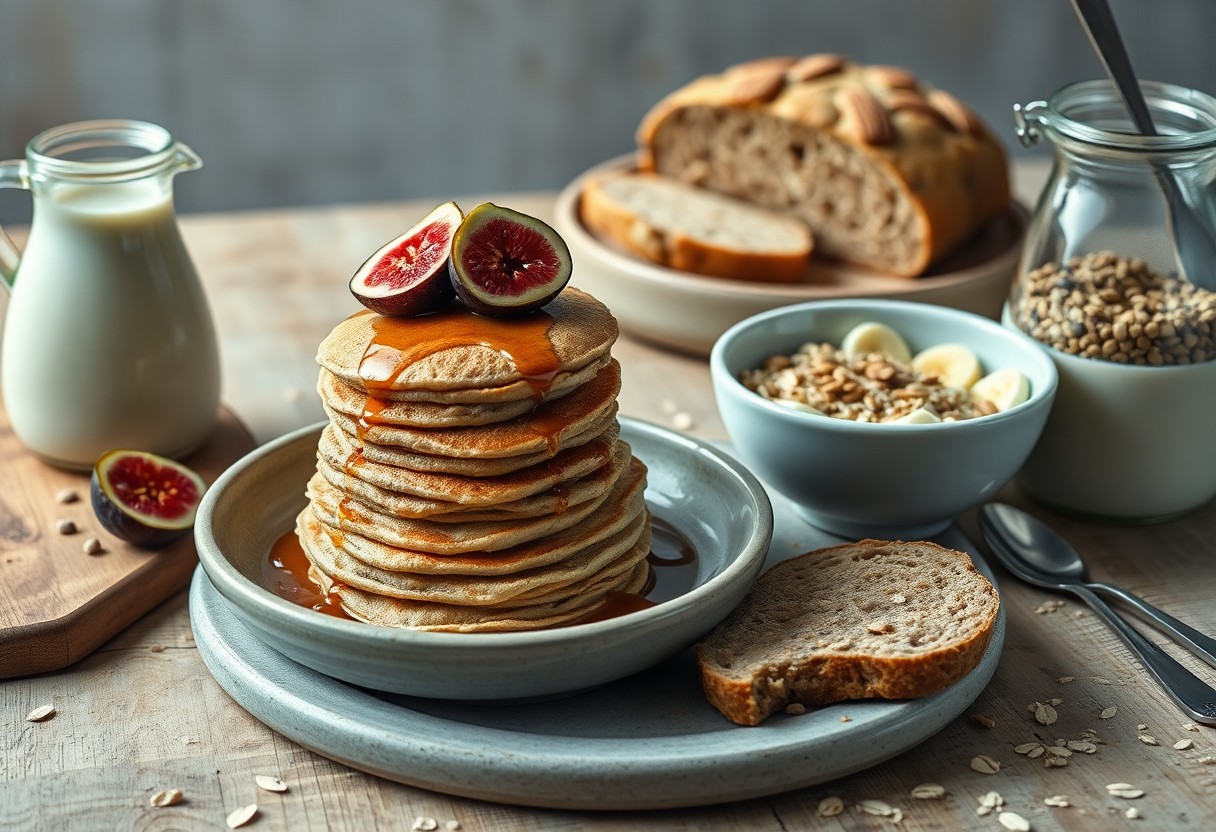
Try overnight oats (½ cup oats + 1 cup milk + 1 tbsp chia), two slices of whole-grain toast topped with one poached egg and ¼ avocado, or a quinoa bowl (1 cup cooked quinoa + berries + 1 tbsp nuts). You can also make whole-wheat pancakes using 100% whole-wheat flour or a barley porridge with milk and cinnamon for a fiber-rich start.
To make whole grains practical, batch-cook 3-4 cups of quinoa or steel-cut oats on Sunday to portion for the week; swap white flour 1:1 with whole-wheat pastry flour in recipes; and check labels for “whole” as the first ingredient. Combining a grain with 15-20 g protein (Greek yogurt, eggs, or nut butter) and 1-2 tbsp healthy fat improves satiety and nutrient absorption.
Family-Friendly Breakfast Choices
For families juggling different tastes and schedules, pick versatile bases like whole-grain toast, Greek yogurt, and steel-cut oats that you can customize: top yogurt with ½ cup berries and 2 tbsp granola for fiber and vitamin C, or make toast combos-1 egg + avocado for protein and healthy fats. Aim for 300-400 kcal and 10-20 g protein per child’s meal to sustain morning energy, and rotate flavors twice weekly to keep picky eaters engaged.
Kid-Approved Recipes
You can win mornings with simple, tested recipes: mini frittatas (6 eggs + ½ cup milk + 1 cup chopped veggies + ½ cup cheese, bake 20 min at 350°F for 12 muffins), banana oat pancakes (1 banana, 1 egg, ½ cup oats blended), and yogurt parfaits layered with ¾ cup Greek yogurt, ½ cup fruit, and 2 tbsp chopped nuts. These options deliver protein, fiber, and familiar textures kids accept.
Meal Prep for Busy Mornings
Batch-cook to cut decision time: make 12 egg muffins, portion into 3-4 breakfasts and refrigerate for up to 4 days or freeze for 2-3 months; assemble 5 overnight oats jars (½ cup oats + ¾ cup milk + 1 tbsp chia) for grab-and-go protein and fiber; and pre-freeze smoothie packs with 1 cup spinach, 1 cup berries, and ½ banana so you blend in 60-90 seconds.
Practical steps boost success: label containers with date and reheating times (microwave egg muffins 60-75 seconds), use clear glass containers for visibility, and portion meals to 300-450 kcal with 15-25 g protein when possible. Freeze pancakes separated by parchment, thaw overnight in fridge, and rotate two weekly menus so you prep once and serve five school/workdays without decision fatigue.
Making Breakfast a Routine
Set a consistent wake-to-breakfast window of 30-60 minutes and treat it like a meeting; people who eat within an hour of waking report steadier energy and better morning focus. Lay out bowls, program a coffee maker, or place pre-portioned smoothie packs in the freezer to shave 5-10 minutes off your routine, and use a simple checklist or app to track progress for 2-4 weeks until it becomes automatic.
Tips for Creating a Breakfast Habit
You can build momentum by starting small-commit to 5 consecutive days, pair breakfast with a reliable cue like brushing your teeth, and target 300-400 kcal with 15-25 g protein. Try quick wins that lower friction:
- Prep grab-and-go smoothie packs for 5 mornings
- Batch-cook 12 egg muffins to last the workweek
- Keep a visible basket of fruit and single-serve yogurt
Any consistent trigger will make the routine stick.
Planning Ahead for Success
Batch-cooking saves 10-15 minutes each weekday: prepare 5 jar oats, a tray of 12 egg muffins, and three frozen smoothie packs in 60-90 minutes on Sunday to cover breakfasts for the week. Aim for portions with 15-25 g protein and fiber-rich add-ins like 1/2 cup oats or 1 cup berries to stay full until lunch.
Use airtight glass containers and label with dates; cooked egg muffins keep 3-4 days refrigerated and up to 3 months frozen, while overnight oats last 4-5 days in the fridge. Reheat muffins 30-45 seconds in the microwave or 8-10 minutes at 350°F from frozen. Spend 60-90 minutes weekly mixing, portioning, and storing-this upfront work minimizes morning decisions and increases the likelihood you’ll eat a balanced breakfast.
To wrap up
Drawing together the easy breakfast ideas covered, you can build satisfying, nutrient-dense mornings with minimal fuss. Prioritize protein, whole grains, fruits, and healthy fats, batch-prep components, and mix-and-match options so your routine stays flexible. With a few staples and simple recipes, you’ll fuel your day, improve energy and focus, and make healthy starts a consistent habit.


Leave a Reply