
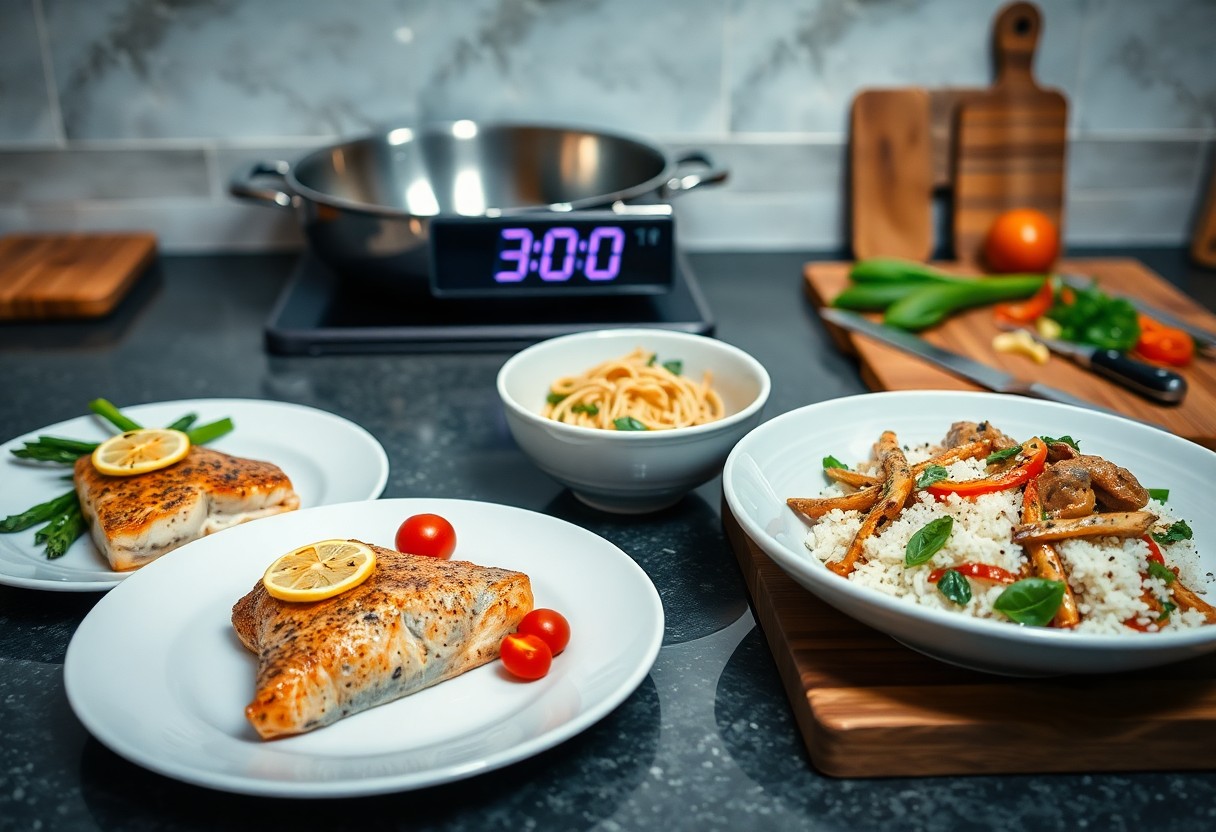
Most evenings you need reliable, flavorful dinners that don’t demand hours in the kitchen; this guide shows how you can confidently prepare balanced, restaurant-quality meals in 30 minutes using smart techniques, time-saving shortcuts, and staple ingredients you likely have on hand. You’ll learn clear steps for efficient prep, seasoning, and plating so your weeknight cooking becomes faster, more consistent, and more satisfying.
Key Takeaways:
- Master basic techniques and timing to produce consistent, flavorful dishes in 30 minutes.
- Stock a versatile pantry and rely on meal templates (stir-fries, pastas, bowls) to customize with minimal ingredients.
- Use simple prep, multitasking, and one-pan methods to speed cooking and reduce cleanup.
Essential Kitchen Tools for Quick Cooking
Must-Have Utensils
You should keep an 8-inch chef’s knife, a serrated bread knife, and a 6-inch paring knife for prep precision. A 12-inch nonstick skillet and a 6-quart Dutch oven cover most stovetop tasks, while a sheet pan and rimmed baking tray let you roast and broil quickly. Also include silicone spatulas, a sturdy whisk, metal tongs, and a microplane zester for brightness. Aim for durable stainless steel and one quality cutting board to cut prep time and waste.
Time-Saving Appliances
Choose an Instant Pot (6-8 quart) for weeknight stews that finish in 30 minutes instead of hours; an air fryer (3-6 quart) crisps fries and reheats in 10-15 minutes using far less oil than traditional frying. A 7-cup food processor shreds and purees in seconds, while a high-speed blender handles smoothies and soups. These appliances cut active cooking time and let you multitask efficiently.
When picking appliances, match capacity to your household size: 1-2 people can use a 3-4 quart air fryer, while families benefit from 5-6 quart units. Prefer multi-function models – an Instant Pot with pressure-cook, sauté, and slow-cook modes replaces multiple devices. Check wattage: blenders at 600-1,200 W handle hot soups and nut butters. Also favor dishwasher-safe parts and simple controls to minimize cleanup and learning time.
Meal Prepping Techniques
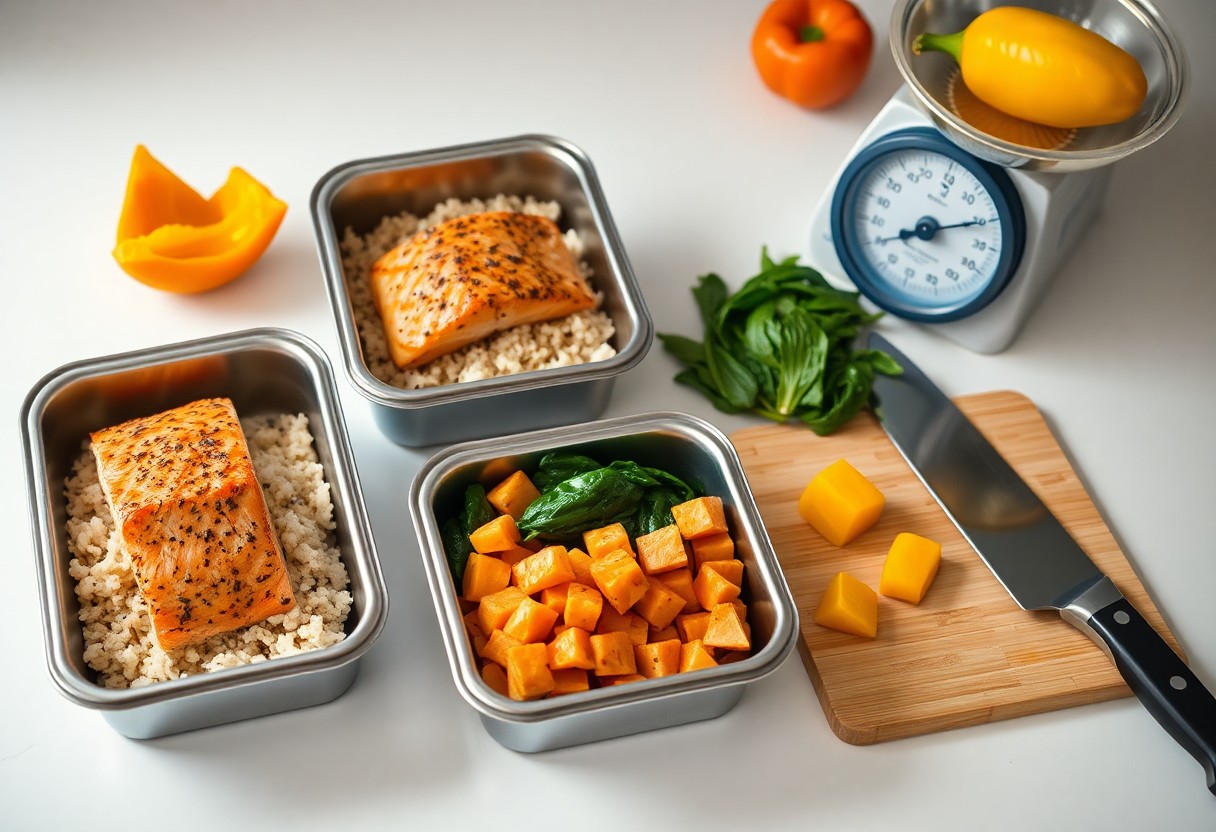
Focus on repeatable systems: pick two proteins, three vegetables, a grain, and two sauces you rotate through. You can block two 60-90 minute prep sessions weekly to cook staples, portion into 4-6 meal containers, and label with dates. Store refrigerated for 3-4 days or freeze individual portions for up to 3 months. Use clear containers and a simple checklist so assembling a 30-minute dinner becomes mostly reheating and quick finishing touches.
Planning Your Week
Map out 5 dinners and 3 breakfasts around one shared ingredient to simplify shopping. Choose 2 proteins (e.g., chicken and chickpeas), 3 versatile vegetables (broccoli, bell pepper, spinach), and one grain that yields 4-6 servings. Block time on your calendar for shopping and two prep sessions, then build a concise grocery list with exact quantities-1.5-2 lbs protein, 2 cups dry grain, 6 cups chopped vegetables-to avoid midweek substitutions.
Batch Cooking Basics
Cook staples in bulk: 2 cups dry rice makes about 6 cups cooked; 1 lb quinoa yields roughly 3 cups cooked. Roast 2-3 lbs mixed vegetables at 425°F for 25-30 minutes, and bake 1.5-2 lb chicken breasts at 400°F for 18-22 minutes depending on thickness. Use sheet pans and one-pot methods to maximize oven space and cut hands-on time to 20-30 minutes per session.
When portioning, aim for 3-5 oz protein and 1-1.5 cups grains per meal, or pack 2 cups vegetables for lighter carb days. Label containers with date and contents, freeze individually if not eating within 3-4 days, and reheat to 165°F for safety. You can also freeze sauces in ice-cube trays for single servings and rotate older items to the front so nothing gets wasted.
Quick Breakfast Ideas
You can pull together a balanced morning meal in 10 minutes: a two-egg scramble with spinach and cherry tomatoes, avocado toast topped with smoked salmon for 20-25 g protein, or a Greek yogurt parfait layered with 1/2 cup berries and 2 tbsp granola. Smoothies and overnight oats both prep ahead. Aim for 300-450 calories and at least 15 g protein to keep energy steady until lunch.
Smoothies and Shakes
Blend a quick 5-minute smoothie: 1 banana, 1 cup spinach, 1/2 cup Greek yogurt, 1 cup milk, and 1 tbsp peanut butter yields roughly 20 g protein and 350 kcal. Freeze fruit in portions to speed prep, add 1 scoop whey or 2 tbsp chia for extra protein and omega-3, and adjust liquid for thickness. Use a 600-800 W blender for smooth results in under a minute.
Nutritious Overnight Oats
Combine 1/2 cup rolled oats, 1/2 cup milk, 1/4 cup Greek yogurt and 1 tbsp chia seeds in a jar; refrigerate 6-8 hours. Top with 1/4 cup berries and 1 tbsp nuts for texture; this mix provides about 300-350 calories and 12-15 g protein. Prepare several jars at once for grab-and-go mornings.
If you meal-prep overnight oats for 3-4 days, vary flavors: apple-cinnamon with diced apple, 1 tsp cinnamon and 1 tbsp chopped walnuts; chocolate-banana with 1 tsp cocoa and sliced banana; or a tropical jar with 1/4 cup pineapple and shredded coconut. Use quick oats for creamier texture, sub almond or soy milk to tweak calories, and add 1 scoop protein powder when you need an extra 15-20 g.
Fast Lunch Options
For midday meals you can assemble balanced lunches in 10-20 minutes that hit protein, fiber, and veg; try a 12-minute quinoa bowl with 3 oz rotisserie chicken (≈26 g protein), roasted sweet potato, spinach, and tahini lemon dressing, or a 5-minute tuna salad made with canned tuna, Greek yogurt, capers, and chopped celery for a 350-450 kcal meal that travels well.
Salad Variations
Mix quick-cooking grains like quinoa (12-15 minutes) or bulgur (10 minutes) with canned beans, roasted beets, or grilled tofu to add texture and 12-30 g protein per serving; assemble a Mediterranean version-cucumber, cherry tomato, feta, olives, oregano-or an Asian slaw with napa cabbage, carrot, edamame, and sesame-ginger vinaigrette for a 7-10 minute prep.
Wraps and Sandwiches
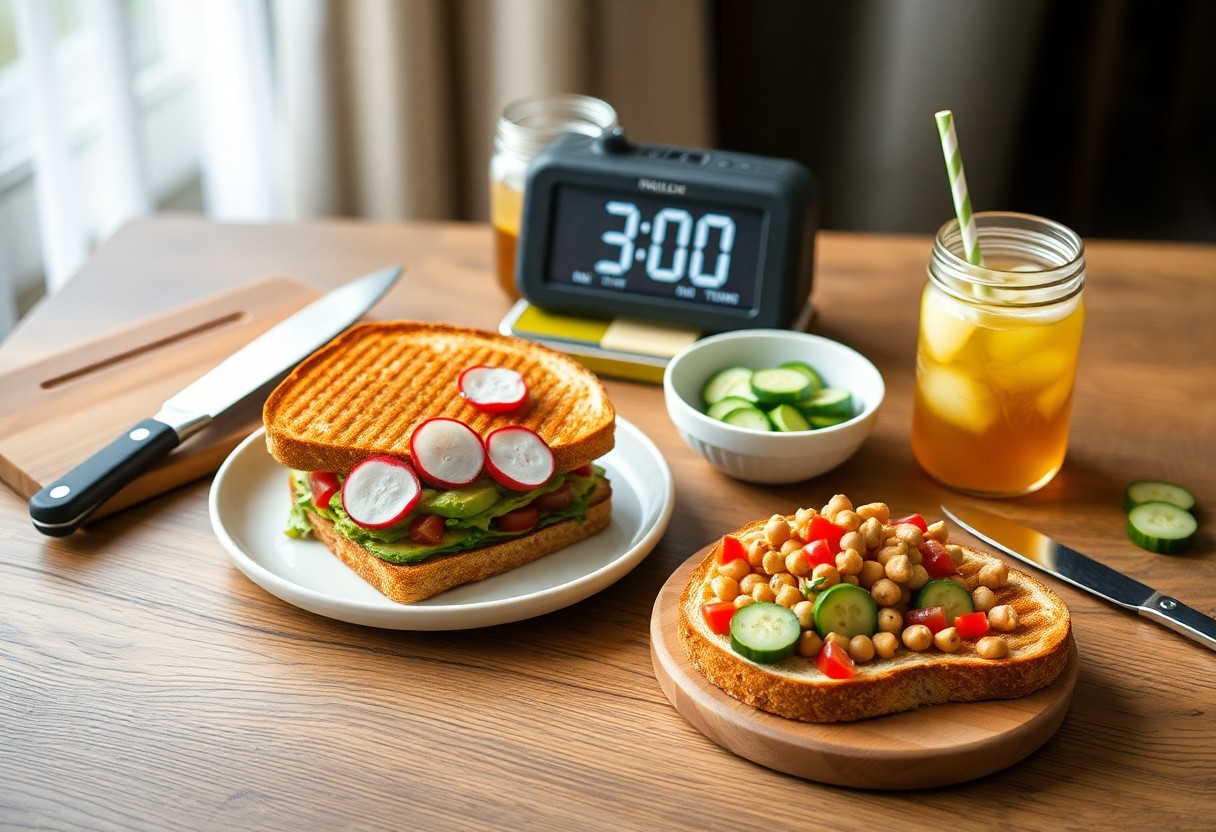
Turn leftovers into a 5-8 minute wrap or sandwich by layering whole-grain tortillas or sourdough with hummus or avocado as a moisture barrier, 3-4 oz sliced turkey or chicken (20-30 g protein), crisp greens, and pickled onions; press in a panini press 1-2 minutes per side or toast the bread for 2-3 minutes for a warm, portable lunch.
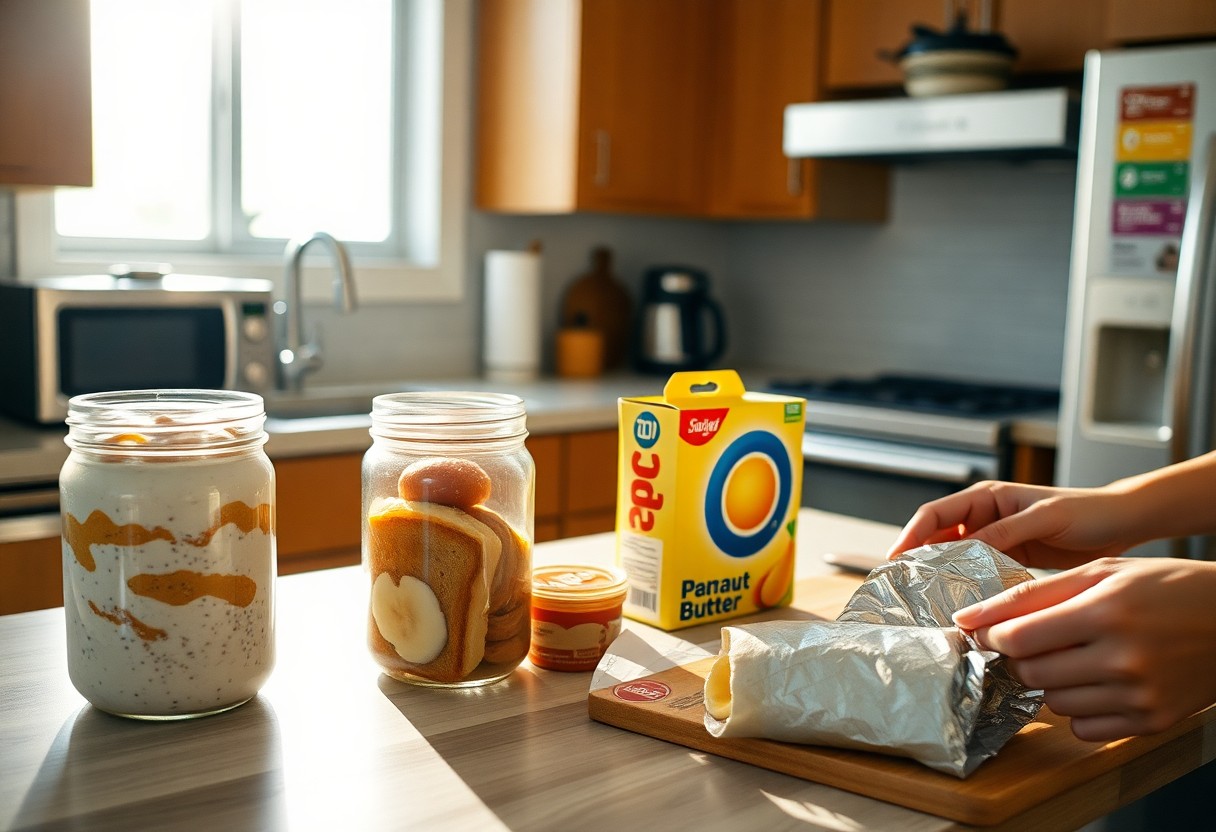
To keep wraps from getting soggy, spread a thin layer of hummus or cream cheese on the bread, place wetter items like tomato in the center, and wrap tightly in foil; store cooked proteins in the fridge 3-4 days and assemble sandwiches the same day or within 24 hours for best texture, or compress in a panini press 30-60 seconds to firm up before packing.
Effortless Dinner Recipes
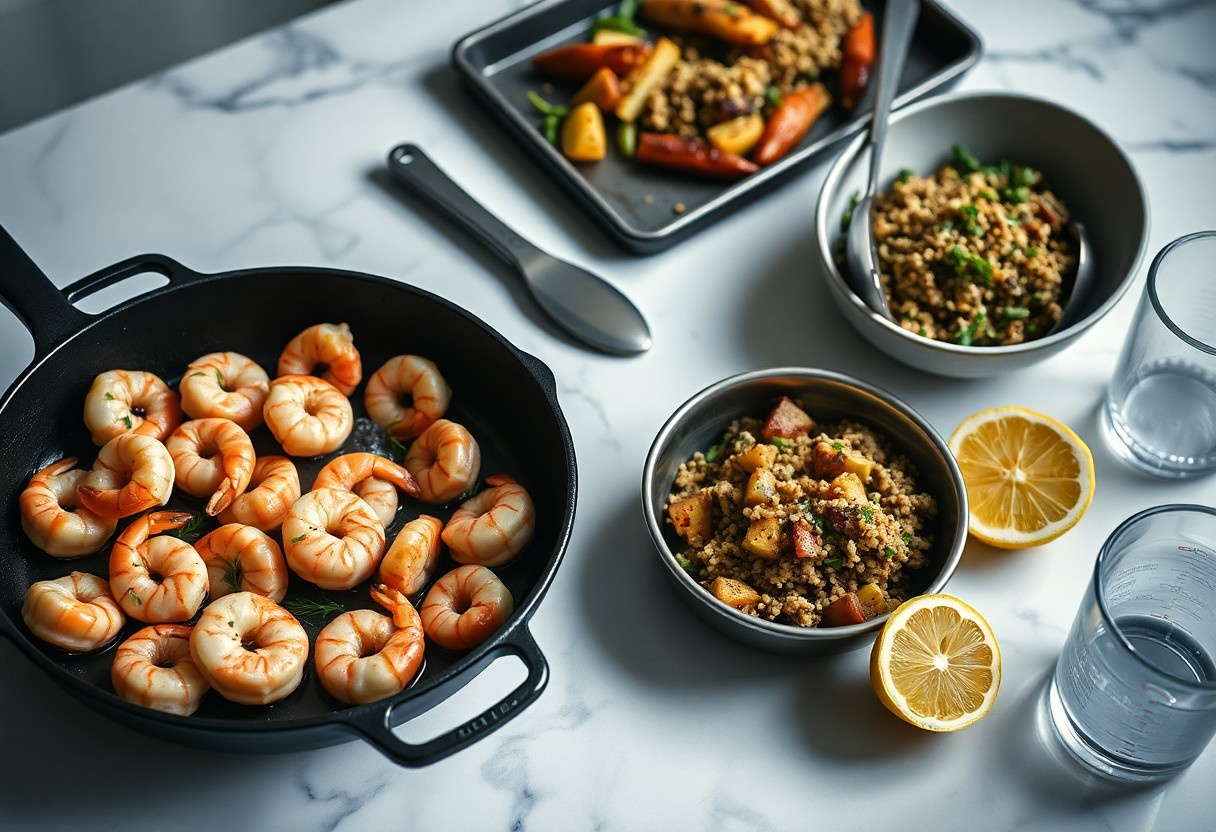
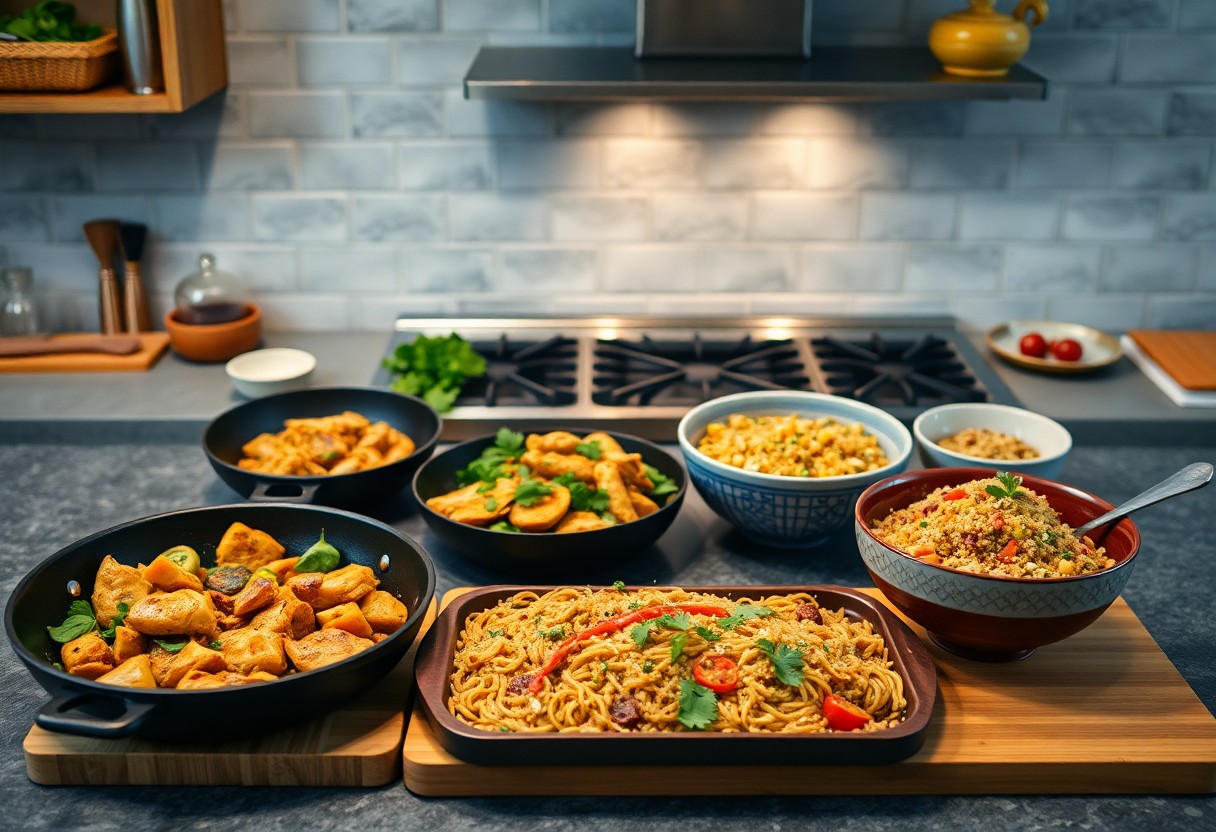
You can pull together satisfying dinners in 15-30 minutes using simple templates: protein + quick veg + a starch. Batch-cook a double portion of grains once a week, keep three sauces (soy-garlic, pesto, lemon-butter) on hand, and rotate proteins-chicken, salmon, tofu-to make 5-7 different meals from the same staples for 2-4 people.
Stir-Fries and Skillets
When you stir-fry, slice proteins thinly so they cook in 4-6 minutes and toss vegetables in 2-3 minutes to keep crunch and nutrients. Use a 10-12″ skillet, 1-2 tablespoons oil, and high heat; examples: beef-and-broccoli ready in 18 minutes, shrimp with snow peas in 12. Toss with a tablespoon of cornstarch-thickened sauce for glossy results.
One-Pan Dishes
Sheet-pan and skillet meals cut prep and cleanup: roast salmon with asparagus at 425°F for 12-15 minutes, or bake bone-in chicken thighs with potatoes for 30-35 minutes. You can feed 3-4 people from a single pan, and swapping spices-smoky paprika, za’atar, or curry powder-changes the dish instantly.
For best results, preheat the oven to 425°F for crisp edges, use parchment or a lightly oiled cast-iron skillet, and space pieces so air circulates. Check chicken to 165°F internal temp and salmon to 125-130°F for medium. Deglaze the pan with ½ cup stock or wine to make a quick pan sauce, and finish with a squeeze of lemon or a tablespoon of chopped herbs.
Decadent Yet Quick Desserts
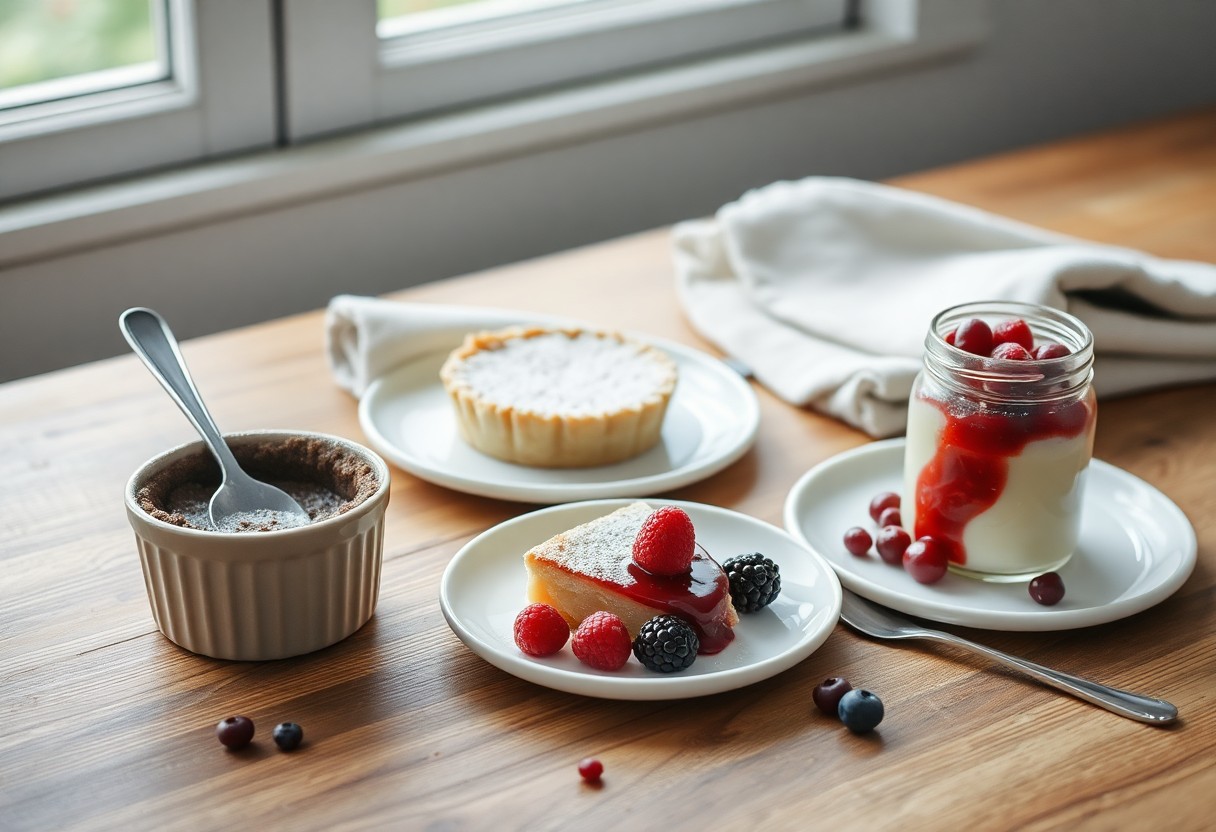
When you need a sweet finish in under 30 minutes, focus on high-impact techniques: molten lava cakes (bake 12-14 minutes), microwave mug cakes (90-120 seconds), or fruit crisps that take 20-25 minutes. You can plate individual portions to control calories or double a batter for six servings; use good-quality chocolate (60-70% cacao) to elevate flavor without extra time.
No-Bake Treats
You can assemble no-bake desserts in 10-20 minutes: a 15-minute no-bake cheesecake for 6-8 servings, chocolate-oat energy bites that keep a week in the fridge, or layered parfaits with Greek yogurt and macerated berries. Press crusts with a measuring cup to save time, toast nuts in a skillet for 3-4 minutes for aroma, and chill at least 1 hour when possible for firmer slices.
30-Minute Baked Goods
Quick bakes that finish in 30 minutes include muffins (12-16 per batch in 18-22 minutes), drop cookies (8-12 minutes), and skillet brownies (20-25 minutes). Preheat to 350°F (175°C), use one-bowl batters, and line pans to speed cleanup. You can often double recipes and still keep bake times within 30-35 minutes by spreading batter across two pans.
To cut prep time, you should measure ingredients by weight – a scale saves minutes and yields consistent muffins – and use room-temperature butter and eggs for even rise. If you have convection, it can shave 2-4 minutes; test doneness with a toothpick, rotate pans halfway when baking multiple sheets, and let items rest 5-10 minutes so 12 muffins will cool enough to glaze in about 10 minutes.
Summing up
On the whole, mastering Delicious 30-Minute Meals Anyone Can Master equips you to prepare nutritious, flavorful dishes fast; by relying on smart mise en place, balanced flavor building, and a handful of pantry staples, you can consistently produce satisfying meals for weeknight dinners or spontaneous guests. With practice, your confidence and speed will improve, making quick cooking a dependable part of your routine.

Leave a Reply