

Easy make-ahead vegetarian recipes streamline your weekly cooking by letting you prepare balanced, flavorful meals in advance. This guide shows dependable techniques, storage tips, and versatile recipes-grain bowls, roasted vegetable batches, protein-rich legumes and tofu options-so you can build nutritious menus, reduce waste, and reclaim time without sacrificing taste.

Key Takeaways:
- Prioritize recipes with sturdy ingredients (legumes, whole grains, firm tofu, hearty vegetables) that store and reheat well.
- Batch-cook base components and keep dressings or delicate toppings separate to preserve texture and flavor.
- Portion into airtight containers, label with dates, and freeze extras to extend shelf life.
Benefits of Meal Prep for Vegetarians
Meal prep turns variable weekday cooking into predictable routines you can rely on: batching staples like grains, legumes and roasted vegetables lets you assemble breakfasts, lunches and dinners in minutes. If you cook once for the week-say, 90-120 minutes on Sunday-you can save roughly 2-4 hours of weekday cooking time, reduce impulse takeout, and ensure balanced portions of protein and fiber across 4-5 meals daily.
Time-Saving Advantages
Batching chopping and bulk-cooking cuts repetitive tasks: you chop once, roast once, and reheat multiple times. For example, cooking a large pot of quinoa and a tray of roasted veg on Sunday gives you five 10-minute lunches instead of daily 30-45 minute prep, and using a pressure cooker or Instant Pot can shorten legume cook time to 20-30 minutes, freeing up weekday hours for work or family.
Cost Efficiency
You lower food costs by minimizing takeout and buying staples in bulk: replacing two $12 takeout meals per week saves about $24 weekly, roughly $100 per month. Purchasing dried beans, oats and frozen vegetables in larger quantities typically reduces unit price by 20-40%, and planning meals around in-season produce cuts per-meal produce costs while avoiding waste.
Stretching ingredients multiplies savings-use cooked lentils across soups, salads and wraps, and freeze portions to avoid spoilage. A $2-3 bag of dried beans or lentils can provide multiple meals, bringing many plant-based servings down to under $1 each; pairing these with inexpensive grains like rice or barley keeps your per-serving cost consistently low.
Key Ingredients for Vegetarian Meal Prep
For efficient meal prep you should prioritize durable proteins, whole grains and hardy vegetables that withstand refrigeration and reheating. Think dried lentils and beans, brown rice or quinoa (1 cup cooked quinoa yields about 8 g protein), extra-firm tofu, and root vegetables like sweet potatoes and carrots. You’ll get predictable textures across meals and fewer last-minute trips to the store when these items form your weekly backbone.
Staples to Stock
Stock pantry staples such as dried lentils and chickpeas, canned tomatoes, brown rice, quinoa, rolled oats, extra-virgin olive oil, soy sauce, and a spice mix you love. Keep extra-firm tofu and a selection of sturdy produce-onions, bell peppers, broccoli-in the fridge, and freeze cooked grains or portions; cooked grains and legumes typically last 4-5 days refrigerated, making batch prep reliable.
Nutrient-Rich Additions
Add nutrient-dense extras like nuts, seeds (chia, hemp, flax), nutritional yeast, fortified plant milks for B12 and calcium, and dark leafy greens for iron and vitamin K. A 3-ounce serving of firm tofu supplies roughly 8-10 g protein, while a tablespoon of chia boosts fiber and omega-3s-these small additions elevate both nutrition and satiety in your meals.
To maximize benefits, you can prep small jars of toppings and mix-ins: 2-3 tablespoon portions of hemp or flax for smoothies, roasted nuts and seeds for grain bowls, and a shaker of nutritional yeast for an instant umami/B12 boost if fortified. Pair iron-rich greens with vitamin C sources-spinach with lemon or bell pepper-to enhance absorption, and keep fermented items like miso or kimchi on hand to add probiotics and flavor without daily prep.

Breakfast Ideas
For weekday breakfasts, you can batch-prep options that hold 3-5 days: make 10-12 egg or tofu muffin cups, 6-8 veggie-packed burritos, and 4-5 jars of overnight oats. Choose sturdy fillings-black beans, quinoa, roasted sweet potato-to avoid soggy textures, and portion into single-serving containers so reheating takes 60-90 seconds in the microwave or 12-15 minutes at 350°F from chilled.
Overnight Oats Variations
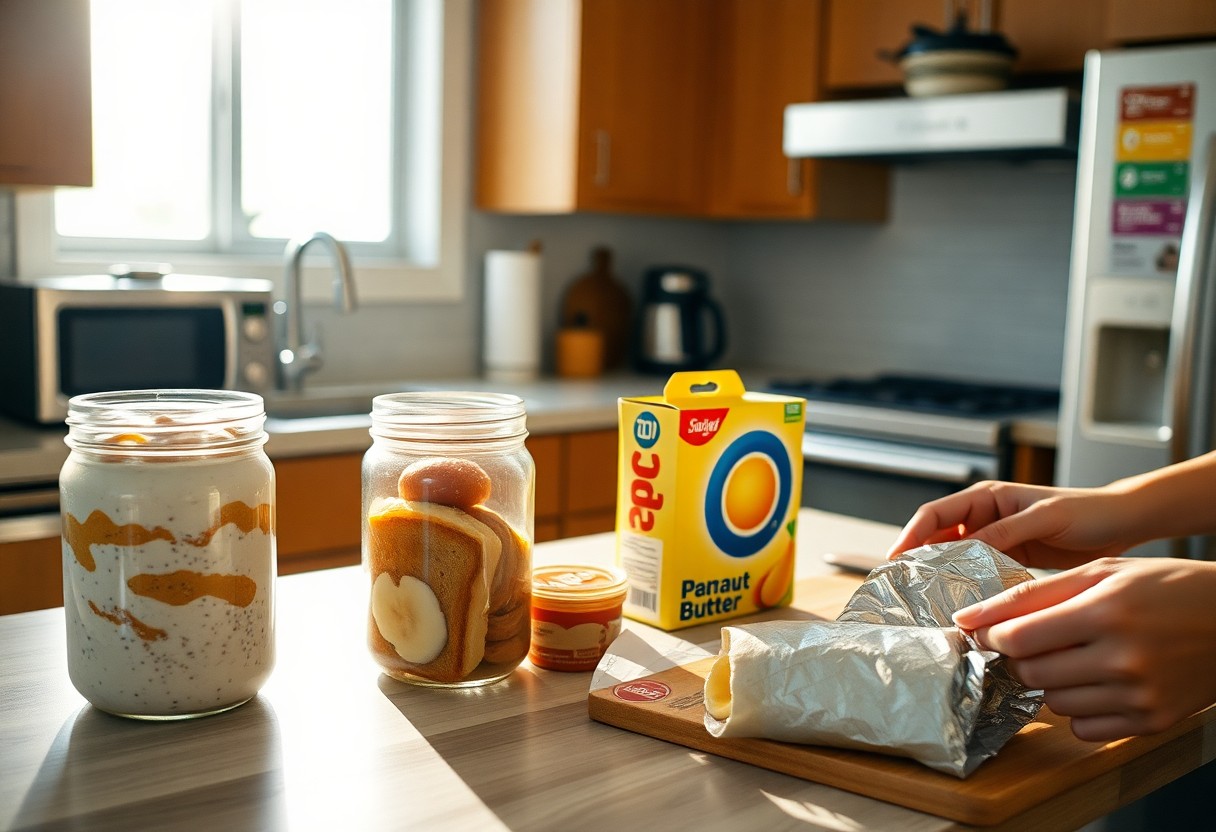
With overnight oats, you use a 1:1 ratio of rolled oats to milk and 1 tablespoon chia seeds per ½ cup oats for creaminess; let sit 6-8 hours. Try 1) apple-cinnamon with grated apple and walnuts, 2) mixed-berry with Greek yogurt and almond butter, or 3) chocolate-peanut with cocoa and banana. Store up to 5 days in jars for grab-and-go breakfasts.
Veggie-Packed Breakfast Burritos
You can wrap protein and fiber in whole-wheat tortillas with ½ cup black beans, ¾ cup scrambled tofu or eggs, ¼ cup roasted peppers, and a handful of spinach per burrito. Assemble 6-8, freeze individually, and expect about 12-18 grams protein each depending on fillings. Reheat from frozen 1-2 minutes in the microwave or 20 minutes at 325°F wrapped in foil.
To avoid soggy burritos, you should squeeze excess moisture from cooked vegetables, drain beans, and cool fillings before wrapping; lightly toast tortillas before assembling to add a moisture barrier. Wrap each burrito in foil, then bag and freeze up to 3 months. When serving, add fresh avocado, salsa, or hot sauce after reheating to preserve texture and flavor.
Lunch Options
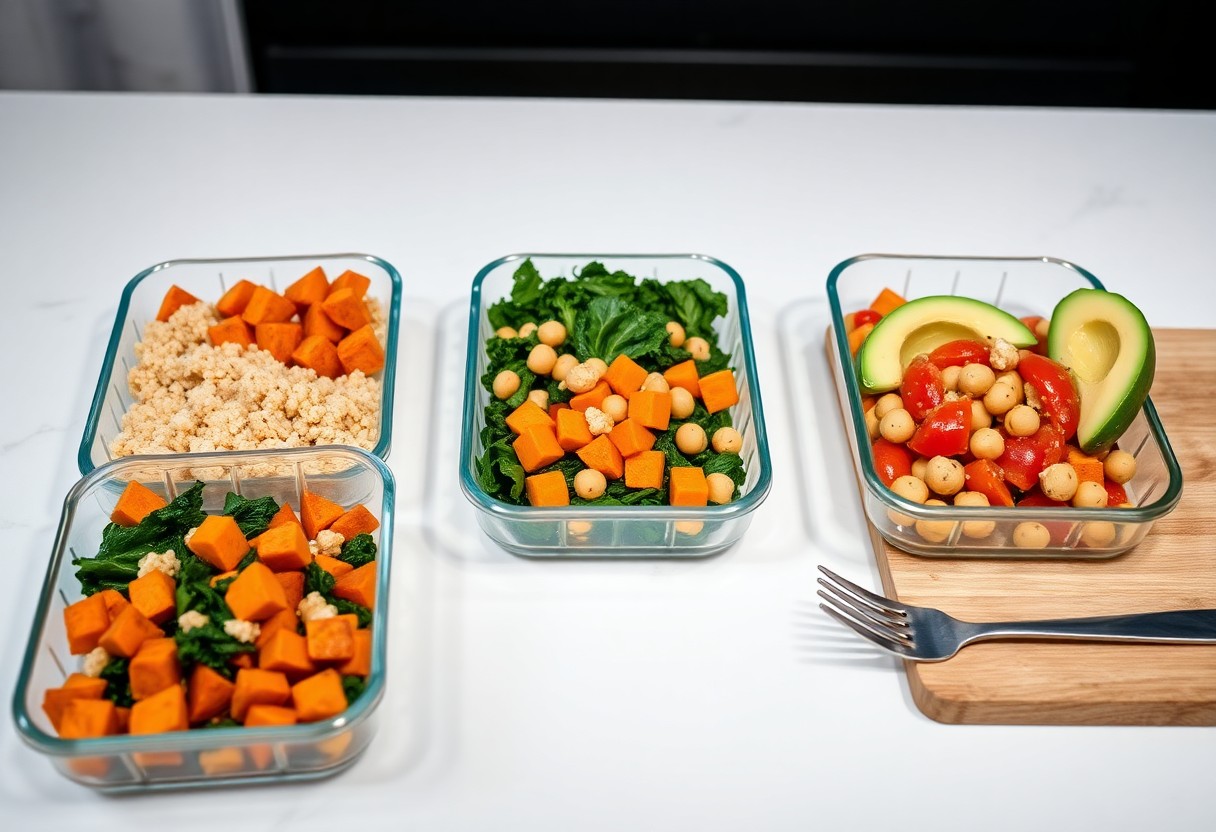
You should plan lunches around make-ahead bowls, salads and wraps that hold 3-5 days refrigerated; batch 3-4 grain bowls, 6-8 wraps or 4-5 mason-jar salads on Sunday to save 10-15 minutes per weekday meal. Use airtight containers, portion proteins separately, and label dates so you rotate older meals first.
Hearty Grain Bowls
You can build bowls from a base like quinoa, farro or brown rice-1 cup dry quinoa yields about 3 cups cooked, enough for 3-4 lunches. Add 1-2 cups roasted vegetables, 1 cup cooked chickpeas or 6-8 oz tofu per bowl, plus a bold dressing (tahini-lemon or miso-ginger). Store components separately up to 4 days to keep textures crisp.
Flavorful Lentil Salads
Lentils give you protein and fiber with minimal fuss: French (Puy) or green lentils hold their shape with 20-25 minute cook times, while red lentils soften in 10-12 minutes for a creamier salad. Cook 1 cup dry to yield about 2-2.5 cups cooked, then toss with vinegar, olive oil, herbs and crunchy add-ins; the salad keeps 4-5 days refrigerated.
You can make a Mediterranean lentil salad with 1 cup cooked lentils, ½ cup diced cucumber, 8 halved cherry tomatoes, 2 tbsp chopped parsley and 2 tbsp crumbled feta; dress with 1 tbsp red wine vinegar and 2 tbsp olive oil. Alternatively, add cumin, smoked paprika and toasted almonds for a Moroccan twist-portion into 4 containers for grab-and-go lunches.
Dinner Recipes
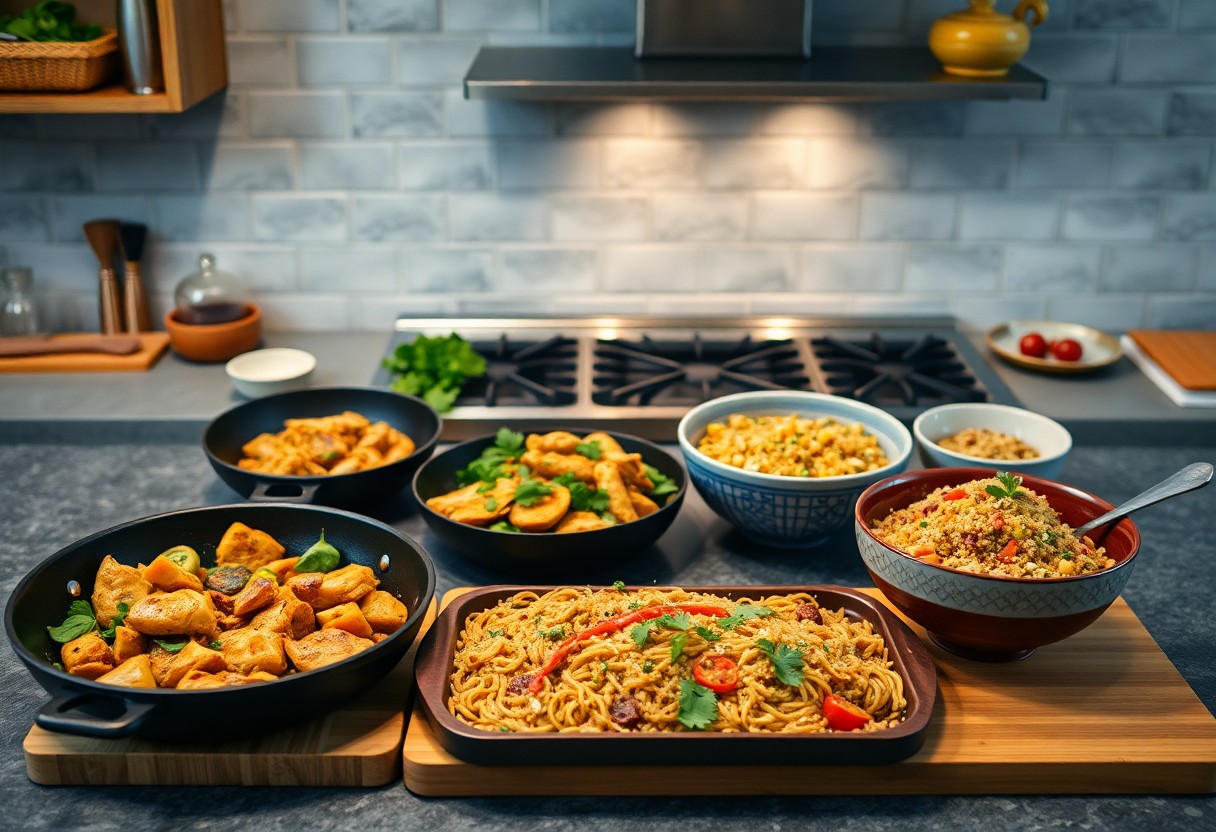
Choose dinners that reheat and portion easily, aiming for 4-6 servings so a single prep session covers 3-4 weeknights. Use durable proteins like chickpeas, lentils or firm tofu paired with whole grains (brown rice, farro) and sturdy veg such as carrots or Brussels sprouts. Schedule 60-90 minutes once weekly to cook staples, and store in airtight containers for 3-5 days or freeze individual portions for up to 3 months.
Quick Stir-Frys
Stir-frys deliver ready dinners in 10-15 minutes and scale well for meal prep: make 3-4 portions by flash-frying 400-500g mixed veg (broccoli, bell pepper, snap peas) with 300-400g tofu or tempeh. Use a simple sauce-2 tbsp soy, 1 tbsp rice vinegar, 1 tsp sesame oil-and serve over pre-cooked rice or noodles. Store in the fridge for 3-4 days; reheat in a hot pan to preserve texture.
Comforting Casseroles
Casseroles give you hearty, make-ahead dinners that reheat evenly-examples include lentil shepherd’s pie, baked ziti with roasted vegetables, and quinoa-black bean enchilada bake. Assemble 6 portions and bake 25-45 minutes at 180°C (350°F); cool, then refrigerate 1-2 days or freeze up to 3 months. Portion before freezing for easy single-serving reheats.
When preparing casseroles you should par-cook components: boil pasta al dente, roast vegetables until caramelized, and fully cook legumes. Layer sauces to retain moisture and cover with foil when baking from chilled-reheat 30-40 minutes at 180°C (350°F); from frozen, bake 50-60 minutes covered, then remove foil for 5-10 minutes to brown the top. Portion and label containers with date and contents for smooth weekly planning.
Snacks and Sides
Energy Bites
Combine 1 cup rolled oats, 1/2 cup nut butter, 1/3 cup honey or maple syrup, 2 tbsp chia or flax and 1/4 cup mix-ins (chocolate chips, chopped nuts) to form a dough; roll into 1-inch balls-this yields about 20-24 bites. Chill 30-60 minutes before storing; you can keep them refrigerated 10-14 days or freeze up to 3 months. You’ll have grab-and-go snacks that deliver roughly 120-150 kcal each depending on mix-ins.
Dipping Veggies
Pre-cut carrots, cucumber sticks, bell pepper strips and celery make for fast, healthy snacks; pack 3-4 cup portions per container. Pairing: you should batch 2-3 dips-classic hummus, tzatziki and roasted red pepper-so variety lasts through the week. Store sliced veggies in airtight containers with a paper towel to absorb moisture; they keep 3-5 days refrigerated, while hummus lasts 5-7 days and tzatziki 3-4 days.
For hummus, blend one 15 oz can (drained ~240 g) chickpeas, 3 tbsp tahini, 2 tbsp lemon juice, 1 clove garlic, 2 tbsp olive oil and 1/2 tsp salt to yield about 2 cups; adjust water for your preferred texture. For tzatziki, grate and squeeze 1/2 cucumber, then mix with 1 cup Greek yogurt, 1 clove garlic, 1 tbsp lemon juice and 1 tbsp dill for roughly 1 cup-store 3-4 days. You can extend freshness by keeping dips and veggies separate and adding a splash of lemon or olive oil to dips before sealing.
Conclusion
From above, you can see that easy make-ahead vegetarian recipes simplify meal prep by letting you batch-cook nutrient-dense dishes, mix-and-match components, and save time during busy weeks. With strategic planning, proper storage, and simple reheating methods, you maintain flavor and variety while meeting your dietary needs. Prioritize versatile bases-grains, legumes, roasted vegetables-to build quick meals that support consistent, stress-free eating.

Leave a Reply