
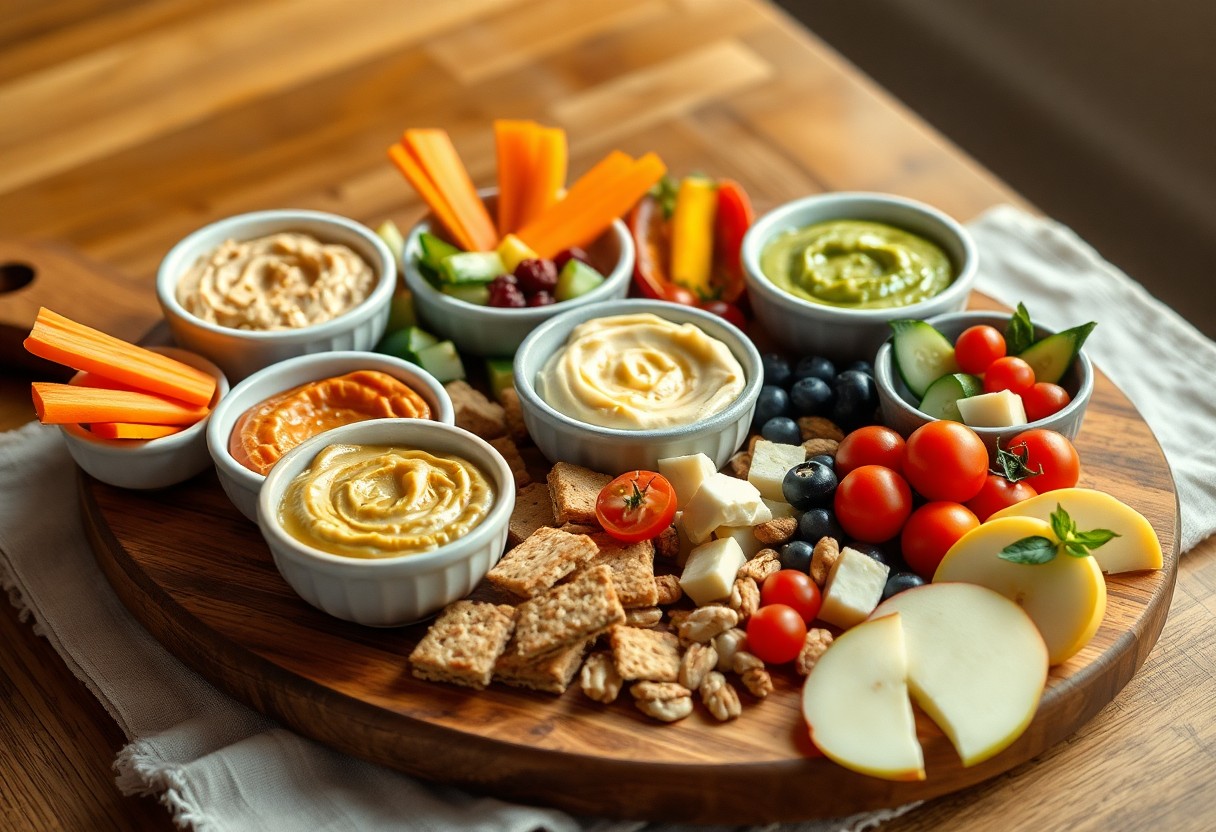
easy snack options let you assemble satisfying bites without a stove, using pantry staples, fresh produce, and simple pairings that fit your taste and schedule; this guide gives quick, no-cook recipes, assembly tips, and storage advice so you can snack smarter and faster.
Key Takeaways:
- Pair protein and fiber for satisfying no-cook snacks (e.g., nut butter with apple slices, cheese with whole-grain crackers, Greek yogurt with berries).
- Prep grab-and-go portions in advance-portion nuts, cut veggies, and assemble snack boxes to save time during the week.
- Keep pantry staples on hand-hummus, canned tuna, nuts, seeds, dried fruit, and whole-grain crackers create many quick combos without cooking.
Fresh Fruits and Vegetables
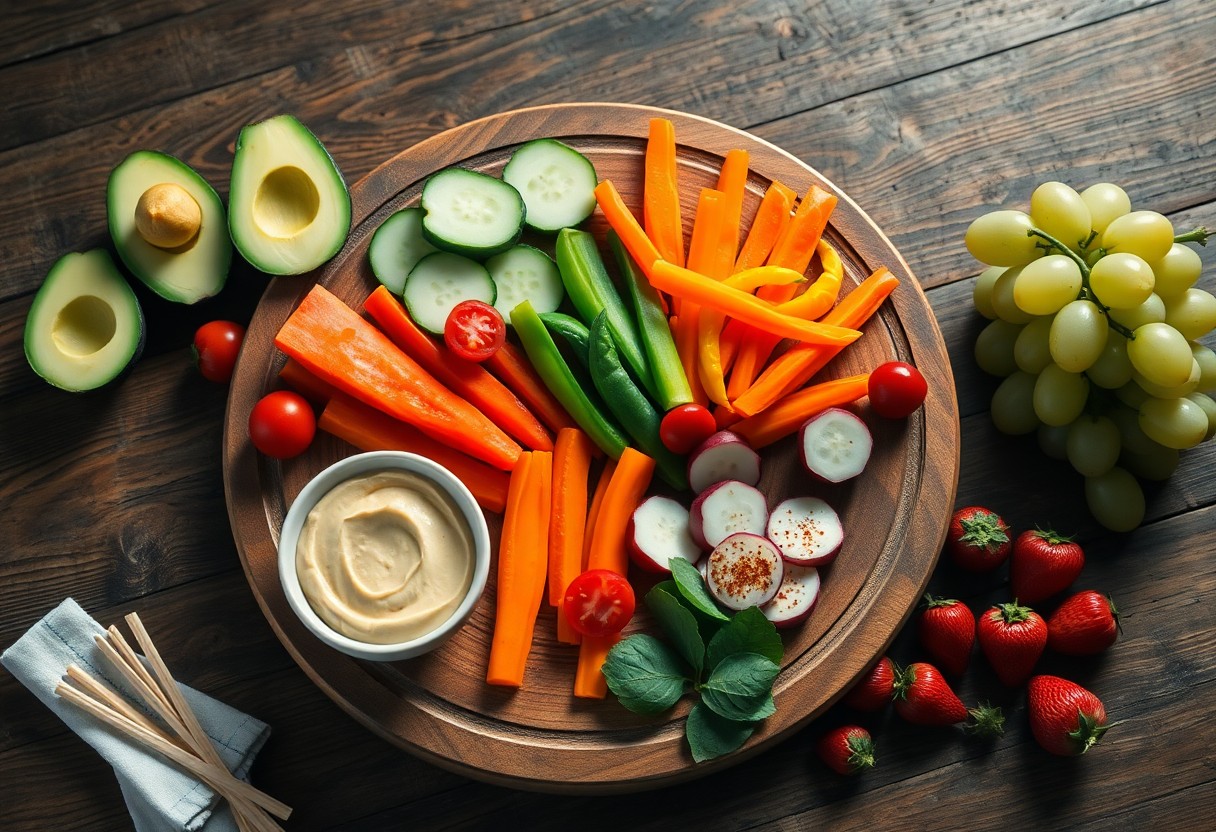
Fresh produce lets you assemble satisfying snacks in minutes while adding vitamins, fiber, and hydration; a medium apple provides about 4 g fiber and 95 kcal, and a cup of raw carrots gives roughly 3.6 g fiber and 52 kcal. You can mix textures and colors-crisp, juicy, and creamy-to keep snacks interesting, and pairing a fruit or veg with a protein-rich dip or spread stabilizes energy and appetite between meals.
Sliced Apples with Nut Butter
Slicing a medium apple and spreading 1-2 tablespoons of peanut or almond butter gives you around 6-8 g protein plus fiber, which helps you feel full longer. You can sprinkle 1 teaspoon of chia seeds for an extra 2 g fiber and omega‑3s, or use sunflower seed butter if you have a nut allergy. Aim for balanced portions-one apple with 1-2 tbsp nut butter makes a portable, 150-250 kcal snack.
Veggie Sticks with Hummus
Cut bell peppers, cucumbers, and carrot sticks into 3-4 inch pieces and pack with 2-3 tablespoons of hummus; that hummus portion supplies about 2-4 g protein and 50-80 kcal, while a cup of mixed veggies adds roughly 50-80 kcal and 3-4 g fiber. You get crunchy, low‑calorie volume plus protein and healthy fats, which helps stabilize blood sugar and curb cravings between meals.
Prep once and snack all week: cut vegetables into uniform sticks and store carrots submerged in water in a sealed container to stay crisp for up to 7 days, while sliced peppers and cucumbers keep well for 3-5 days. Opened store‑bought hummus typically lasts 4-7 days refrigerated; homemade lasts about 3-4. To boost protein, stir 1-2 tablespoons of plain Greek yogurt into hummus-each tablespoon adds roughly 1-1.5 g protein-without sacrificing texture.
Nut and Seed Combinations
Trail Mix Recipes
You can mix quick, portion-controlled trail mixes using a 2:1:1 ratio of nuts:seeds:dried fruit – for example, 1/2 cup almonds, 1/4 cup pumpkin seeds, and 1/4 cup dried cranberries makes about four 1/4-cup servings. Swap in 1/4 cup dark chocolate chips for a sweeter option, or add 2 tbsp shredded unsweetened coconut for texture. Aim for 1/4-cup servings (roughly 150-200 calories) to keep snacks satisfying without overeating.
Roasted Chickpeas
You’ll find pre-roasted chickpeas in single-serve packs or bulk bins, offering a crunchy, high-protein snack without cooking. Try 1/4-cup portions (about 120-140 calories) as a pocket snack; popular flavors include sea salt, smoked paprika, and curry. Mix them with nuts for extra staying power, or use them whole as a crunchy salad topper to add texture and about 5-7 grams of protein per serving.
To extend enjoyment, store opened roasted chickpeas in an airtight container and keep them in a cool, dry place – they stay crisp for about 1-2 weeks; unopened commercial bags can last months. For flavor variety, rotate seasonings like za’atar, chili-lime, or cinnamon-maple in mixes, and combine 1/8 cup roasted chickpeas with 1/8 cup sunflower seeds for a balanced crunch and added micronutrients.
Dairy and Dairy Alternatives
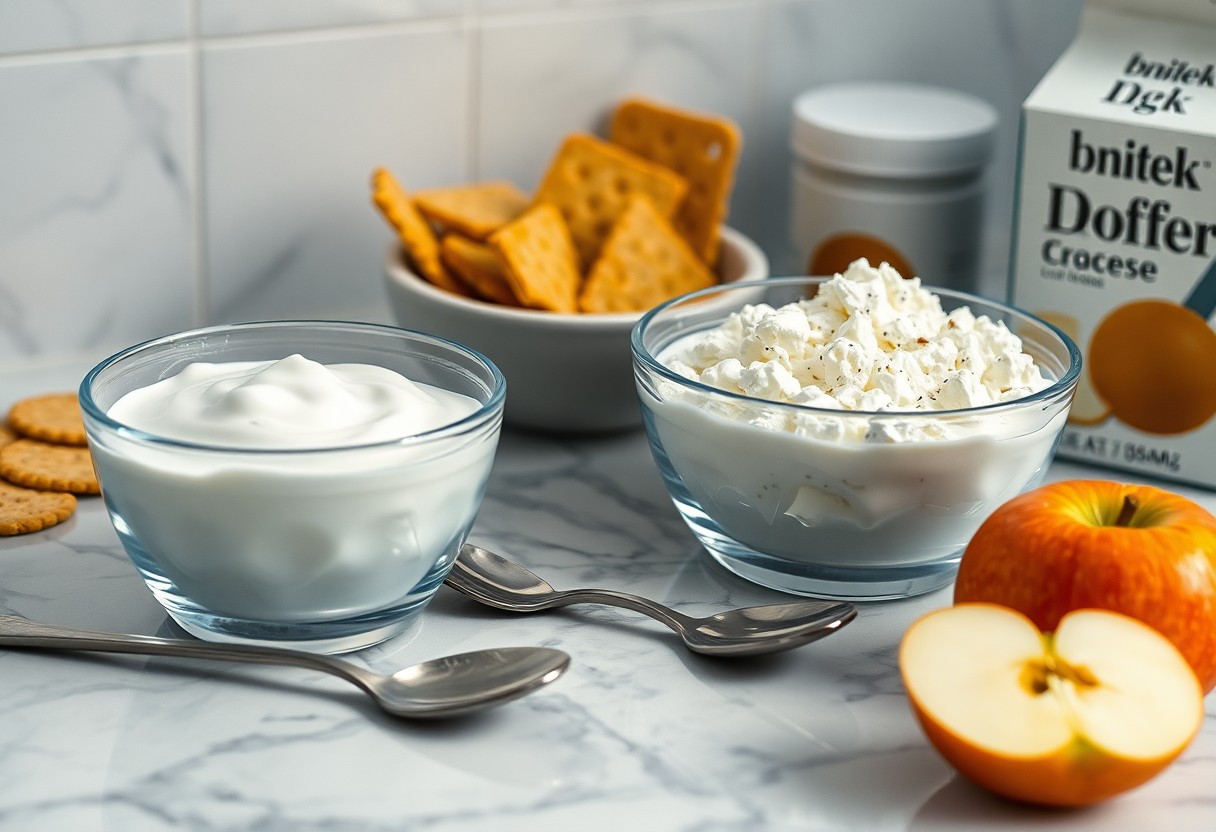
Tap into ready-to-eat dairy and plant-based options for quick protein and calcium; Greek yogurt has about 10 g protein per 100 g, kefir provides probiotics, and fortified soy or almond milk often offers ~300 mg calcium per cup. You can pair single-serve containers with fruit, nuts, or whole-grain crackers for balanced snacks that take 2-3 minutes to assemble.
Yogurt Parfaits
You can start with 150-200 g Greek yogurt (roughly 15-20 g protein) and layer 1/2 cup berries (4-6 g fiber), 1/4 cup granola, and 1 tbsp chia seeds for an omega-3 boost. Swap in plant-based yogurt if needed-aim for varieties with 5-10 g protein per serving-and use canned fruit in juice or nut butter drizzles to vary texture and sweetness without cooking.
Cheese Plates
You can offer 1-2 oz portions of 2-3 cheeses: a hard cheese like aged cheddar (~7 g protein/oz), a spreadable goat or brie, and a pungent blue for contrast. Combine with whole-grain crackers, 1-2 tbsp fruit preserves, a handful of nuts, and apple or pear slices to balance fat, salt, crunch, and acidity for a satisfying no-cook snack.
As you assemble, plan about 2-3 oz total per person and vary textures-aged cheddar with apple and walnuts, goat cheese with honey and figs, or Manchego with quince paste are classic combos. Let cheeses sit 20-30 minutes at room temperature to open flavors, and if you prefer non-dairy, choose cashew- or almond-based spreads (often 2-4 g protein per serving) and pair them the same way.
Whole Grain Options
For filling, nutrient-dense snacks pick whole-grain bases like seeded crispbreads, whole-wheat mini pitas, or brown rice cakes; the Dietary Guidelines recommend making at least half your grains whole. You’ll gain more fiber, B vitamins, and minerals-many whole-grain snack portions deliver about 3-5 g fiber-and pairing them with protein or healthy fat keeps your snack balanced and satisfying between meals.
Whole Grain Crackers with Toppings
Use a 30 g serving of whole-grain crackers (often 100-140 kcal, 3-5 g fiber) as a canvas: spread 2 tbsp hummus and sliced cucumber, top with 1 oz turkey and mustard, or add 1 tbsp almond butter and thin apple slices for sweet-savory contrast. You should aim to add 5-15 g protein per snack to stabilize blood sugar and extend satiety.
Rice Cakes with Spreads
Rice cakes are a low-calorie base-about 35-40 kcal each-so you can stack flavors without blowing your snack budget; choose brown rice varieties for extra fiber. Try 1 tbsp peanut butter and banana slices, 2 tbsp cottage cheese with berries, or mashed avocado with lemon and chili for a quick, portable option under roughly 200 kcal when you pair one or two cakes with protein-rich spreads.
To make them more satisfying, prioritize protein and healthy fat: 1 tbsp nut butter adds ~90 kcal and 3-4 g protein, while 1/2 cup cottage cheese contributes about 12-14 g protein. Assemble just before eating to avoid soggy cakes, or portion spreads into small containers for grab-and-go prep; keep to 1-2 cakes per snack and add fresh fruit or raw veggies for volume.
Easy Dips and Spreads
You can turn simple crackers, sliced veg, or whole-grain pita into a filling snack by adding high-flavor dips and spreads. Try hummus made from one 15-oz can chickpeas, 3 tbsp tahini, 2 tbsp olive oil and a clove of garlic blended 30 seconds, or mix cottage cheese with herbs for a 12-15 g protein boost per 100 g serving.
Guacamole
Mash 1 ripe avocado with 1 tbsp lime juice, 2 tbsp finely diced red onion, 1 tbsp chopped cilantro and 1/4 tsp salt for a 3-5 minute guacamole. You’ll preserve color by pressing plastic wrap on the surface; add diced tomato or a pinch of cumin for a heartier spread that pairs well with seeded crispbreads or cucumber rounds.
Salsa Variations
You can rotate between pico de gallo, blended red salsa, and fruit salsas to keep snacks interesting: try pico with 2 chopped tomatoes, 1/4 cup onion, 1 jalapeño and lime; blended salsa with roasted tomatillos and garlic; or mango salsa using 1 cup diced mango, 1/4 cup red pepper and cilantro. Each type lasts 2-3 days refrigerated.
For best texture, seed tomatoes to reduce liquid and chop ingredients uniformly-use a food processor for smooth salsa or a chef’s knife for chunky pico. Pair spicy salsas with avocado or plain yogurt to temper heat, and portion into 4 oz containers for grab-and-go servings that control sodium and calories.
Sweet Treats
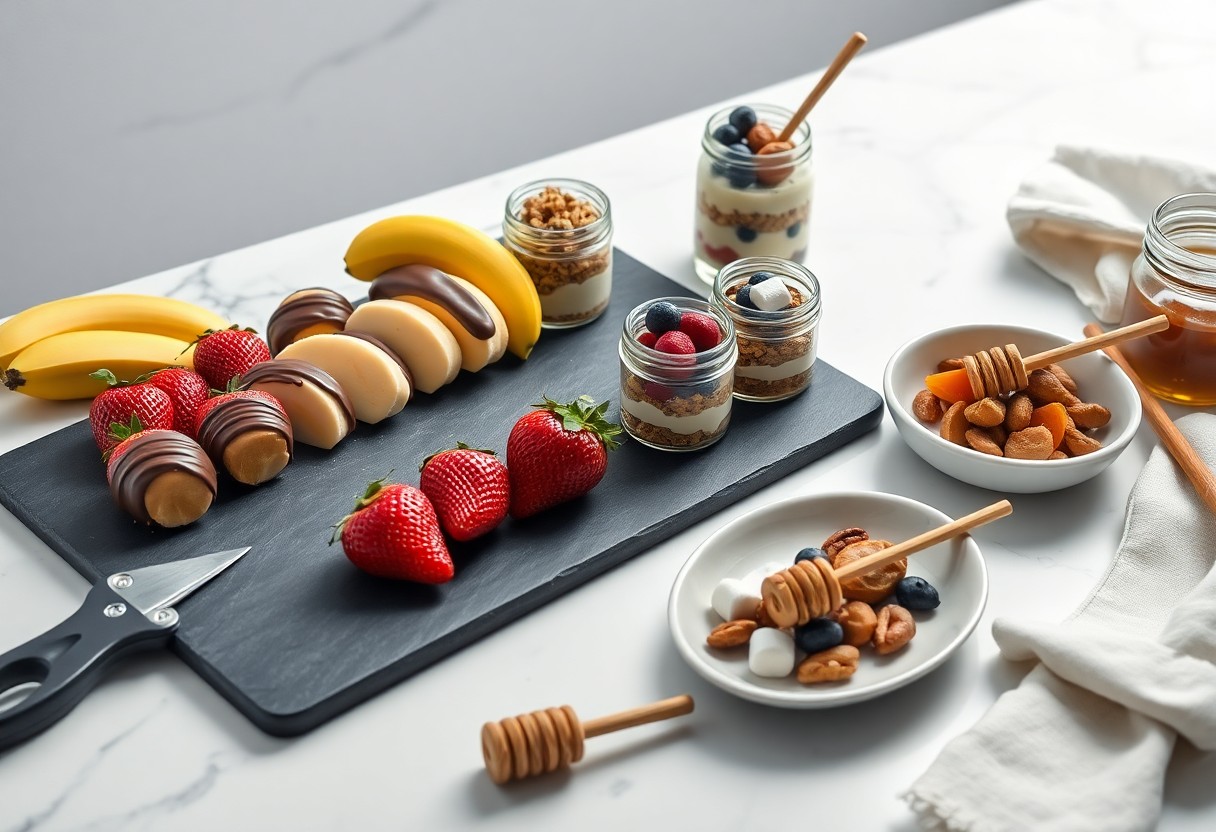
When you’re craving something sweet without heat, reach for no-bake options that balance flavor and nutrition. You can combine fresh fruit, nut butters, whole oats, and a bit of dark chocolate (70% cocoa has ~170 kcal and about 3 g fiber per ounce) to create desserts with protein and fiber. Mix textures like creamy, crunchy, and juicy for satisfaction; small swaps such as Greek yogurt or chia seeds boost protein and omega-3s.
Energy Bites
You can make energy bites in about 10 minutes by pulsing 1 cup rolled oats, 1/2 cup dates, 1/2 cup nut butter, 2 tbsp chia seeds, and 2 tbsp honey-roll into 1-inch balls to yield roughly 12 pieces at ~100-120 kcal each. Try adding 2 tbsp cocoa powder, 1/4 cup mini chips, or 2 tbsp protein powder for extra flavor and protein. Store in the fridge up to 7 days or freeze up to 3 months.
Chocolate-Covered Snacks
Try dipping strawberries, banana slices, almonds, or mini pretzels in melted dark chocolate for an easy treat-6 oz (170 g) of melted chocolate typically covers about 12-15 strawberries. Use short microwave bursts of 20-30 seconds, stirring between intervals, then chill 10-15 minutes to set. Choosing 70% cocoa gives more antioxidants and generally less sugar than milk chocolate.
As an alternative to melting, you can spread a thin layer of chocolate-hazelnut spread on apple slices or fill silicone molds with melted chocolate for controlled portions; 1 tablespoon of spread is roughly 80-100 kcal. Sprinkle sea salt, crushed nuts, or toasted coconut on top before the chocolate firms to add contrast, and keep items in airtight containers-most chocolate-covered snacks stay best for 5-7 days refrigerated.
Final Words
Following this concise guide, you can assemble satisfying, no-cook snacks that fit busy days, dietary needs, and flavor preferences-think simple combos of fruit, cheese, whole grains, and spreads. Plan a few go-to pairings, keep smart staples on hand, and you’ll always have snack options that are nutritious, portable, and effortless.

Leave a Reply