
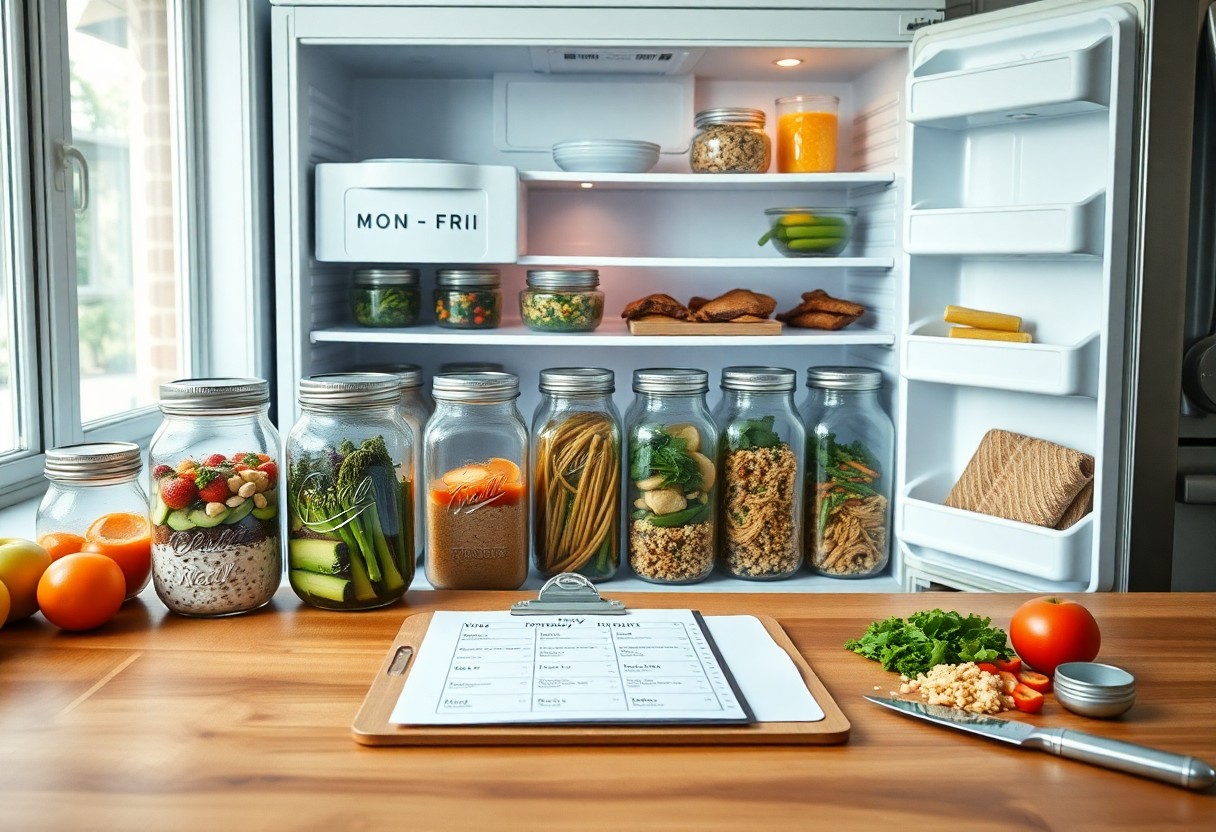
Easy meal planning gives you time back: prepare versatile make-ahead dishes and batch components so your weekdays run smoothly, reduce stress, and ensure healthy, flavorful meals without daily cooking. With clear steps and simple storage tips, you can assemble breakfasts, lunches, and dinners in advance, adjust portions to your schedule, and confidently rely on freezer- and fridge-safe recipes that preserve texture and taste.
Key Takeaways:
- Plan and batch-cook versatile staples (grains, proteins, sauces) to mix-and-match through the week-saves time and keeps meals varied.
- Use airtight containers, cool foods properly before freezing, and label with contents and dates to preserve quality and safety.
- Portion for easy reheating and finish with fresh add-ins (herbs, citrus, crunchy toppings) to restore flavor and texture.
Benefits of Make-Ahead Meals
You get steady weeknight wins: fewer last-minute decisions, lower grocery bills, and less food waste. By prepping once-60-90 minutes on a weekend-you can reduce nightly cooking to 10-15 minutes and have grab-and-go lunches for 3-5 days. You also cut impulse takeout when meals are ready, and freezing portions extends shelf life up to 3 months, stretching both your time and your budget.
Time-Saving Techniques
You can shave hours from your week by batching staples: cook a large pot of grains, roast a sheet pan of vegetables, and prepare 2-3 proteins (baked chicken, lentils, tofu) in one session. Use labeled 1-2 cup containers, a slow cooker for hands-off simmering, and timers to multitask; 60-90 minutes of focused prep often creates 8-12 meals that reheat in 3-8 minutes.
Healthier Eating Habits
You gain better control over calories, sodium, and portion sizes when you pre-portion meals and choose whole ingredients. Swap creamy dressings for yogurt or vinaigrette, build plates with ½-1 cup cooked whole grains and a cup of vegetables, and use lean proteins to hit satiety without excess fat. Consistent prep makes it simpler to meet your nutrition goals each day.
You can make tracking macros and servings straightforward: aim for about 25-35 grams of protein per meal, 1-2 servings of vegetables, and ½ cup cooked grains. For scale, 1.5 pounds of cooked chicken yields roughly six 4-6 oz portions; freeze soups or casseroles in 2-cup portions and label with the date for up to 3 months. These practical steps help you reduce added sugars and sodium while keeping meals convenient and portion-controlled.
Breakfast Recipes
Overnight Oats
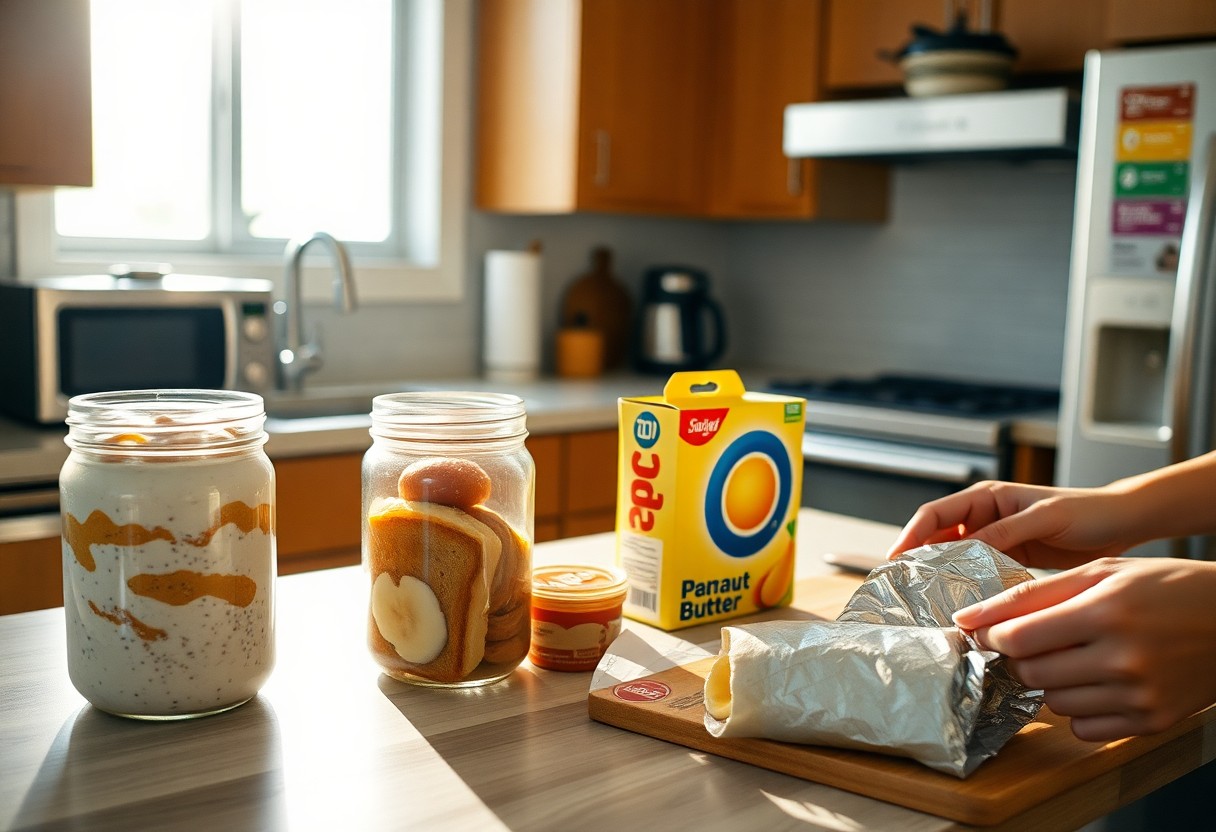
You can batch overnight oats by combining 1/2 cup rolled oats, 1/2-3/4 cup milk or plant milk, and 1/4 cup Greek yogurt for extra protein; refrigerate 6-8 hours. Add 1 tbsp chia seeds, 1/2 banana, or 1/4 cup berries for fiber and vitamins. Prep five jars on Sunday to cover your workweek breakfasts, and rotate flavors-peanut butter + cocoa, apple + cinnamon-to keep variety without extra effort.
Freezer Smoothie Packs
You should assemble freezer smoothie packs with measured portions-1 cup mixed berries, 1/2 banana, 1 tbsp flax or chia, and 1 cup spinach-into labeled freezer bags; freeze up to three months. When blending, add 1/2-1 cup liquid (milk, juice, or water) plus a scoop of protein powder if desired. Batch 10 packs on the weekend to cut morning prep to under two minutes.
You’ll get best results if you lay packs flat in a single layer until solid, then stack to save space and label with date; most packs stay good for about three months. To preserve texture, keep soft ingredients like avocado or banana separate or add lemon to slow browning. Blend directly from frozen using a high-speed blender, start with 1/2 cup liquid and increase as needed, and pulse to break up ice for a smooth 12-16 oz drink.
Lunch Recipes
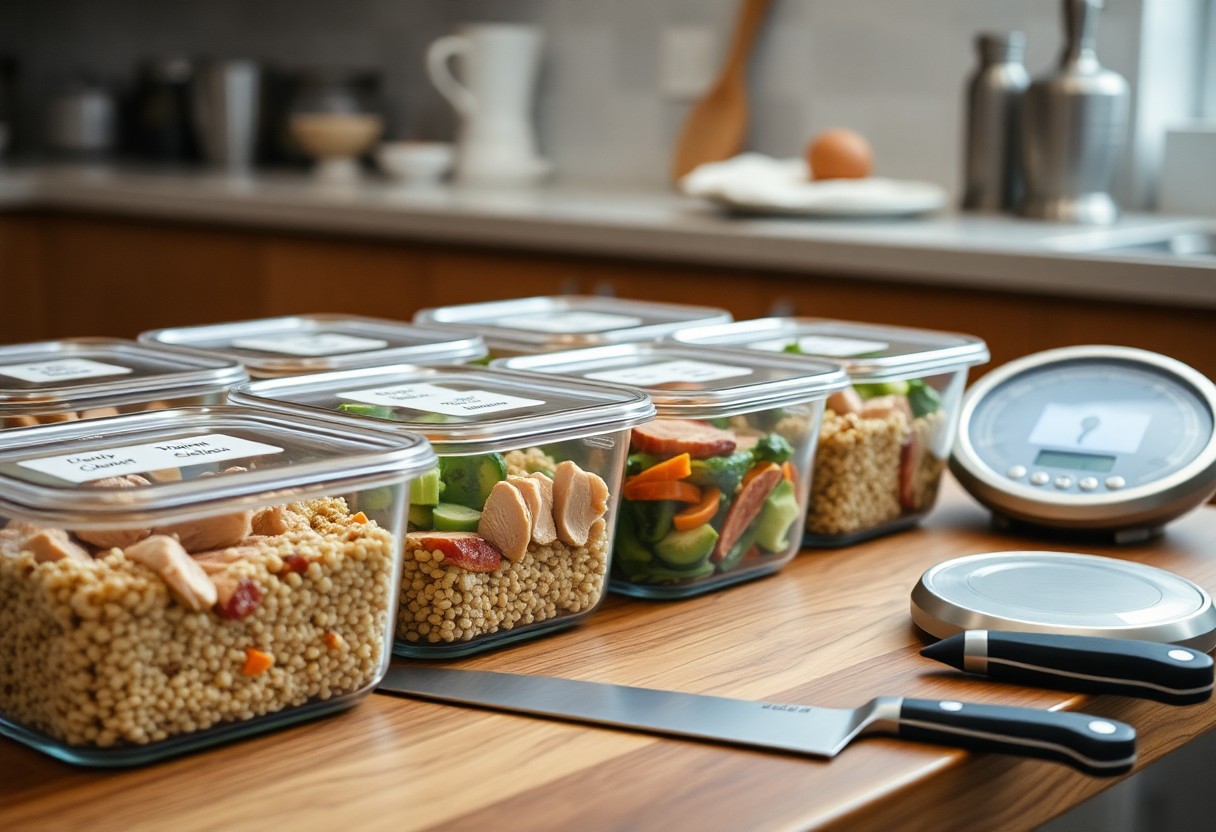
For lunch, aim to prep 3-5 grab-and-go options each week so you can rotate without monotony. Batch-cook staples like 6 cups cooked quinoa, 2 cans drained chickpeas, and roasted vegetables; then assemble salads, wraps, or bowls in 10 minutes. Plan for 3-4 days refrigerated and freeze extra portions in single-serving containers for up to 3 months.
Mason Jar Salads
Layer jars with 2-3 tbsp dressing at the bottom, hearty items next (1/2 cup beans or grains), then chopped vegetables, and finish with 1-2 cups greens on top so you keep salads crisp for 4 days. Use wide-mouth pint jars and store lids tightly; flip into a bowl to mix or shake vigorously before eating to combine flavors.
Bulk Grain Bowls
Cook 2 cups dry quinoa (yields ~6 cups cooked) or 2 cups dry brown rice (yields ~6 cups) to batch enough base for 6 bowls. Roast 1.5 lb chicken or two 14-oz tofu blocks for protein, and portion into containers with 1 cup grains, 1/2 cup vegetables, and a 2-tbsp sauce so you’ll have ready lunches; refrigerate up to 4 days.
You can try specific combos: Mexican bowls with black beans, corn, salsa, and 1/4 avocado; Mediterranean bowls with 1/3 cup feta, olives, cucumber, and tzatziki; Asian bowls with edamame, pickled carrots, and 1-2 tbsp sesame-ginger dressing. Store sauces separately in small containers, and reheat grains 60-90 seconds in the microwave with a splash of water.
Dinner Recipes
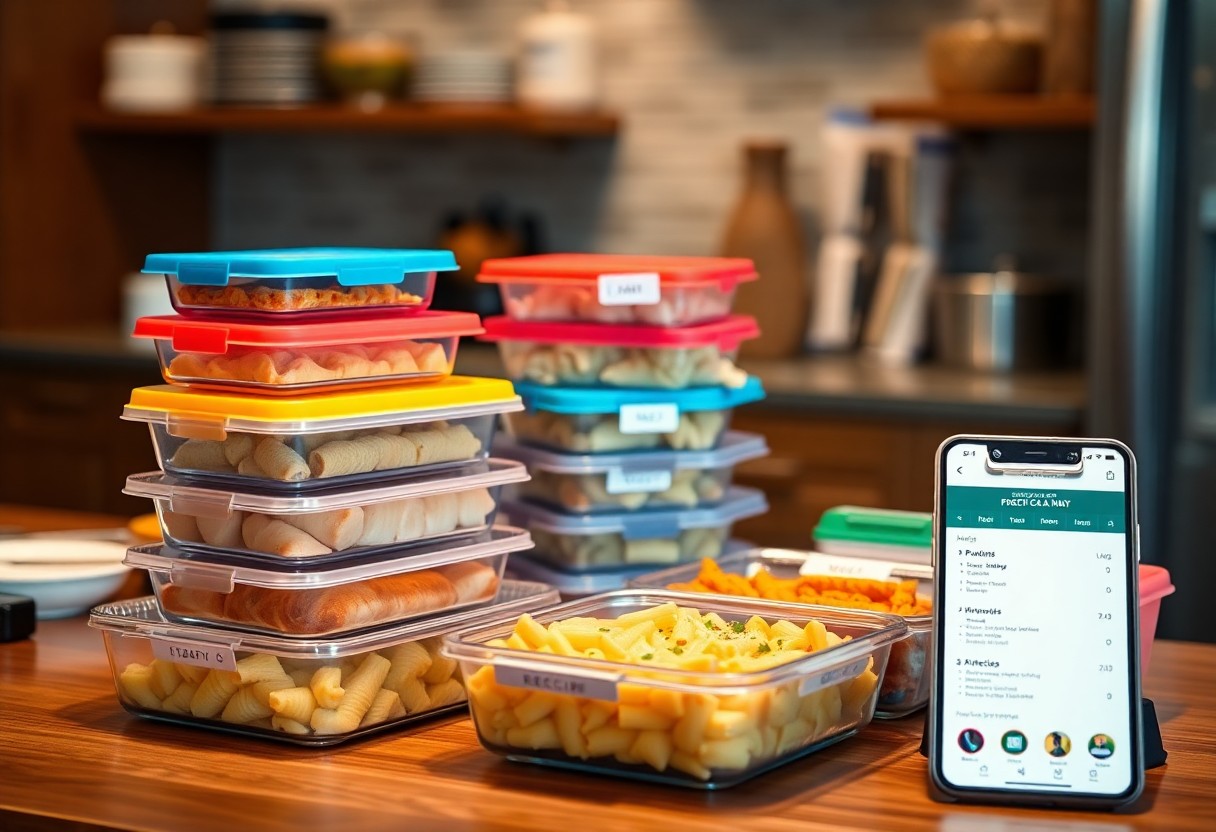
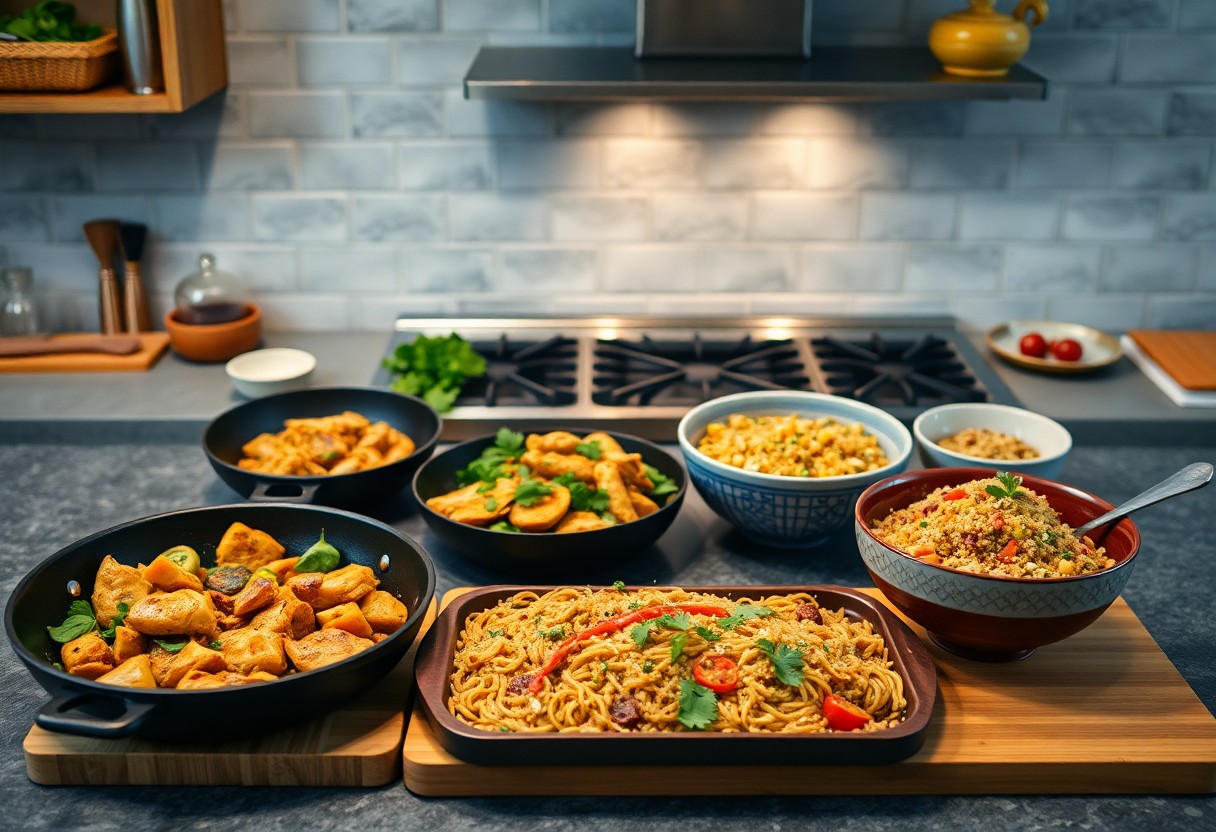
For weeknight dinners, build meals from make-ahead proteins and versatile bases: roast 2 lb chicken or bake four salmon fillets, cook 2 cups quinoa or 3 cups rice to yield 4-6 servings. You can refrigerate prepared components 3-4 days or freeze individual portions up to 3 months. Swap sauces-chimichurri, tahini, or salsa-to convert one batch into Mediterranean, Mexican, or Asian bowls in minutes, cutting nightly cooking to a simple reheat and assembly step.
One-Pan Dishes
Sheet-pan meals cut prep and cleanup: toss 1.5 lb chicken thighs with 4 cups mixed vegetables, 2 tbsp oil, and roast at 425°F for 25-30 minutes. You can assemble trays the night before or roast and store leftovers for 3-4 days; reheat at 375°F for 10-12 minutes or microwave single portions 1-2 minutes. Swapping salmon (12-15 minutes) or firm tofu diversifies meals without extra effort or shopping.
Slow Cooker Meals
Slow cooker recipes are ideal for batch cooking: a 6-quart pot handles 4-6 servings-try 2 lb chuck roast with 1 cup broth and aromatics for 8 hours on low or 4 hours on high. You should brown meat first for depth, then shred and portion for freezing up to 3 months. Thickening is easy: stir in 1-2 tsp cornstarch mixed with water and simmer briefly after cooking.
Layering matters: place root vegetables under meat so they don’t overcook, and add quick-cooking veg like bell peppers or peas in the last 30-60 minutes. Use roughly 1-2 cups liquid for a 6-quart cooker and avoid filling more than two-thirds to prevent spills. If using beans, add canned at the start or pre-soak dried beans; aim for poultry at 165°F and shreddable beef at 190-205°F. Finish batches with fresh herbs or citrus zest to brighten reheated servings.
Snack Ideas
Snacks should be as simple as your week needs: batch 2-3 grab-and-go options like 12 hard-boiled eggs, a quart of mixed nuts, and 24 energy bites so you avoid impulse purchases. You can prep these in one 30-45 minute session and portion into single-serve containers, keeping most ready for 4-5 days in the fridge and longer in the freezer.
Energy Bites
Make 12-16 energy bites by combining 1 cup rolled oats, 1/2 cup nut butter, 1/3 cup honey, 1/2 cup chopped dates or 1/3 cup protein powder, plus 1/4 cup add-ins like chia seeds or chocolate chips; roll and chill 30-60 minutes. You can vary flavors with 1 tsp vanilla, 2 tbsp cocoa, or 1/4 cup dried fruit, then freeze individually for quick weekday fuel.
Veggie Prep Packs
You’ll cut and portion vegetables into 3-4 cup packs: carrot sticks, bell pepper strips, cucumber slices, and snap peas stored in airtight containers with a paper towel to absorb moisture; most stay crisp 4-5 days. Pair each pack with single-serve hummus (about 3 tbsp) or tzatziki to keep portions controlled and snacks satisfying between meals.
You can blanch broccoli or green beans 1-2 minutes and shock them in ice water before packing to extend fridge life to 4-6 days. Keep leafy greens separate and avoid slicing avocados until use; store celery submerged in water to stay crisp up to a week. Use clear glass containers so you can rotate supplies and prep twice weekly (Sunday and Wednesday) to maintain freshness.
Freezing and Reheating Tips
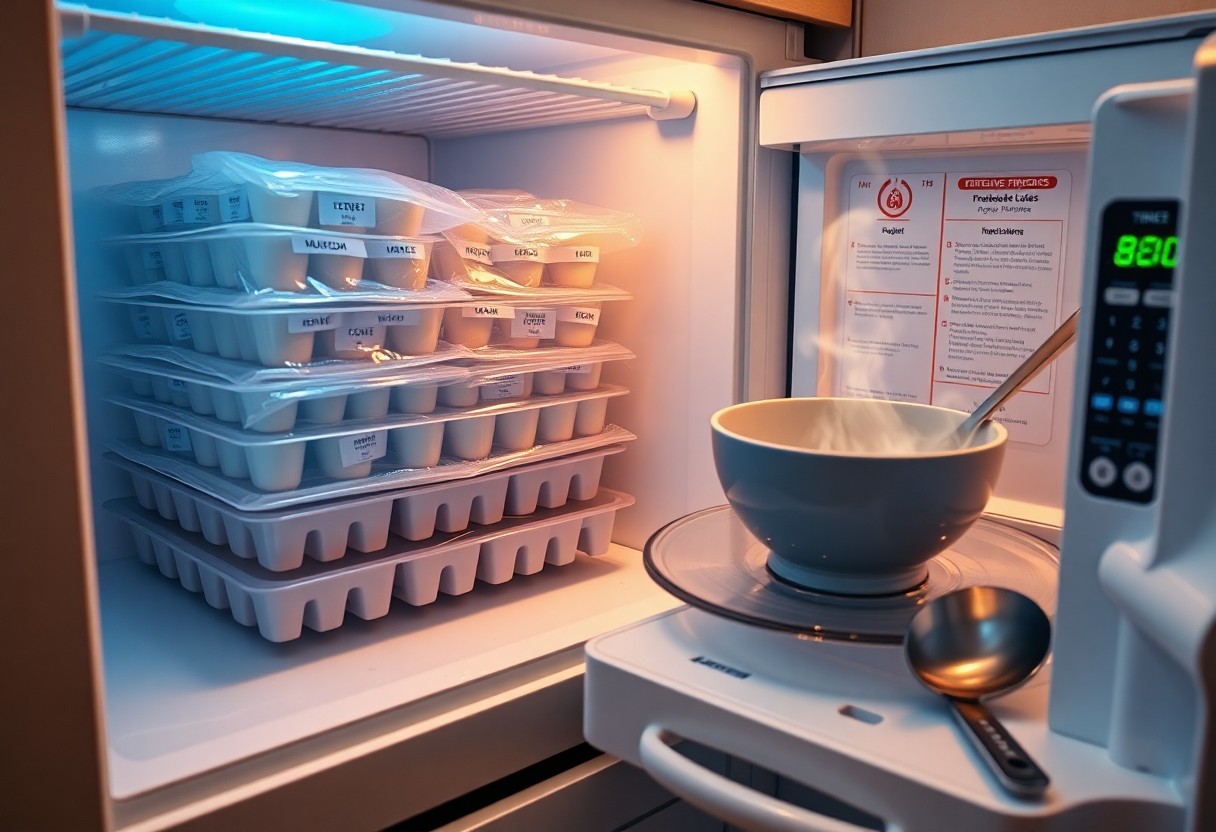
You can preserve texture and flavor by freezing portions quickly and labeling them; most soups and stews stay high-quality for 2-3 months, cooked grains up to 6 months, and shredded or cooked chicken about 4 months. Use airtight containers or vacuum-sealed bags and cool foods to room temperature within 2 hours before freezing. Any time you defrost, plan to use within 24-48 hours in the fridge and reheat until the internal temperature reaches 165°F (74°C).
- Freeze flat in zip bags to stack and thaw quickly.
- Leave 1/2″ headspace for liquids to expand.
- Label with date and contents; rotate older batches forward.
- Blanch most vegetables 1-3 minutes to preserve color and nutrients.
Best Practices for Freezing
You should portion meals into single servings, cool hot dishes on a shallow tray for 20-30 minutes, then transfer to airtight containers or vacuum bags; for example, flatten soups to 1″ thickness to freeze and thaw evenly. Blanch green beans 2-3 minutes, shock in ice water, and dry before freezing, leave 1/2-inch headspace for stews, and aim to use homemade casseroles within 3 months for best texture and flavor.
Proper Reheating Methods
When reheating target an internal temperature of 165°F (74°C); microwaves work fast-stir every 30-45 seconds for even heating-while ovens at 350°F are ideal for casseroles (20-30 minutes if thawed, 45-60 minutes from frozen). For rice add a tablespoon of water per cup and cover while heating, and warm soups gently over medium heat until simmering, adjusting times for portion size.
To restore crispness, finish breaded items in a 425°F oven or hot skillet for 5-8 minutes after initial reheating; use a probe thermometer for thick cuts of meat or dense casseroles to confirm 165°F throughout. Thaw safely in the fridge or under cold running water, avoid reheating more than once, and when in doubt, reheat in smaller portions to ensure even temperature and better texture.
To wrap up
Drawing together the strategies and recipes you’ve learned, you can streamline weekday cooking with simple batch-cooking, smart storage, and quick reheats. With basic mise en place and flexible ingredient swaps you’ll cut prep time, reduce waste, and ensure satisfying, nutritious meals all week. Use labeled containers, portion sizes that fit your routine, and a rotating recipe list to keep variety without extra effort.

Leave a Reply