
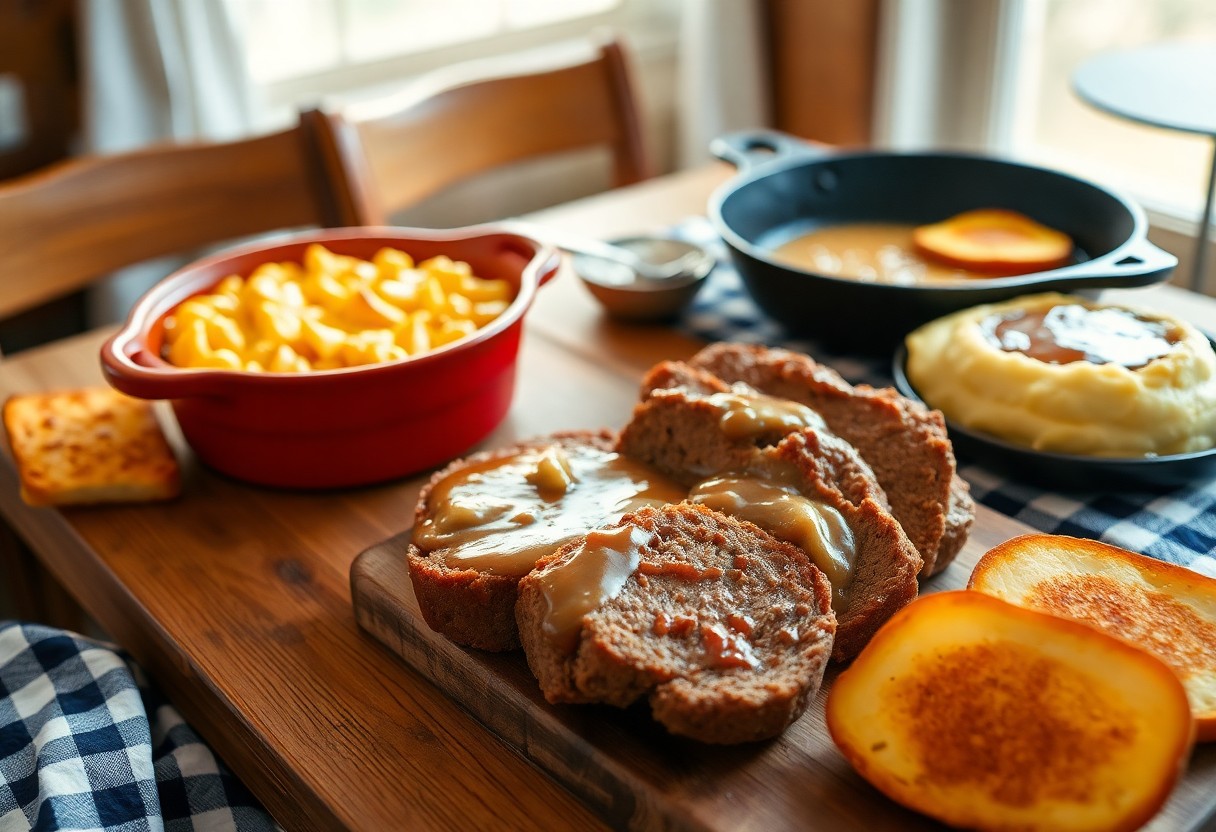
There’s a straightforward approach to transforming time-honored comfort dishes into attainable, home-cooked meals; by mastering fundamental techniques and pantry-friendly ingredients, you’ll be able to recreate classics like mac and cheese, pot roast, and chicken pot pie with consistent results and minimal stress, and you’ll learn how to streamline prep, scale recipes, and adapt seasonings so your meals deliver nostalgic flavor without unnecessary fuss.
Key Takeaways:
- Simplify classics with few-step techniques and smart shortcuts (one-pot methods, pantry swaps) to cut prep time while keeping flavor.
- Use quality staples and season deliberately-salt, acid, and fresh herbs elevate simple ingredients.
- Prep ahead, batch-cook, or freeze components so comfort meals are quick to finish; focus on texture and seasoning when reheating.
Essential Ingredients for Comfort Food
Center your kitchen around a short list of high-impact items that transform simple recipes into memorable meals: a 28-oz can of crushed tomatoes (≈3.5 cups) for sauces, a quart of low-sodium stock for soups, 1 lb of dried pasta for quick dinners, and a 5-lb bag of all-purpose flour for gravies and baking. Keep a reliable set of spices and two cooking fats-olive oil and a neutral oil-and you’ll cut prep time while preserving depth of flavor.
Pantry Staples
Stock at least one 15-28 oz can of beans, two cans of tomatoes, a jar of tomato paste, pasta (1 lb), long-grain rice (2-4 cups), and canned or boxed stock (32-48 oz). Add baking powder, baking soda, sugar, and a small spice kit-smoked paprika, cumin, dried oregano, chili flakes-plus soy sauce and Worcestershire for umami. These items keep for months and let you recreate stews, casseroles, and sauces without extra trips to the store.
Fresh Produce
Keep 2-3 yellow onions, a head of garlic, 3-4 carrots, 2 celery stalks (mirepoix ratio 2:1:1), 2-3 lb of potatoes, a bunch of sturdy herbs (thyme or parsley), and 2 lemons on hand. You’ll use onions and garlic to build savory bases, carrots and celery for texture, and potatoes as a filling starch; lemons and herbs then brighten finished dishes to balance richness.
Store onions in a cool, dry, ventilated spot separate from potatoes to prevent sprouting; refrigerate leafy greens in a damp towel to extend life 5-7 days. When caramelizing onions, cook low and slow for 20-30 minutes to develop deep sweetness, and toss herbs into a sauce in the final 2-3 minutes to preserve aroma. Buying seasonal root vegetables often yields better flavor and longer storage life.
Classic Recipes Made Simple
Tackle time-tested dishes by leaning on targeted shortcuts: swap rotisserie chicken for long braises, use a 10-minute roux (2 tbsp butter, 2 tbsp flour, 2 cups milk) to thicken sauces, or choose one-pot methods to cut cleanup. You’ll shave 30-50% off prep time when you rely on pantry staples like canned tomatoes, frozen vegetables, and pre-shredded cheese while preserving authentic flavor and texture.
Mac and Cheese
When you make mac and cheese, boil 8 ounces (about 2 cups) elbow macaroni until just al dente, about 7-8 minutes. Make a quick béchamel in 10 minutes: melt 2 tbsp butter, whisk 2 tbsp flour, slowly add 2 cups milk, then fold in 2 cups sharp cheddar and 1 cup gruyère for depth. Finish at 350°F for 12-15 minutes or broil 1-2 minutes for a golden top.
Chicken Pot Pie
You can use rotisserie chicken to save time, shredding about 3 cups (one medium bird). Sauté 1 onion and 2 carrots in 2 tbsp butter for 4-5 minutes, add 2 cups frozen peas and corn, then stir 1 cup chicken broth and 1 cup cream into a 10-minute roux to create a glossy filling. Fit into a 9-inch pie dish with store-bought crusts or puff pastry and bake at 375°F for 25-30 minutes.
To thicken your filling without over-reducing, whisk a cornstarch slurry of 1 tbsp cornstarch and 2 tbsp cold water into the simmering filling; you’ll see it thicken within a minute. For a crisp top, brush an egg wash (1 beaten egg + 1 tbsp water) and cut vents. Refrigerate leftovers up to 3 days or freeze whole pies for 1-2 months; when reheating, thaw overnight and bake at 350°F for 20-25 minutes until heated through.
Satisfying Soups and Stews
You can lean on one-pot techniques here: quick soups simmer 15-30 minutes, while stews reward low heat for 2-3 hours or a 35-45 minute pressure-cook. Use pantry staples-canned tomatoes, stock, dried herbs-and precise swaps like rotisserie chicken for long braises to save time. For balance, finish with 1 tablespoon acid (vinegar or lemon) and a pat of butter to round flavors, then serve with crusty bread or a 10-minute grilled cheese.
Creamy Tomato Soup
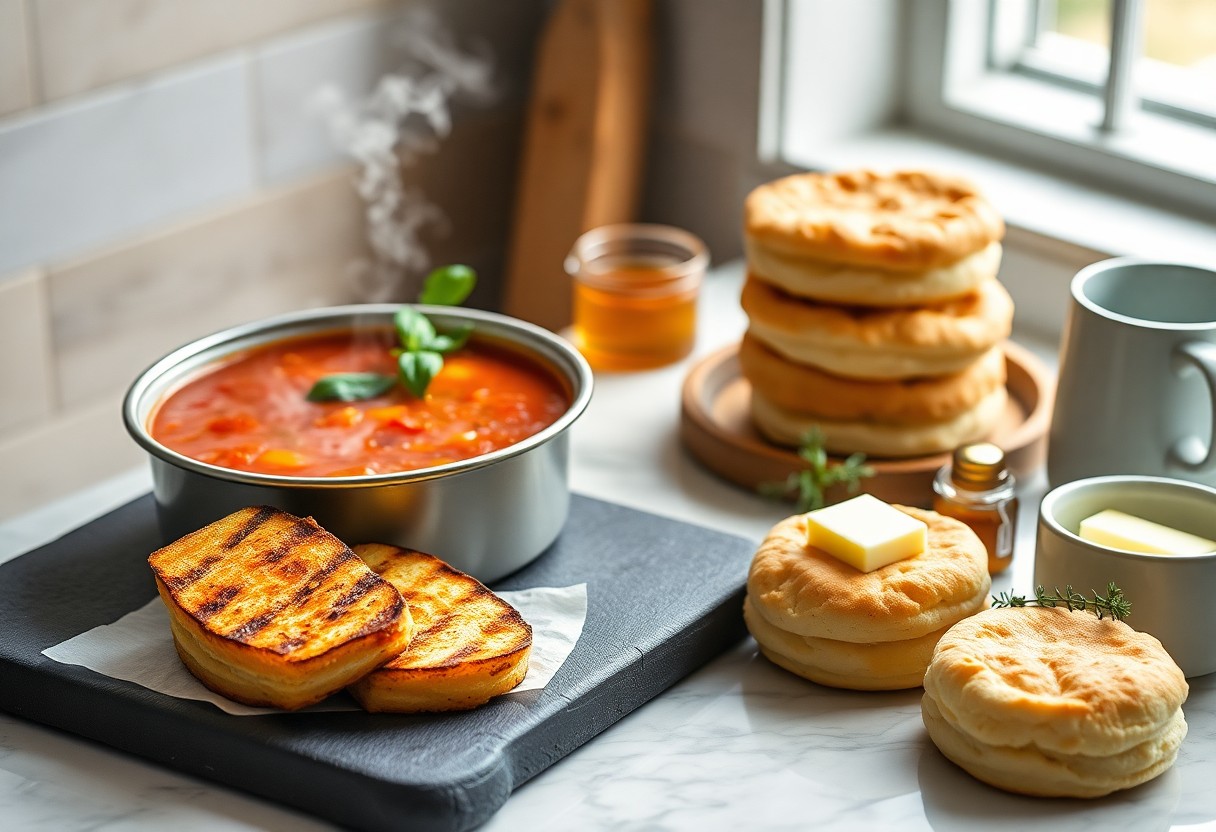
You’ll get deep flavor by sautéing one diced onion and two garlic cloves, adding two 28-oz (800 g) cans crushed tomatoes, 1 cup (240 ml) stock, and simmering 15-20 minutes. Blend until smooth, stir in 1/2 cup (120 ml) heavy cream or milk plus 1 tablespoon butter, season with 1 tsp sugar and salt to taste. Pair with a 3-4 minute per-side grilled cheese for an easy classic combo.
Beef Stew
For dependable results, sear 1-1.5 kg (2-3 lb) beef chuck cut into 2 cm cubes in batches for 3-4 minutes per side, deglaze with 1 cup wine or stock, then add 3 cups beef stock, 2 bay leaves, and thyme. Include 2 carrots and 2 medium potatoes, simmer 2-3 hours or pressure-cook 35-45 minutes, and finish with 1 tablespoon butter and chopped parsley for shine.
When you brown meat in batches you maximize Maillard flavor and avoid steaming; aim for 2 cm cubes so connective tissue breaks down in 2-3 hours. Thicken by tossing beef in 1-2 tablespoons flour before searing, or stir a 1:1 butter-flour beurre manié at the end. If using a slow cooker, cook 8 hours on low; add 1 tablespoon Worcestershire or balsamic to brighten before serving and let the stew sit 10-15 minutes for flavors to meld.
Decadent Desserts to Indulge In
Sink into rich finishes that you can execute without fuss; you can turn pantry staples into bakery-level desserts in 30-60 minutes using simple techniques, like tempering custards or resting dough for structure, and by choosing ingredients such as brioche or Belgian chocolate to elevate texture and depth.
Chocolate Chip Cookies
Make classic cookies with 2 1/4 cups flour, 1 cup chocolate chips, and a 1:1 ratio of brown to granulated sugar for chew and caramel notes; bake at 350°F for 10-12 minutes, chill dough 30 minutes to control spread, and try browned butter for a nutty, professional edge-a typical batch yields about 24 medium cookies.
Bread Pudding
Use 4 eggs to every 2 cups of milk (or half-and-half) for a custard that sets firm yet tender, tear 6-8 cups day-old bread like brioche, soak 20-30 minutes, then bake at 350°F for roughly 40-50 minutes until an instant-read thermometer hits about 165°F; you’ll get a custardy center with golden edges.
For variations, bake individual ramekins for 25-30 minutes for single servings, or stir in 1/2 cup plumped raisins and 1/2 cup chopped pecans for texture; finish with a simple sauce-simmer 1/2 cup brown sugar, 2 tbsp butter, and 1/4 cup bourbon for 3-4 minutes-or a citrus-spiked crème anglaise, and let the pudding rest 10-15 minutes before serving to set.
Tips for Quick and Easy Meal Prep
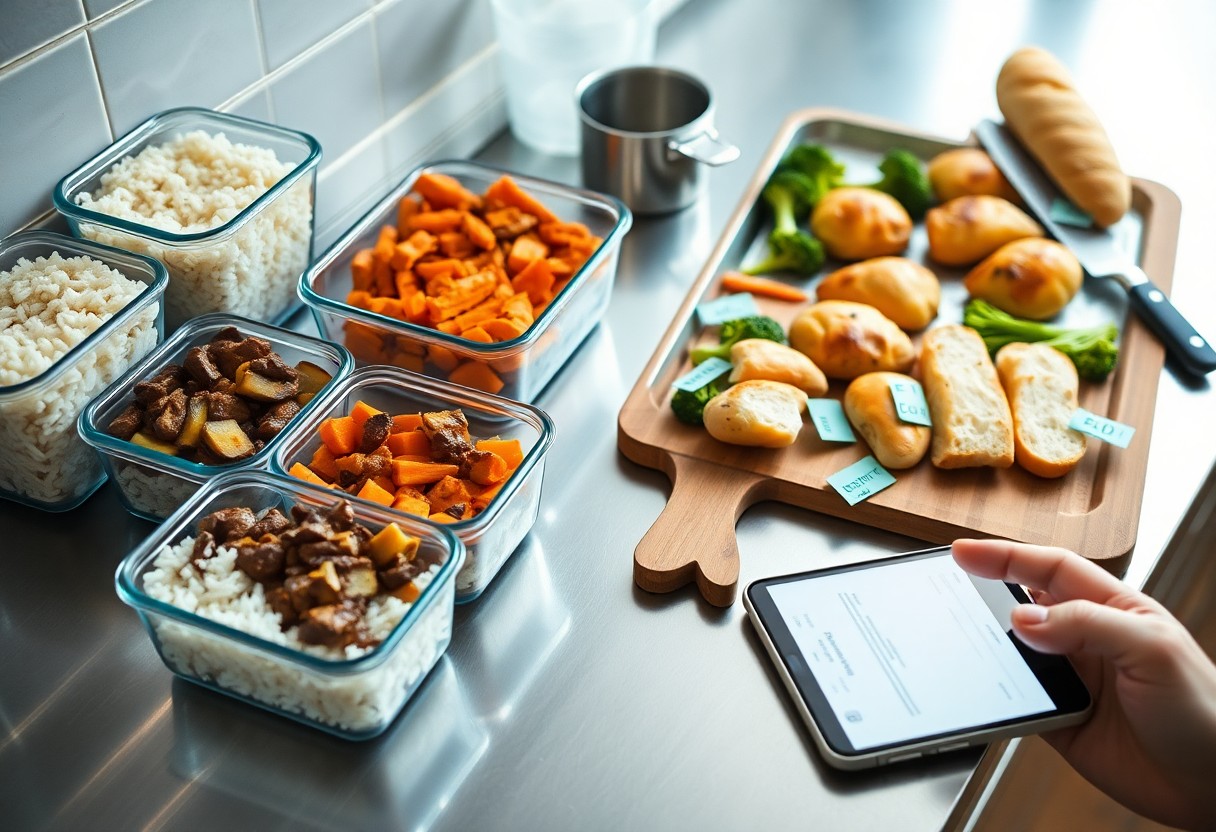
Start small: set aside 30-60 minutes twice a week to chop, roast, and portion. Use a timer and a simple checklist-prep proteins, grains, and two vegetables-so you can assemble dinners in under 10 minutes. Keep jars of cooked grains (2 cups quinoa = 2 servings) and a tray of roasted vegetables ready for bowls, salads, or quick stir-fries.
- Roast a 2-3 lb chicken or a 3 lb pork shoulder and divide into 4-6 portions for easy meals.
- Cook 8 cups of rice or 6 cups of pasta on prep day; store in 2-cup portions for quick sides.
- Flash-freeze chopped peppers and onions on a tray for 30-60 minutes, then bag for stir-fries.
- Any leftovers become next-day lunches or a soup base-label with date and use within 3 months.
Batch Cooking
When you batch cook, aim for 6-8 servings so you cover several meals at once; for example, slow-cook a 3 lb pork shoulder for 6-8 hours, shred it, and portion into six 1.5-cup containers. Use a 6-8 quart Dutch oven or slow cooker, and freeze individual portions to avoid waste. You’ll cut weekly cooking time by more than half and always have a reliable protein on hand.
Freezer-Friendly Meals
Choose recipes that freeze and reheat well-soups, stews, lasagnas, and meatballs are dependable. Portion into 2-cup or single-meal sizes, leave about 1/2 inch headspace in rigid containers, cool within 2 hours, and label with contents and date; most cooked dishes keep top quality 2-3 months at 0°F.
Thaw overnight in the fridge (12-24 hours) and reheat to 165°F for safety; soups can be reheated from frozen on the stove for 20-30 minutes, while casseroles bake at 350°F for 45-60 minutes covered then uncovered. Flash-freeze items on a baking sheet for 30-60 minutes before bagging to prevent clumping, and vacuum sealing extends quality to 6-12 months.
Serving Suggestions and Pairings
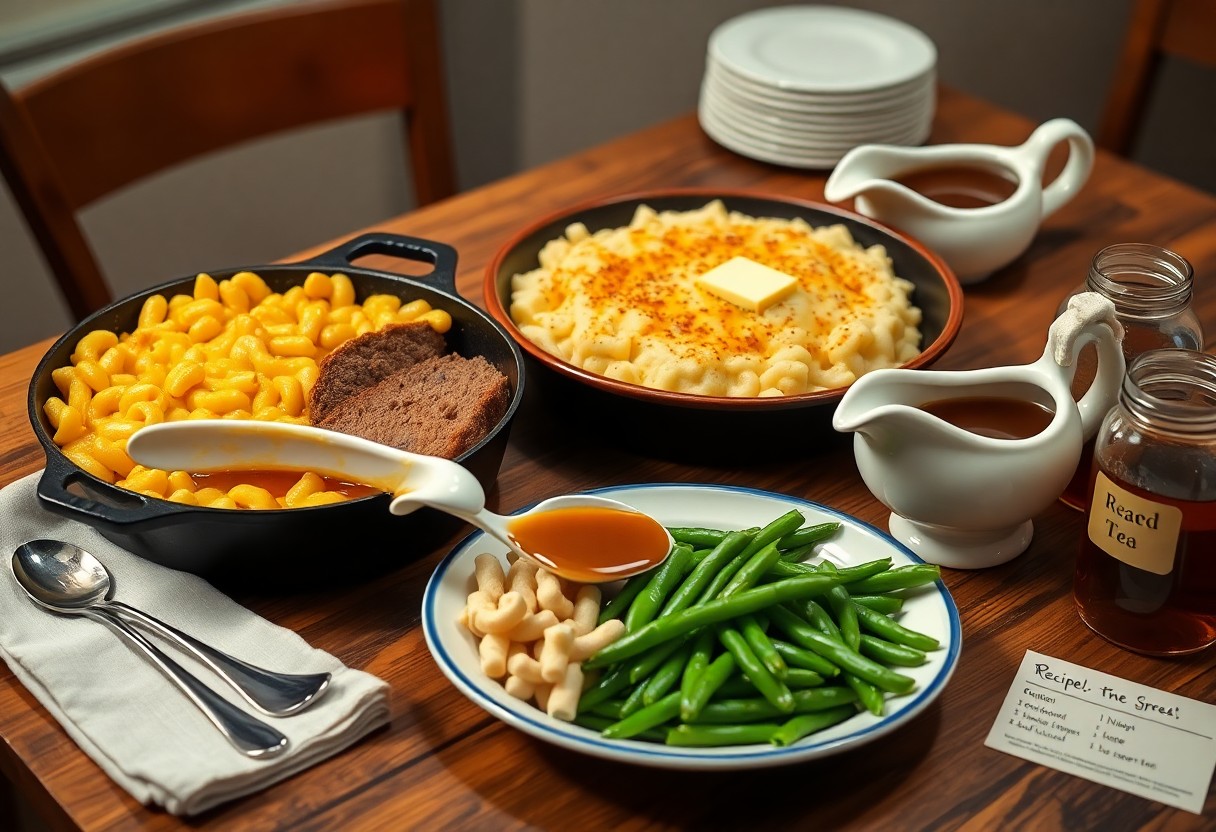
For plating and portioning, aim for balance: serve 4-6 oz of protein, 1/2-1 cup of starch, and about 1 cup of vegetables per person. You can keep plates warm by preheating them in a low oven (150°F) for 10 minutes and finish with a sprinkle of fresh herbs or citrus zest to brighten rich dishes. Family-style service encourages seconds and easier cleanup, while individual plating highlights contrasts like crunchy toppings against creamy bases.
Accompaniments for Comfort Food
Use quick pickles, a 10-minute slaw, or a 5-7 minute garlic sauté to cut richness and add texture. You can roast root vegetables at 425°F for 20-30 minutes for caramelization, or toss sautéed greens with lemon and olive oil as a bright counterpoint. Also offer 6-8 slices of crusty bread or dinner rolls for mopping up sauces; a 5-minute compound butter elevates any spread and ties flavors together.
Beverage Pairings
Match beverage weight to your dish: you can pair heavy braises with full-bodied reds like Malbec or Syrah, while lighter fare suits Pinot Noir or Sauvignon Blanc. For beers, you can select a porter or stout for stews, an IPA for rich fried foods, and a crisp pilsner for roasted chicken. Serve wine in 5 oz pours and beer in 12 oz servings; temperature matters-reds 60-65°F, whites 45-55°F.
Focus on acidity, sweetness, and carbonation: you can use wine acidity (or lemon in a cocktail) to cut fat, off-dry Rieslings to tame spice, and sparkling beverages to refresh the palate. You can also pick nonalcoholic options like high-quality cold-brew coffee, ginger kombucha, or sparkling water with citrus for balance. For desserts, pair rich chocolate with an imperial stout or espresso, and choose Moscato or a 1:16 coffee-to-water brew for lighter sweets.
To wrap up
Ultimately you can master comfort food classics at home by focusing on quality ingredients, simple techniques, and sensible shortcuts; as you practice, your confidence grows and your meals become reliably satisfying, letting you tailor flavors and portions to your taste while saving time and money without sacrificing nostalgia or depth.

Leave a Reply